




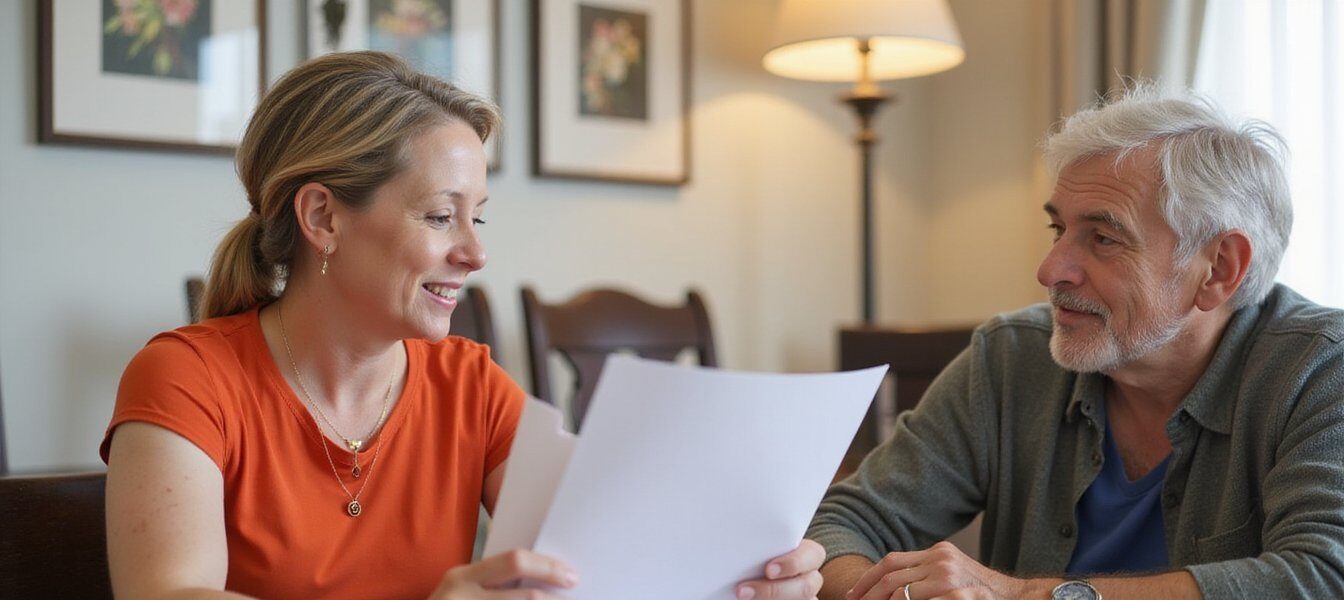
When communicating with a loved one who has dementia, focus on creating a calm, distraction-free environment and speak slowly using simple sentences. Maintain warm eye contact, offer gentle touch, and use positive reinforcement to encourage engagement. Don’t rush conversations, correct every mistake, or speak about them as if they’re not present. Your patience and adaptability will help preserve meaningful connections – there’s much more to uncover about nurturing these precious interactions.
Understanding the Impact of Dementia on Communication

While dementia affects each person differently, the condition invariably impacts their ability to communicate. You’ll notice your loved one struggling to find the right words, follow conversations, or maintain their train of thought. This cognitive decline can make even simple exchanges challenging and frustrating for both of you.
It’s essential to recognize that communication difficulties extend beyond just words. Your loved one may misinterpret facial expressions, struggle to process information, or have trouble expressing their needs and feelings. The emotional impact can be significant, leading to anxiety, withdrawal, or outbursts when they can’t make themselves understood.
Understanding these changes will help you adapt your communication style and respond with patience as your loved one navigates this challenging path.
Creating the Right Environment for Conversation
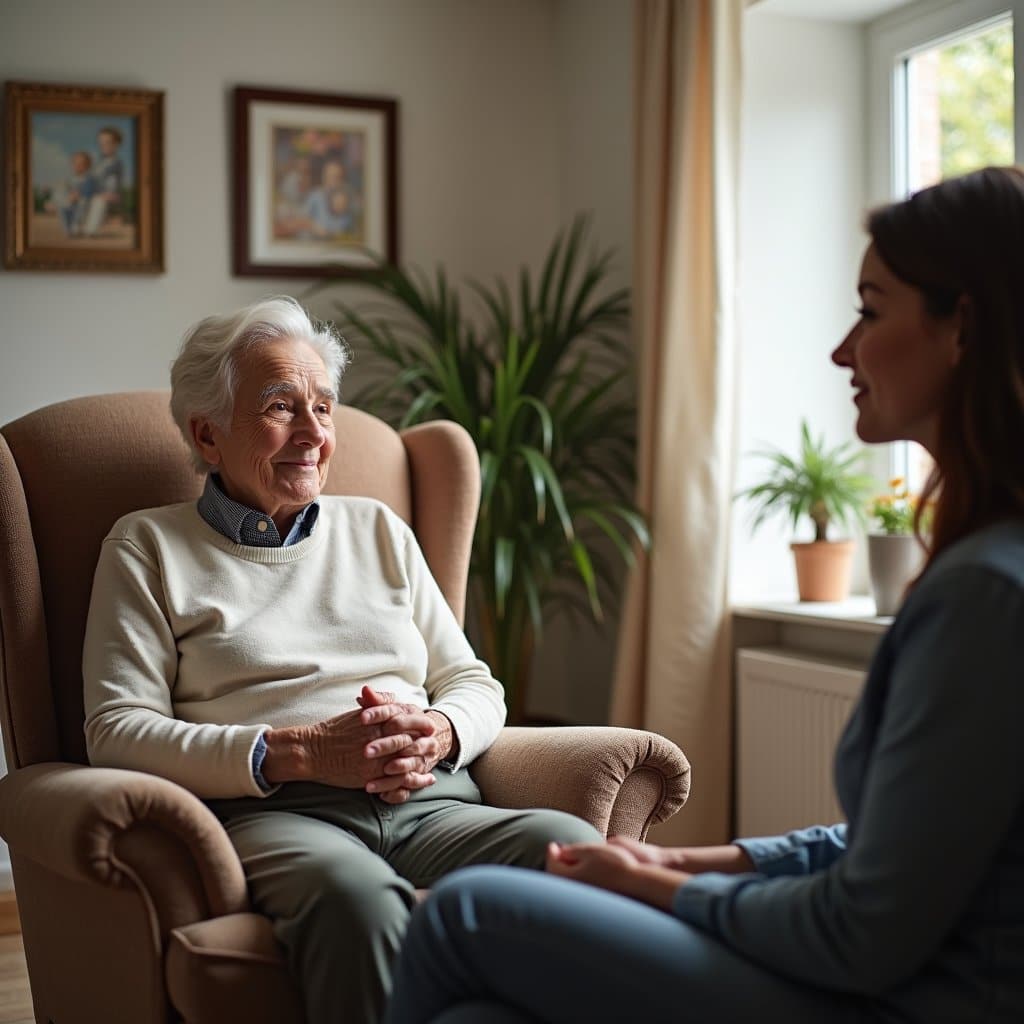
Three key elements create an ideal environment for communicating with someone who has dementia: minimal distractions, good lighting, and comfortable seating.
To establish a calm atmosphere, turn off the TV, silence phones, and choose a quiet time of day when your loved one is most alert. Select a familiar environment, like their favorite room, where they’ll feel secure and at ease. Ascertain the space has soothing lighting natural daylight is best, but avoid harsh glares or shadows that might cause confusion.
Create a positive space by incorporating engaging visuals and personal belongings that can spark memories and conversation. Position yourself at eye level in comfortable seating that allows for easy eye contact. Your supportive presence, combined with these environmental adjustments, will help your loved one feel more focused and receptive to communication.
Essential Do’s for Effective Communication
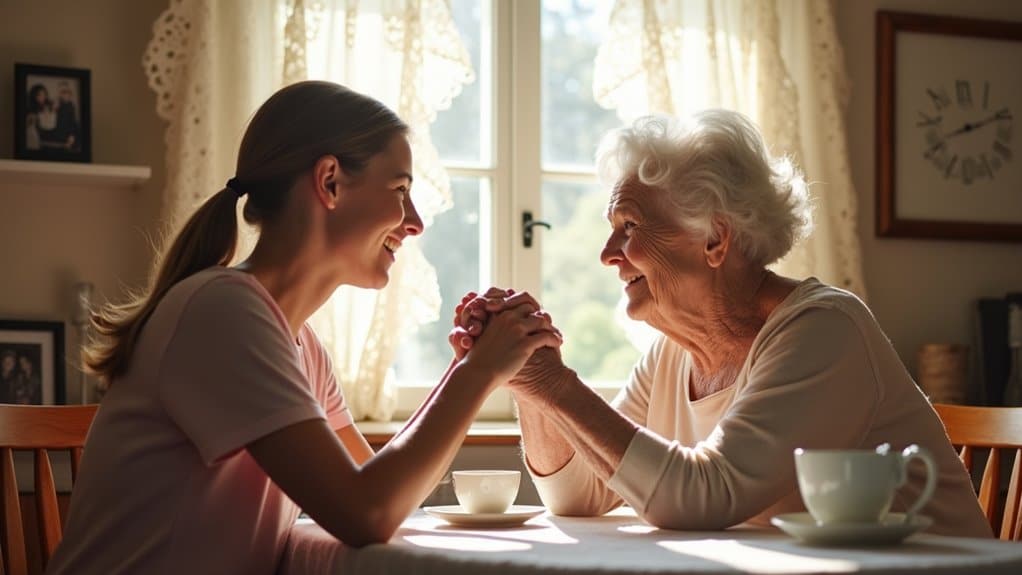
Speaking slowly and clearly is essential when communicating with your loved one who has dementia. You’ll want to use short, straightforward sentences while maintaining a calm, even tone of voice. By choosing simple words and avoiding complex language, you’ll help guarantee your message is understood and reduce potential frustration for both of you.
Speak Slowly and Clearly
Clear and deliberate speech is essential when communicating with someone who has dementia. When you speak too quickly, your loved one may struggle to process and understand your words, leading to confusion and frustration. By using slow speech and maintaining a steady pace, you’ll give them time to comprehend each word and sentence.
Focus on clear pronunciation and avoid mumbling or running words together. Keep your voice at a moderate volume – not too loud or too soft. You’ll want to enunciate each word distinctly without being condescending. If your loved one doesn’t understand you the initial time, resist the urge to raise your voice. Instead, rephrase your message using the same calm, measured pace. This approach helps maintain their dignity while ensuring effective communication.
Use Simple Direct Language
When communicating with someone who has dementia, using simple and direct language becomes essential for meaningful interaction. Structure your sentences with clear instructions and concise messages that are easy to process. Use straightforward questions that require simple responses, and avoid jargon or complex terminology that might cause confusion.
It’s helpful to repeat phrases when necessary and use visuals to support your verbal communication. When presenting options, limit choices to two or three alternatives to prevent overwhelming your loved one. Offer positive reinforcement when they respond, as this encourages continued engagement. Break down complex topics into smaller, manageable parts, and allow extra time for them to process information and formulate responses. Keep in mind that simple, direct communication helps maintain dignity while ensuring your message is understood.
Common Communication Mistakes to Avoid
While communicating with someone who has dementia requires patience and understanding, certain common mistakes can create unnecessary frustration for both you and your loved one. Don’t rush conversations or interrupt when they’re speaking, as this can lead to communication barriers and heightened emotional responses. Avoid correcting every mistake they make, which can damage relationship dynamics and increase social isolation.
You’ll want to refrain from speaking about them as if they’re not present, as this diminishes their dignity and reduces mental stimulation. Don’t ignore their verbal cues or assume they can’t understand you due to cognitive decline. Instead, focus on patient listening and empathy development. Keep in mind that auditory processing takes longer with dementia, so avoid speaking too quickly or providing too much information at once.
Non-Verbal Communication Techniques That Work
When communicating with your loved one who has dementia, your non-verbal signals often convey more meaning than words alone. You’ll find that maintaining gentle eye contact, offering appropriate touch like holding hands, and using open body language can create a strong foundation of trust and comfort. Your facial expressions are particularly essential, as people with dementia retain the ability to read emotional cues long after their verbal comprehension declines.
Eye Contact and Touch
Non-verbal communication forms two essential pillars in connecting with dementia patients: eye contact and appropriate touch.
When speaking with your loved one, position yourself at their eye level and maintain gentle eye contact techniques. Don’t tower over them or approach from behind, as this can be intimidating. Instead, sit or kneel to meet their gaze, which helps establish trust and shows you’re fully present in the interaction.
Meaningful touch can provide comfort and reassurance when used appropriately. You can hold their hand, gently pat their shoulder, or offer a warm hug if they’re receptive. However, always observe their body language initial – some dementia patients may feel uncomfortable with physical contact. If you notice any signs of distress, respect their space and rely more on eye contact to maintain connection.
Body Language Speaks Volumes
Beyond eye contact and touch, your general body language shapes how effectively you communicate with a dementia patient. Your body language cues can either comfort or confuse them, so remain mindful of your non-verbal signals at all times.
Keep your posture open and relaxed, with your arms uncrossed and shoulders facing them directly. Smile genuinely when appropriate, but don’t force expressions that don’t match the situation. Use gentle hand gestures meaning to guide or demonstrate, but avoid sudden or aggressive movements that might startle them.
Remember that your loved one may be more attuned to your non-verbal communication than your words. If you’re feeling frustrated or impatient, they’ll likely pick up on these emotions through your body language, even if you’re trying to hide them verbally.
Facial Expressions Matter Most
Among all forms of non-verbal communication, facial expressions serve as the most powerful tool for connecting with dementia patients. Your facial cues can either comfort or confuse your loved one, making it essential to maintain awareness of your emotional expression. When you’re interacting, your face becomes a mirror that reflects understanding, patience, and empathy.
| Expression | Impact | Response |
|---|---|---|
| Genuine Smile | Creates trust | Promotes comfort |
| Furrowed Brow | Shows confusion | Triggers anxiety |
| Neutral Face | Appears distant | May cause withdrawal |
| Warm Eyes | Conveys love | Encourages connection |
Remember that your loved one retains the ability to read faces long after other communication skills decline. A warm, gentle expression paired with direct eye contact can bridge gaps when words fail, helping maintain your emotional bond throughout the progression of dementia.
Managing Difficult Conversations and Behaviors
When caring for someone with dementia, you’ll likely encounter challenging behaviors and difficult conversations that can test your patience and communication skills. Understanding behavioral triggers and implementing effective coping strategies can help you navigate these complex interactions while maintaining your loved one’s dignity.
Navigating dementia care requires understanding triggers and strategies to maintain dignity while managing challenging behaviors with patience and compassion.
Key practices for managing difficult topics and emotional responses include:
- Practice active listening without arguing or correcting their perspective, even when they’re confused
- Use reassurance techniques like gentle touch or calm tones to diffuse tense situations
- Monitor family dynamics and share stress management strategies with other caregivers
- Redirect conversations when they become agitated instead of forcing resolution
Remember that patience practices are essential as you work through conflict resolution. Your loved one isn’t being difficult intentionally – their behavior stems from the challenges of processing information and emotions differently.
Adapting Your Approach Through Different Stages
As dementia progresses through its diverse stages, your communication approach must evolve to match your loved one’s changing cognitive abilities and needs. You’ll need to recognize early signs and adjust your stage specific strategies accordingly while maintaining a strong emotional connection.
| Stage | Communication Evolution | Patience Techniques |
|---|---|---|
| Early | Use memory cues, speak clearly | Allow extra response time |
| Middle | Simplify instructions, adapt tone | Practice active listening |
| Late | Focus on non-verbal cues, touch | Maintain calm presence |
Understanding relationship dynamics becomes vital as you refine your listening skills through each phase. Consider seeking caregiver training to learn specialized techniques for different stages. Keep in mind that your loved one’s ability to process information will change, requiring you to continuously modify your approach. Stay patient and flexible, knowing that maintaining connection matters more than perfect communication.
Building Meaningful Connections Despite Memory Loss
Though memory loss presents significant challenges, you can still forge deep and lasting connections with your loved one who has dementia. Focus on creating meaningful moments through sensory activities and emotional validation rather than correcting factual mistakes. Reminiscence therapy, including storytelling techniques and photo albums, can stimulate positive memories and foster connection.
Dementia may affect memory, but meaningful connections endure through shared moments, sensory engagement and emotional understanding.
- Use music therapy to evoke emotions and memories, as musical memory often remains intact longer than other cognitive functions
- Engage in art expression activities together, which can provide cognitive stimulation and emotional outlet
- Maintain meaningful routines that create structure and familiarity in your interactions
- Share simple, tactile experiences like looking through fabric swatches or sorting familiar objects
Remember that memory engagement doesn’t always require words sometimes simply being present and sharing quiet moments creates the most profound connections.
Supporting Family Members and Caregivers
Creating strong support networks early in your caregiving expedition will help you navigate the complex challenges of caring for someone with dementia. You’ll find that sharing caregiving duties with family members, friends, and professional resources can prevent burnout while ensuring your loved one receives consistent care. Making time for your own physical and emotional wellness through daily self-care isn’t selfish – it’s essential for maintaining the strength and resilience needed to provide quality care.
Build Support Networks Early
Building a support network before dementia symptoms advance can dramatically improve outcomes for both patients and caregivers. You’ll need access to reliable resources and emotional support as you navigate this path. Local support groups, online forums, and family workshops can provide valuable connections with others facing similar challenges.
- Join community support groups to share experiences and coping strategies
- Participate in caregiver training programs to learn essential care techniques
- Connect with online forums for 24/7 access to advice and emotional support
- Research local community resources for respite care and medical assistance
Don’t wait until you’re overwhelmed to seek help. Early engagement with support networks allows you to build relationships, gather knowledge, and prepare for future challenges. These connections will prove invaluable as your caregiving responsibilities evolve and your loved one’s needs change.
Share Caregiving Responsibilities Together
When caring for someone with dementia, sharing responsibilities among family members and caregivers prevents burnout and guarantees better care for your loved one. Establish a system of shared responsibilities by creating a detailed care schedule that outlines specific tasks, time commitments, and individual strengths of each caregiver.
Collaborative caregiving works best when you maintain open communication channels with all involved parties. Regular family meetings help address concerns, adjust care strategies, and assure everyone understands their roles. Don’t hesitate to delegate tasks based on each person’s availability and capabilities. Some caregivers might excel at medication management, while others may be better suited for social activities or household maintenance. Remember to document care routines, medication schedules, and behavioral changes to maintain consistency across all caregivers.
Practice Self-Care Every Day
Taking care of yourself remains essential while supporting a loved one with dementia, as caregiver burnout can negatively impact both you and the person in your care. Maintaining your mental health through consistent self care routines helps you stay resilient and present during challenging moments.
Make time each day for activities that restore your energy and well-being:
- Schedule regular breaks to pursue hobbies or interests that bring you joy
- Connect with supportive friends or join a caregiver support group
- Practice stress-reduction techniques like meditation, yoga, or deep breathing
- Prioritize your physical health through exercise, proper nutrition, and adequate sleep
Remember that caring for yourself isn’t selfish it’s necessary. When you’re well-rested and emotionally balanced, you’re better equipped to provide compassionate care for your loved one with dementia.
Tools and Resources for Better Communication
Several practical tools and resources can help you communicate more effectively with a loved one who has dementia. Communication aids like picture cards, photo albums, and memory books can spark meaningful conversations and help with daily tasks. Technology tools, including specialized apps and tablets, offer interactive ways to engage and connect.
You’ll find valuable support through resource guides from organizations like the Alzheimer’s Association, while local support groups provide opportunities to share experiences and learn from others. Educational workshops and caregiver training programs can teach you essential skills, while online forums connect you with a global community facing similar challenges. Consider incorporating memory games and visual cues into your interactions, and don’t hesitate to consult with speech therapy professionals who can provide personalized strategies for your specific situation.
Frequently Asked Questions
Should I Tell My Loved One With Dementia That Someone They Know Died?
You should consider your loved one’s memory retention and ability to process information when sharing news of a death. If they’ll notice the person’s absence, it’s better to tell them gently, but be prepared to have this conversation multiple times. You’ll want to provide grief support each time they learn of the loss anew. If they won’t notice the absence, telling them may cause unnecessary distress.
How Often Should I Remind Them About Taking Their Medications?
You’ll need to provide medication reminders consistently, based on your loved one’s prescribed dosage schedules. It’s best to establish a routine system, like using pill organizers or setting alarms. Don’t overwhelm them by asking if they’ve taken their medications multiple times; instead, offer gentle, direct reminders when it’s time. If they’re resistant or confused, stay calm and patient. Consider keeping a medication log to track their adherence.
Is It Okay to Play Along With Their Incorrect Memories?
Yes, it’s generally acceptable to validate your loved one’s memories, even if they’re not entirely accurate. Memory validation helps maintain their dignity and emotional well-being while reducing anxiety and agitation. Instead of correcting them, try gentle redirection by acknowledging their feelings and shifting the conversation to a related topic. For example, if they mention a misplaced memory, you can say, “Tell me more about that” and listen with empathy.
What’s the Best Time of Day to Have Important Conversations?
You’ll find that morning conversations tend to be most productive, as this is when your loved one is typically most alert and well-rested. Schedule significant discussions before lunch when their energy levels are at their peak. Try to avoid evening discussions, as many people experience increased confusion and fatigue later in the day a phenomenon known as “sundowning.” Keep conversations brief and focused, allowing time for processing and response.
Should I Correct Them When They Call Me by Someone Else’s Name?
When your loved one experiences name confusion, it’s best not to correct them directly. Instead, respond naturally to their conversation while providing emotional support. You can gently remind them who you are by saying something like “Yes, and I’m [your name], your [relationship].” This approach helps maintain their dignity and prevents frustration. If they’re particularly confused, you can redirect the conversation to a pleasant topic they enjoy discussing.