





When designing a memory care room for 2025, you’ll need to blend smart technology with therapeutic elements. Start with secure keypad locks and motion sensors, then incorporate adjustable lighting systems using calming blues and greens. Position furniture with rounded edges along clear pathways, and create personalized memory walls with meaningful photos and artifacts. Add sensory elements like aromatherapy diffusers and sound panels to reduce anxiety. These foundational choices will shape your complete memory care environment.
Safety Features and Smart Technology Integration
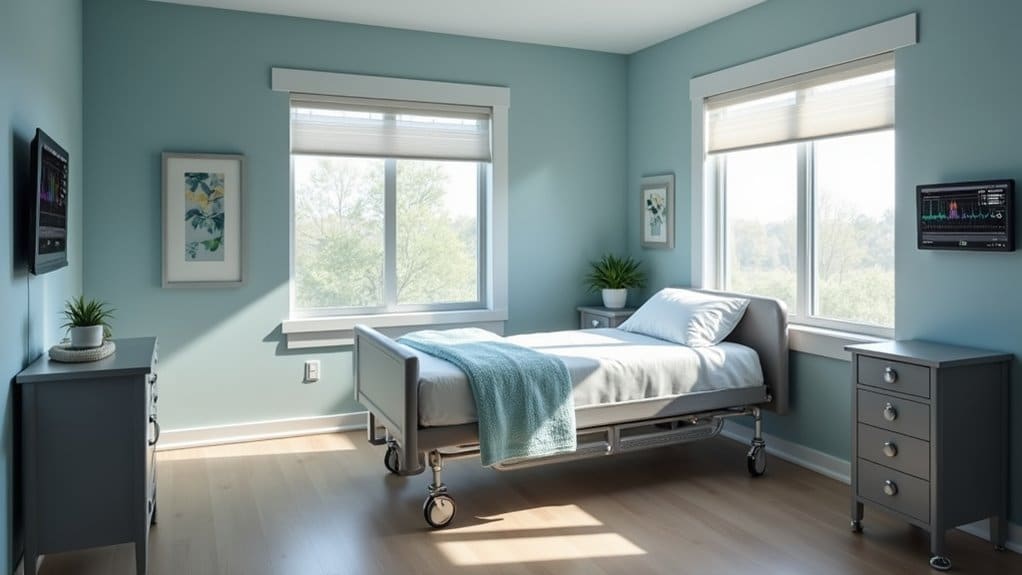
When designing memory care rooms, safety features and smart technology must work seamlessly together to protect residents while preserving their dignity. You’ll want to install secure locks with keypad entry systems that prevent wandering while allowing staff quick access during emergencies. Smart alarms can discreetly alert caregivers when residents need assistance or attempt to leave designated areas.
Consider incorporating motion sensors that automatically illuminate pathways at night, reducing fall risks. Install temperature-monitoring systems that maintain ideal room comfort and alert staff to potentially dangerous fluctuations. Anti-scalding devices in bathrooms help prevent accidents, while pressure-sensitive floor mats can detect falls and immediately notify care teams. Make sure all technology integrates with your facility’s central monitoring system, creating an all-encompassing safety network that’s both effective and unobtrusive.
Color Psychology and Lighting Solutions
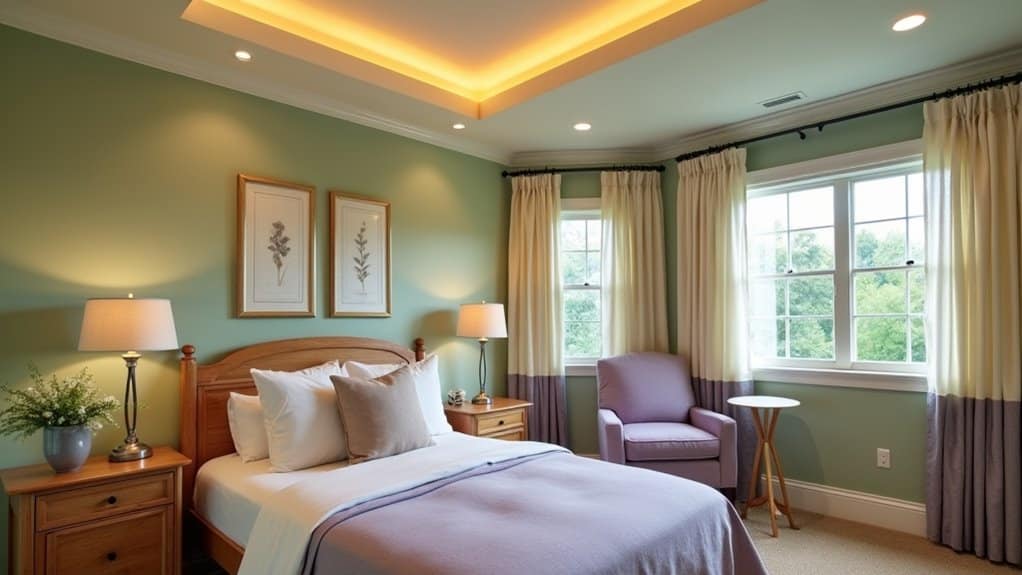
Thoughtful color selection in memory care rooms can reduce anxiety and create a calming environment, with soft blues and greens proving especially therapeutic for residents with dementia. You’ll want to optimize natural light exposure through strategically placed windows and glass doors, as this helps regulate circadian rhythms and improves mood. Consider incorporating adjustable lighting systems that can shift from bright daylight to softer evening tones, supporting both daily activities and natural sleep patterns.
Therapeutic Color Selection
Color selection plays an essential role in creating therapeutic environments for memory care residents. When choosing your palette, focus on color harmony that promotes both calm and mental clarity. You’ll want to select muted blues and greens for their soothing emotional impact, while incorporating warm beiges and soft yellows to create a welcoming atmosphere.
Avoid jarring color combinations that might trigger agitation or confusion. Instead, opt for a gradual shift between complementary hues. Keep in mind that color perception changes with maturity, so you’ll need to increase contrast between walls and furnishings to help residents navigate their space. Choose matt finishes over glossy ones to reduce glare, and use deeper tones for wayfinding elements like doorframes and handrails. This thoughtful approach to color selection improves both safety and emotional well-being.
Natural Light Integration
Natural light serves as a cornerstone in memory care design, working harmoniously with your chosen color palette to regulate residents’ circadian rhythms. When planning window placement, prioritize east-facing orientations to enhance morning daylight exposure, helping seniors maintain healthy sleep-wake cycles.
- Position beds where residents can easily view outdoors while resting, promoting connection to nature and time awareness
- Install adjustable window treatments to control glare while maintaining ideal light levels throughout the day
- Create sitting areas near windows to encourage daytime activity and social interaction
- Consider clerestory windows or skylights for spaces where traditional windows aren’t feasible
- Use light shelves or reflective surfaces to distribute natural light deeper into the room
Remember to balance daylight exposure with privacy needs by incorporating translucent materials and strategic window heights in your design.
Furniture Selection and Room Layout Strategies
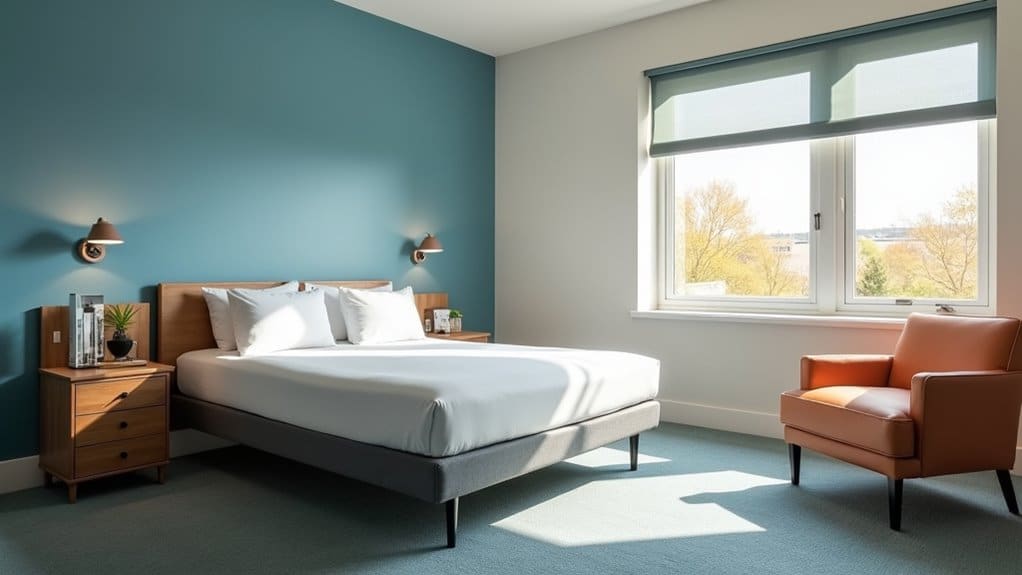
Strategic furniture choices and layout planning form the foundation of an effective memory care room. You’ll want to select pieces that combine comfort with functionality while maintaining clear pathways for easy navigation. When considering furniture ergonomics, choose chairs with firm support and appropriate seat heights that help residents stand up independently.
Layout optimization should focus on creating distinct activity zones while avoiding clutter. Position the bed where residents can easily see the bathroom door, and place comfortable seating near windows to encourage engagement with natural light. Install grab bars near frequently used furniture pieces to support safe movement. Select rounded edges on all furniture to prevent injury, and opt for pieces with contrasting colors to help residents distinguish between different items. Keep the floor plan open but clearly defined.
Personal Space Customization and Memory Cues
When you’re designing a memory care room, establish a dedicated photo wall that helps residents recognize their space through familiar faces and cherished memories. You’ll want to incorporate display areas for meaningful personal objects like awards, crafts, or valued collections that can trigger positive recollections and provide conversational touchpoints. Using color-coded zones within the resident’s personal space helps create clear visual boundaries and makes the room more navigable, especially when you match these colors to their belongings and door frames.
Photo Walls For Recognition
Creating personalized photo walls in memory care rooms helps residents recognize their living spaces while reinforcing connections to their life stories. These carefully curated displays serve as powerful memory triggers, enabling better spatial orientation and emotional comfort. You’ll want to strategically place photos at eye level where they’re easily visible from the bed and sitting areas to enhance photo recognition opportunities.
- Select 8-12 meaningful photos that span different life periods and evoke positive memories
- Arrange images chronologically to help residents mentally track their life experience
- Use non-glare frames and adequate lighting to reduce visual confusion
- Include labels or captions that identify people, places, and dates
- Update photos seasonally to maintain engagement and provide fresh memory cues
When designing photo walls, focus on creating clear visual pathways that guide residents’ attention while avoiding cluttered arrangements that might cause overstimulation.
Meaningful Object Display Areas
Designated display areas for valued personal belongings serve as powerful memory anchors in memory care rooms. You’ll want to create accessible shelving or curated shadow boxes that showcase memory artifacts like family photographs, career mementos, or prized collectibles. Consider installing adjustable lighting above these displays to improve visibility and emotional connection.
Position your display organization at eye level, keeping items within easy reach but secure from accidental displacement. Install clear, shatterproof covers to protect delicate objects while maintaining visibility. You can incorporate small labels or captions beneath items to help trigger specific memories and encourage conversation. Select display areas that are visible from the resident’s favorite sitting spot, ensuring these meaningful objects remain part of their daily visual experience and support their sense of identity and comfort.
Color-Coded Personal Zones
Color-coded zones in memory care rooms provide essential visual cues that help residents navigate their personal spaces with greater confidence and independence. By incorporating distinct color zones throughout the room, you’ll create intuitive boundaries that reinforce personal identity and daily routines. Choose colors that resonate with your resident’s past experiences while maintaining clear visual contrast between different functional areas.
- Use warm, calming tones for the sleeping area to promote rest and comfort
- Designate bathroom zones with blue hues to trigger water-related associations
- Create a vibrant seating area using familiar accent colors from their past home
- Mark clothing storage areas with personalized color schemes that reflect their style
- Highlight memory boxes and photo displays with soft, neutral backgrounds that won’t compete for attention
The strategic use of color zones helps maintain spatial awareness while supporting dignity and independence in daily activities.
Sensory Elements and Environmental Controls
Since memory care residents often experience sensory processing challenges, thoughtful control of environmental stimuli plays an essential role in their wellbeing. You’ll want to incorporate adjustable elements that support both sensory stimulation and environmental adaptability throughout the room.
| Control Element | Therapeutic Benefit |
|---|---|
| Dimmer Switches | Reduces sundowning anxiety |
| Sound Panels | Minimizes distressing noise |
| Smart Thermostats | Maintains comfort levels |
Install automated window shades to regulate natural light exposure and circadian rhythms. Consider adding aromatherapy diffusers with calming scents like lavender or vanilla. You’ll also benefit from installing white noise machines to mask disruptive sounds. Create a sensory station with different textures and tactile objects that residents can investigate safely. Remember to position environmental controls at accessible heights and use simple, intuitive interfaces that won’t overwhelm or confuse residents.
Caregiver Access and Monitoring Systems
While sensory controls support residents’ comfort, effective caregiver systems form the backbone of quality memory care. You’ll need to integrate monitoring technology seamlessly into the room’s design while maintaining a homelike atmosphere. Modern caregiver accessibility features should balance resident privacy with essential oversight.
- Install discreet motion sensors and bed-exit alarms that connect to staff mobile devices
- Position nurse call buttons within easy reach of both bed and bathroom areas
- Create hidden documentation stations that don’t intrude on living spaces
- Implement smart lighting systems that alert staff to nighttime resident movement
- Design doorways and furniture placement to allow quick caregiver access during emergencies
Remember to carefully consider sight lines from hallway observation windows and guarantee all monitoring equipment remains unobtrusive yet fully functional for staff needs.
Frequently Asked Questions
What Are the Average Costs of Converting a Regular Room to Memory Care?
You’ll need to budget between $8,000 to $15,000 for converting a standard room to memory care specifications. Cost factors include safety modifications ($2,000-3,000), specialized lighting ($1,500-2,500), contrast-enhanced fixtures ($800-1,500), and sensory integration elements ($1,000-2,000). Your renovation budgets should also account for non-slip flooring ($2,000-3,000) and memory-supportive bathroom modifications ($1,500-3,000). Don’t forget to include labor costs, which typically represent 30% of your total budget.
How Long Does It Typically Take to Complete a Memory Care Room Renovation?
You’ll need to plan for 4-8 weeks to complete a memory care room renovation, depending on the scope of work. The renovation timeline can extend if you’re addressing complex design challenges like installing specialized lighting systems or safety features. If you’re working on structural modifications or adding therapeutic elements like sensory walls, expect longer completion times. It’s best to add a buffer of 1-2 weeks to account for potential material delays or inspection requirements.
Can Memory Care Rooms Be Shared Between Two Residents With Dementia?
While memory care rooms can accommodate shared living arrangements, you’ll need to carefully consider roommate compatibility initially. It’s crucial to match residents with similar cognitive levels, sleep patterns, and behavioral tendencies. You’ll want to create distinct personal spaces within the shared room using privacy screens, individual storage units, and separate seating areas. However, you should always prioritize private rooms when possible, as they typically provide better outcomes for residents with dementia.
Are There Specific Insurance Considerations for Memory Care Room Modifications?
You’ll need to check your insurance coverage carefully, as many standard policies don’t automatically cover memory care modifications. Consider contacting your provider about specialty riders for aging-in-place renovations. You can also investigate renovation grants through organizations like the National Council on Aging or local aging services. It’s worth consulting an insurance specialist who understands memory care requirements to guarantee you’re maximizing available benefits for therapeutic design elements.
What Certifications Do Designers Need to Specialize in Memory Care Spaces?
To specialize in memory care design, you’ll need a combination of certifications and expertise. Start with NCIDQ (National Council for Interior Design Qualification) certification, then pursue specialized credentials in environmental psychology and therapeutic design principles. Consider obtaining EDAC (Evidence-Based Design Accreditation) and dementia care certifications through organizations like SAGE or CAPS. You’ll also benefit from continuing education in healthcare design and hands-on experience working with memory care facilities.