





Memory care provides more intensive, specialized support than assisted living through higher staff ratios, dementia-specific training, and enhanced security features. You’ll find 24/7 supervision, structured routines, and therapeutic activities tailored to cognitive needs in memory care, while assisted living offers more general support for daily tasks. Though memory care costs more ($6,450-$7,292 monthly vs. $4,000-$6,000), the specialized care can make a significant difference in your loved one’s quality of life. Let’s explore the key factors to help you make this important decision.
The Level of Care and Support in Each Setting
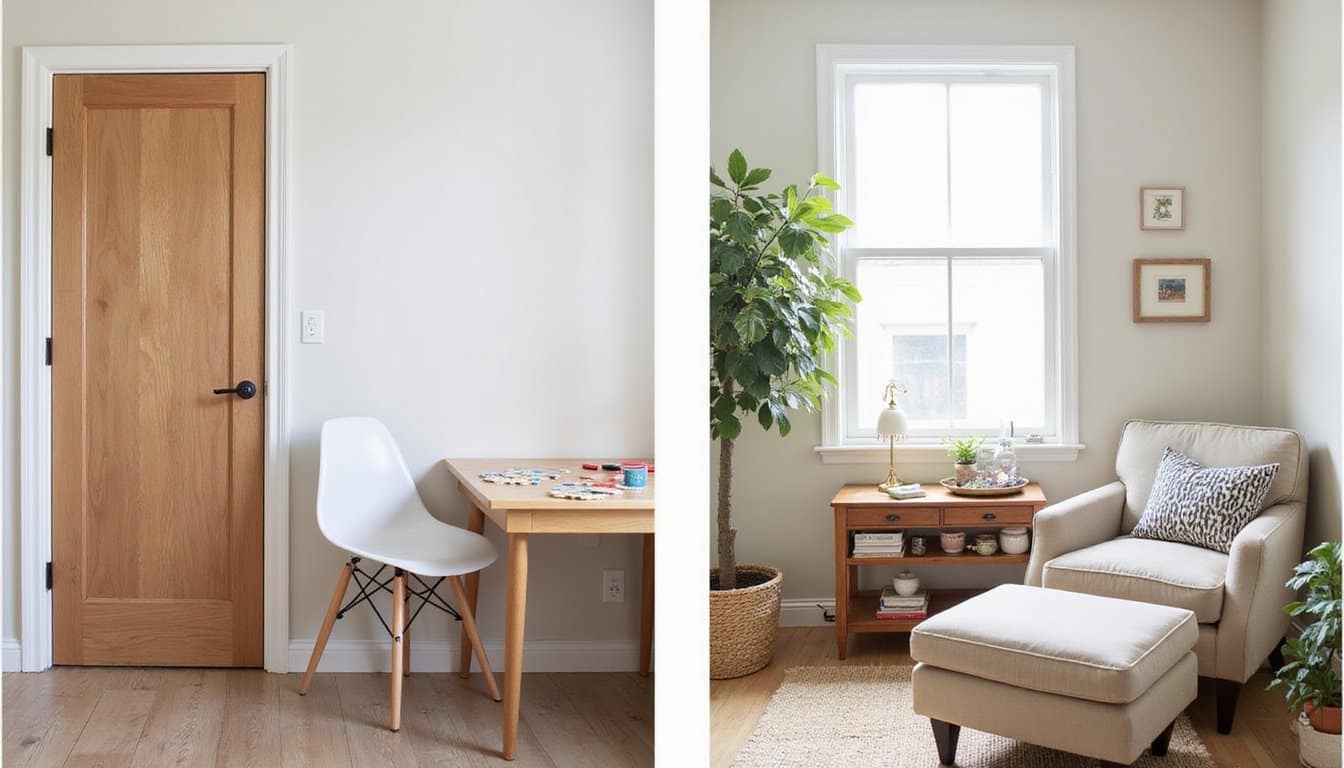
While both memory care and assisted living offer supportive environments for seniors, they differ considerably in their level of care and supervision. Memory care provides 24-hour oversight with specialized staff trained in managing cognitive decline and behavioral challenges. You’ll find a lower caregiver-to-resident ratio, ensuring your loved one receives more individualized attention throughout the day. Tailored activities promote engagement while accommodating each resident’s unique cognitive abilities. The staff undergoes dementia-specific training to better understand and respond to the unique needs of residents with cognitive impairments.
In memory care, staff assist with all activities of daily living and follow structured, individualized routines to minimize confusion. They’re equipped with security features and wandering management systems to keep residents safe. The facility design includes secured layouts that help prevent wandering and disorientation. Behavioral management support helps address issues like anxiety or aggression. While assisted living maintains a more hands-off approach for relatively independent seniors, memory care’s admission criteria specifically target those with moderate to severe memory impairments who need thorough, around-the-clock supervision.
Specialized Staff Training and Supervision Requirements
Because caring for seniors with memory loss requires specialized expertise, memory care facilities maintain considerably higher training standards than traditional assisted living communities. While assisted living staff complete general eldercare training, memory care staff undergo extensive dementia-specific training and must earn specialized certifications. Staff members are specifically trained in basic hygiene practices and safety protocols to ensure proper daily care for residents. The intensive training programs create a nurturing environment where residents receive personalized attention and support. Memory care facilities provide tailored programs to boost cognitive function, complementing assisted living facility services to support residents’ emotional and physical well-being.
Key differences in staff training and supervision include:
- Memory care staff receive in-depth behavior management training and ongoing professional development focused on dementia care
- Continuing education requirements are more rigorous, with many states mandating 4-6 additional hours annually for memory care staff
- Memory care maintains higher staff-to-resident ratios to guarantee constant supervision and personalized attention
- Staff must complete specialized training in pharmacological management and assessment of dementia, plus earn dementia care certifications from organizations like NCCDP
Safety Features and Environmental Design Differences
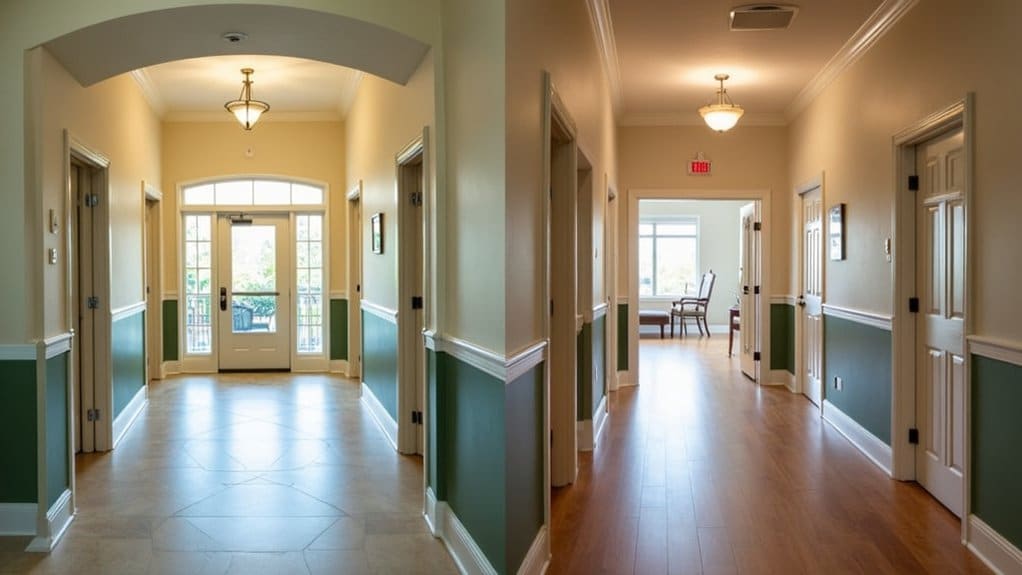
Although both types of senior living communities prioritize resident safety, memory care facilities incorporate considerably more extensive security features and specialized environmental designs than assisted living communities. Basic personal care assistance is readily available in assisted living while providing more independence to residents. You’ll find memory care environments specifically designed to prevent exit-seeking behaviors through locked entrances, delayed egress systems, and enclosed outdoor spaces. While assisted living promotes independence with apartment-style living, memory care reduces confusion through color-coded hallways, simplified layouts, and visual cues. The monitoring systems in memory care are more thorough, featuring remote cameras and motion sensors for enhanced resident protection. Environmental design elements include rounded corners, anti-slip flooring, and hazard reduction measures. Memory care also incorporates sensory support spaces with calming colors and textures to help manage emotional distress, creating a secure yet dignified living environment. The difference in design reflects the significantly higher caregiver-to-resident ratio in memory care facilities, allowing staff to better utilize these safety features for resident protection. The intentional elimination of dark-colored carpets helps prevent spatial disorientation and reduces fall risks for memory care residents.
Daily Activities and Therapeutic Programming
Since daily routines form the foundation of senior care, you’ll find distinct differences in how assisted living and memory care communities structure their activities and therapeutic programs. While both settings support activities of daily living, memory care offers more intensive supervision and specialized therapies tailored to cognitive needs. Residents with memory conditions require 24/7 monitoring by professional staff. Memory care communities provide structured routines for cognitive and social support. Knowing the differences between memory care and assisted living helps families choose the right care.
- Memory care provides structured daily routines with set times for meals, activities, and rest to reduce anxiety and enhance familiarity. Assisted living communities create vibrant environments through organized outings and social events for more active seniors. Staff must ensure proper access restrictions are in place to maintain resident safety during activities.
- You’ll find personalized care plans that include cognitive engagement through music therapy, art sessions, and sensory stimulation
- Social interaction happens in smaller, staff-facilitated groups designed for residents’ shorter attention spans
- Staff members receive specialized training in dementia care and maintain higher caregiver-to-resident ratios to guarantee emotional well-being and proper support during activities
Understanding the Cost and Financial Considerations

Every family approaching senior care decisions needs to understand the substantial cost differences between memory care and assisted living communities. The median monthly cost for assisted living averages $4,000-$6,000, while memory care typically runs $6,450-$7,292. You’ll find these differences stem from specialized services provided in memory care, including higher staff ratios and advanced safety features. Memory care communities provide 24/7 supervision to ensure resident safety and support. These costs are projected to see a 20% increase by 2025 due to ongoing economic pressures. Residents receive cognitive therapy and enrichment activities designed specifically for memory support needs.
| Cost Factor | Assisted Living | Memory Care |
|---|---|---|
| Monthly Base Rate | $4,000-$6,000 | $6,450-$7,292 |
| Staff Ratio | Lower | Higher |
| Safety Features | Basic | Advanced |
| Care Level | Standard | Specialized |
| Therapy Programs | Limited | Extensive |
When planning financially, consider private pay options, long-term care insurance, and potential Medicaid coverage. Working with a financial planner can help you navigate pricing structures and identify available financial assistance programs for your specific situation.
Frequently Asked Questions
How Long Does the Transition Process Take Between Assisted Living and Memory Care?
The shift between assisted living and memory care can take anywhere from a few days to several months. If you’re facing urgent safety concerns, the move might happen quickly. You’ll need time for initial assessments, care planning, and completing paperwork. The adjustment period typically spans several weeks as your loved one adapts to new surroundings. Having both services in the same community can make the shift smoother.
Can Couples Stay Together if Only One Spouse Needs Memory Care?
Yes, you can often keep couples together when one spouse needs memory care. Many communities offer flexible arrangements, like shared apartments or nearby units within the same campus. You’ll find that policies vary by facility – some prioritize keeping couples together, while others may recommend separate living spaces based on care needs. The arrangement you choose should balance your desire to stay together with ensuring both partners receive appropriate care.
What Happens if Memory Care Funds Run Out Mid-Stay?
If your loved one’s memory care funds run out mid-stay, you’ll need to act quickly to secure alternative funding. First, check the facility’s admission agreement for their policies. You can explore Medicaid coverage if the facility accepts it, though you’ll need to meet eligibility requirements. Other options include VA benefits, life insurance settlements, or family pooled resources. If these aren’t viable, you may need to think about shifting to a Medicaid-certified nursing home.
Are Residents Allowed to Bring Their Own Furniture and Decorations?
Yes, you can bring personal furniture and decorations to both settings. In assisted living, you’ll have more flexibility with your choices, mainly limited by space and basic safety requirements. Memory care has stricter guidelines – you’ll need furniture that’s durable, safe (with rounded edges), and easy to clean. It’s best to focus on meaningful items like family photos and familiar decor, but avoid cluttered or confusing patterns in memory care settings.
How Often Can Family Members Visit in Each Type of Facility?
You can typically visit your loved one seven days a week in both memory care and assisted living facilities, usually between 10:30 a.m. and 7 p.m. While assisted living offers more flexibility for drop-in visits, memory care may require advance scheduling to maintain resident routines. Most facilities allow up to two visitors at a time, with visits lasting about an hour. Don’t worry – you’ll be able to maintain regular contact with your family member.