





Memory care and assisted living serve distinct needs in senior care. While assisted living supports independence with basic daily assistance, memory care provides specialized 24/7 supervision for those with cognitive decline. You’ll find higher staff-to-resident ratios, secured environments, and dementia-specific programming in memory care facilities. The cost difference reflects these enhanced services, with memory care typically running $1,000-$2,500 more per month. Understanding these key distinctions will help you make an informed choice for your loved one’s care needs.
Understanding the Focus and Care Approach
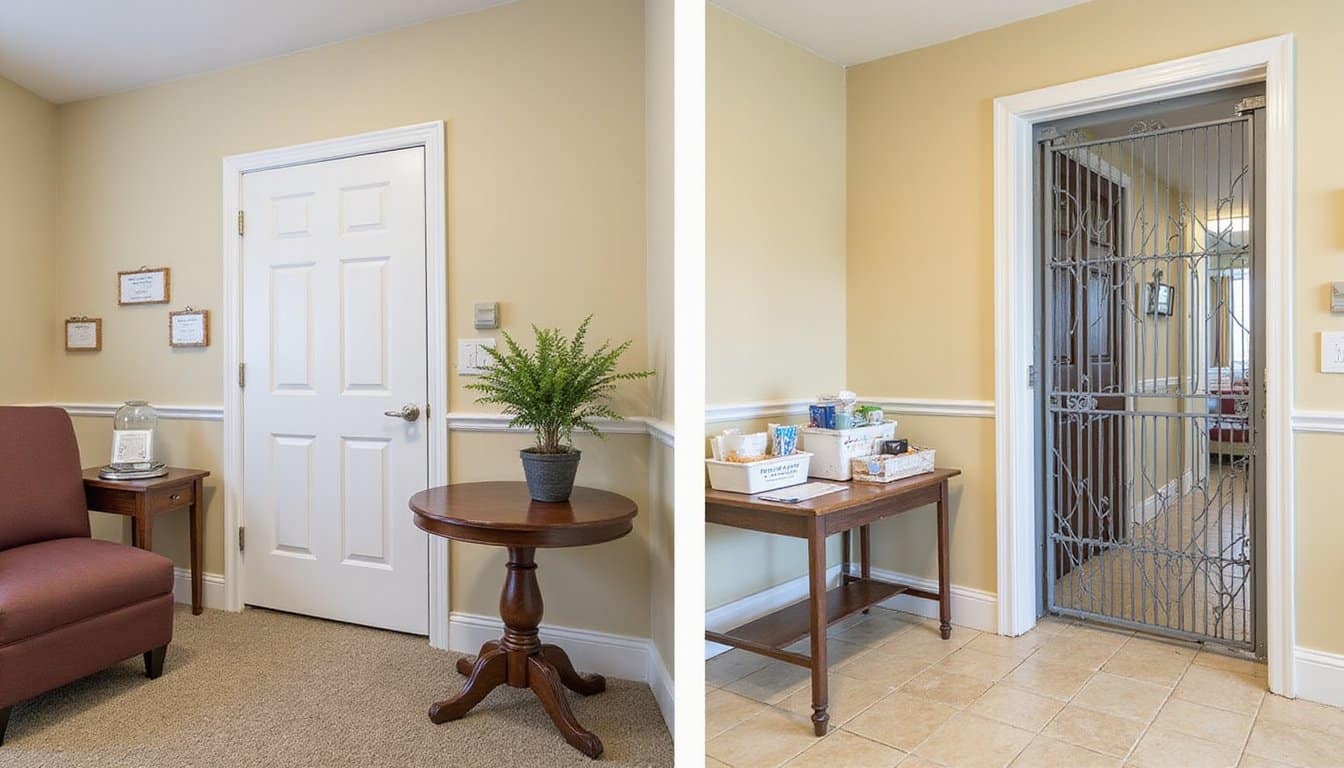
While both assisted living and memory care provide residential support for seniors, their fundamental approaches differ markedly in focus and delivery. Assisted living emphasizes independence, offering support for basic daily activities while allowing residents to make their own routine decisions. The memory care definition encompasses specialized support designed specifically for those with cognitive decline, including Alzheimer’s and other forms of dementia. 24/7 trained staff monitor and assist residents with cognitive impairments to ensure their safety and wellbeing. Secure entrances and monitoring systems are essential features of memory care facilities to prevent wandering.
You’ll find that memory care provides structured routines and enhanced supervision to address confusion and behavioral changes. Staff maintain consistent schedules, implement behavioral management strategies, and deliver cognitive health interventions. In contrast, assisted living residents typically need minimal to moderate assistance. Memory care facilities maintain lower staff-to-resident ratios to ensure residents receive individualized attention throughout the day. The key distinction lies in memory care’s thorough approach to cognitive support, featuring specialized programming and heightened supervision for those who can’t safely manage independently.
Staff Expertise and Support Levels
The distinct levels of staff expertise between memory care and assisted living facilities greatly influence care quality and resident outcomes. While both settings provide essential care, you’ll find memory care staff possess specialized training in dementia management, behavioral interventions, and cognitive support strategies. Research shows that personal care staff attitudes directly affect the quality of care residents receive.
| Memory Care Facility | Assisted Living Facility |
|---|---|
| Specialized dementia certifications | Basic elder care training |
| Lower staff-to-resident ratios | Higher staff-to-resident ratios |
| 24/7 specialized supervision | Basic daily assistance |
| Advanced behavioral management | General personal care support |
| Thorough medication oversight | Basic medication management |
At a memory care facility, staff maintain rigorous certification requirements and receive ongoing education in dementia care. Understanding the unique challenges of dementia enables staff to develop empathetic care strategies that significantly enhance residents’ quality of life. Memory care facilities maintain a higher caregiver ratio to ensure residents receive personalized attention and comprehensive support. They’re equipped to handle complex cognitive challenges and provide personalized interventions. In contrast, assisted living facility services staff focus on supporting basic daily activities while offering general oversight for more independent seniors.
Safety Features and Security Measures
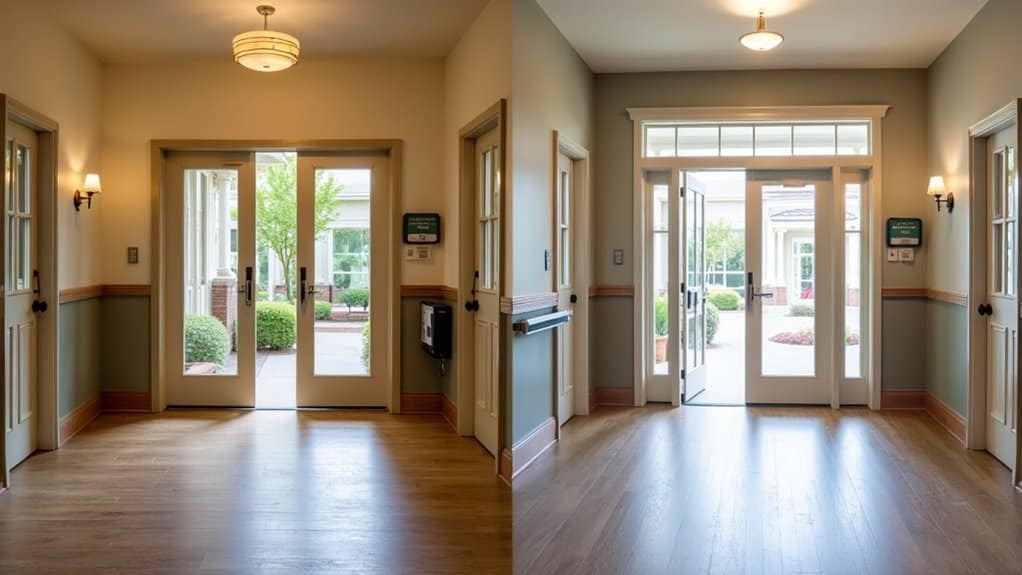
Safety features and security protocols mark a notable distinction between memory care and assisted living environments. When you’re exploring what a memory care facility offers, you’ll find thorough security systems designed specifically for residents with cognitive challenges. These specialized environments incorporate multiple layers of protection while maintaining a homelike atmosphere. Memory care communities provide structured routines that help residents feel secure and oriented throughout their daily activities.
Key security features in memory care include:
- Secured entry/exit points with advanced door alarms and monitoring systems
- Higher staff-to-resident ratios ensuring constant supervision
- Wander management technology including tracking devices
- Specialized environmental design with visual cues and simplified layouts
- Enclosed outdoor spaces with secure walking paths
While assisted living provides basic safety measures, memory care facilities offer enhanced security features that address the unique challenges of cognitive decline, greatly reducing wandering risks and ensuring resident safety around the clock. Remote cameras are frequently installed throughout memory care facilities to provide additional monitoring and security for residents requiring specialized attention. Memory care staff members receive extensive dementia training to effectively respond to and manage various behavioral challenges that may arise.
Daily Activities and Programming Options
Understanding daily activities and programming reveals significant differences between memory care and assisted living environments. In assisted living explained simply, you’ll find flexible schedules where residents choose their preferred activities, from exercise classes to cultural events. You’ll have freedom to participate in social clubs, outings, and entertainment based on your interests. Residents receive help with activities of daily living while maintaining their independence. Just like access restrictions for certain services, some activities may have limitations based on resident needs and abilities. In contrast, memory care environments focus on structured routines tailored to residents with cognitive impairments, providing specialized support for daily living activities. It’s crucial for families to recognize the signs parent needs memory care, such as difficulty with communication, disorientation, or memory loss that affects their safety and well-being.
Memory care, however, operates on highly structured routines with set times for meals, activities, and rest periods. You’ll experience specialized cognitive programming, including art therapy, music therapy, and reminiscence activities, all designed to maintain mental function. Activities are shorter, more supervised, and adapted to various stages of cognitive decline. Staff members provide constant support, helping residents navigate daily tasks while incorporating therapeutic elements into every interaction. The caregiver-to-resident ratio is intentionally higher to ensure residents receive personalized attention and proper oversight during all activities.
Cost Analysis and Financial Planning

When comparing memory care and assisted living costs, you’ll find notable differences in monthly expenses and included services. While assisted living focuses on daily assistance with basic needs, memory care provides specialized cognitive care and enhanced security features, resulting in higher monthly costs.
Key financial considerations to understand:
- Memory care averages $6,450 monthly, typically $1,000-$2,500 more than assisted living
- Location considerably impacts costs, ranging from $3,995 in Georgia to $11,490 in D.C.
- Private pay is most common, but Medicaid and VA benefits may help qualifying individuals
- Long-term care insurance can offset expenses, depending on your policy coverage
- Early financial planning is essential as costs typically increase 20% annually
These specialized facilities emphasize cognitive enrichment programs through dedicated memory care wings and daily activities. Most communities require entrance fees as a one-time payment before moving in. The comprehensive base rate includes 24-hour supervision and three daily meals for residents. Consider consulting a senior care specialist to develop a thorough financial strategy that accounts for your specific care needs and location preferences.
Frequently Asked Questions
Can Couples Live Together if One Needs Memory Care?
Yes, you can often stay together when one partner needs memory care. Many senior communities offer flexible arrangements like shared apartments, adjoining rooms, or two-bedroom units with common areas. You’ll find options that let couples live together while ensuring specialized care and safety. Even if full cohabitation isn’t possible, you can maintain closeness through daily visits and shared activities in the same community.
How Do You Know When It’s Time to Transition From Assisted Living?
You’ll know it’s time to shift from assisted living when you notice significant cognitive decline affecting daily activities, increased safety risks, or behavioral changes that require specialized care. Watch for signs like frequent confusion, wandering tendencies, difficulty with personal care, or the need for constant supervision. If you’re experiencing multiple incidents related to memory loss or your current care team can’t adequately meet your growing needs, it’s time to evaluate memory care.
What Percentage of Residents Eventually Move From Assisted Living to Memory Care?
While precise statistics aren’t widely available, you should know that changes from assisted living to memory care are common, especially for residents with diagnosed cognitive conditions. Research shows that up to 34.89% of residents may change to higher levels of care near end-of-life, though this includes all care changes, not just memory care. You’ll find that cognitive decline, safety concerns, and increased care needs typically drive these moves.
Do Medicare or Medicaid Cover Memory Care or Assisted Living Costs?
Medicare won’t cover room and board costs for memory care or assisted living, though it’ll pay for some medical services like assessments and skilled nursing. Medicaid offers more coverage but varies by state – it fully covers nursing home care for eligible individuals but typically won’t pay for assisted living. You might qualify for HCBS waivers through Medicaid to help cover some memory care services, but not room and board expenses.
Are Pets Allowed in Memory Care and Assisted Living Facilities?
Yes, many memory care and assisted living facilities allow pets, but policies vary by community. You’ll typically find restrictions on pet size (usually under 50 pounds), species types, and behavior standards. You’ll need to provide vaccination records and establish a backup care plan for your pet. Some facilities only allow resident-owned pets, while others permit therapy or visiting animals. Service animals are always allowed under federal disability laws.