





When comparing costs between aging in place and care communities, you’ll need to weigh multiple factors. While staying home requires $2,400-$24,000 annually for maintenance plus $12,000-$16,000 for modifications, senior living communities bundle housing, amenities, and care into monthly fees ranging from $4,000-$10,000. Your choice depends on your current home condition, needed care level, and long-term financial outlook. Understanding these complex financial implications will help you make the best decision for your future.
Breaking Down the Real Costs of Aging at Home

While aging in place represents the preferred choice for most seniors, understanding the true financial implications requires a detailed examination of both immediate and long-term costs.
When you’re evaluating the cost of aging in place versus senior living communities, you’ll need to account for recurring expenses that can range from $2,400 to $24,000 annually. These home maintenance costs include utilities, property taxes, and essential repairs. You’ll also want to ponder one-time home modifications, averaging $12,000 to $16,000, to guarantee your space meets your evolving needs. The cost of living at home extends beyond basic expenses, potentially including home health services and care costs as your requirements change. While staying at home offers independence, it’s pivotal to compare these expenses against the monthly cost of assisted living to make an informed decision.
Understanding Senior Living Community Expenses
Moving from home-based costs, let’s examine the financial structure of senior living communities. Your monthly fee typically bundles housing, amenities, and essential care services into one predictable payment. These continuing care retirement communities offer various levels of care, from independent living to assisted living and memory care, adapting to your changing needs.
- Monthly costs vary based on your chosen accommodations, location, and required care services
- Your fee includes maintenance, utilities, housekeeping, and property upkeep expenses you’d normally handle separately at home
- Senior living communities provide built-in social activities, fitness programs, and transportation services
- The cost of care adjusts as you move between different levels of support, ensuring you receive appropriate assistance without relocating
These extensive offerings often provide better value than managing multiple separate expenses while aging in place.
The Hidden Financial Impact of Home Modifications
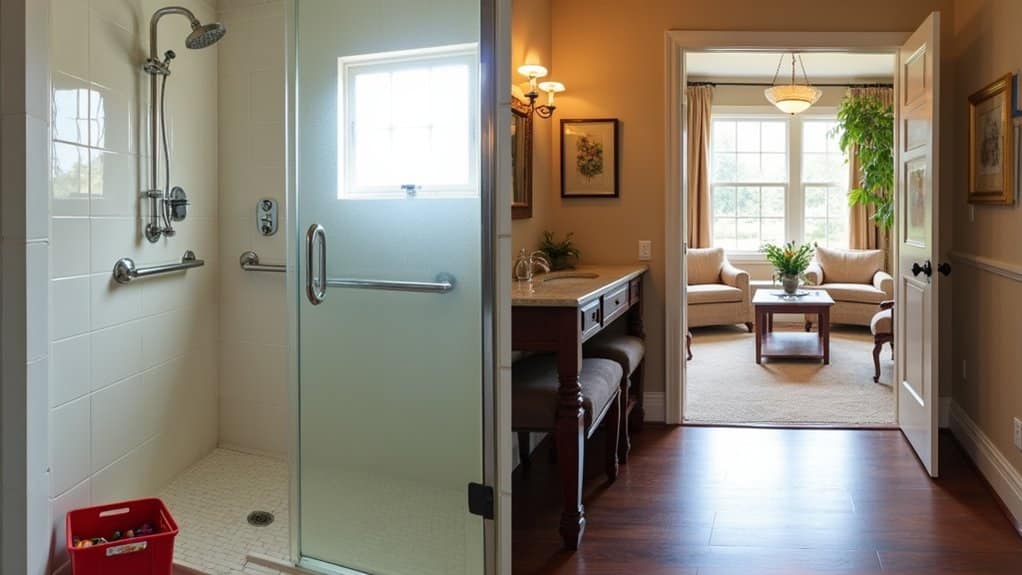
Before you decide to age in place, it’s indispensable to understand the substantial costs of modifying your home for safety and accessibility. You’ll likely need to invest between $12,000 and $16,000 for a single-story residence to accommodate your changing needs.
While family caregiving can help reduce professional care expenses, you’ll still need to address necessary home modifications. Several financing options can help you manage these costs, including home equity loans, reverse mortgages, government loans/grants, and home renovation loans. To make informed decisions about these modifications, consider consulting a Certified Aging in Place Specialist who can evaluate your specific needs and recommend appropriate changes. They’ll help you understand which modifications are pivotal for your situation and guarantee you’re making cost-effective choices that support your long-term independence and safety.
Monthly Service Fees and Care Packages Compared
Understanding the true cost differences between aging in place and senior living communities requires a detailed comparison of monthly service fees and care packages. When you’re evaluating your options, it’s vital to consider how costs vary based on your specific care needs and living preferences.
- Senior living communities often bundle services like meals, transportation, and healthcare into one monthly fee, while aging in place means you’ll manage these expenses separately.
- Assisted living costs typically include a base rate plus additional fees for enhanced care, whereas in-home care expenses can be customized but may escalate quickly.
- Memory care units provide specialized support at higher rates than standard assisted living but might be more cost-effective than in-home dementia care.
- Continuing Care Retirement Communities offer all-encompassing care packages with varying entrance fees and monthly costs based on your level of care.
Long-term Financial Planning for Housing Decisions

Beyond comparing monthly fees and care packages, successful long-term financial planning requires a thorough analysis of your housing options and their future implications.
When planning for aging in place, you’ll need to budget for home modifications ($12,000-$16,000) and recurring expenses like food, utilities, and maintenance ($2,400-$24,000 annually). Consider financing options such as home renovation loans for necessary modifications. If you’re exploring assisted living, prepare for monthly costs ranging from $4,000 to $10,000, plus moving expenses. Continuing Care Retirement Communities offer inclusive solutions but require careful financial planning for entrance fees and monthly costs. You’ll want to evaluate how long-term care insurance benefits can integrate with your chosen housing option, potentially offsetting expenses and providing greater financial flexibility over time.
Frequently Asked Questions
Is a CCRC Better Than Aging in Place?
Whether a CCRC is better depends on your personal needs and preferences. You’ll find exhaustive independent living options and retirement community advantages in CCRCs, including on-site medical services, transportation services provided, and diverse dining options available. You’ll enjoy built-in social engagement opportunities through community activity schedules. While aging in place offers familiarity, CCRCs provide personal care assistance and structured activity program schedules that support your evolving needs and lifestyle preferences.
Why Are 55 and Older Communities Cheaper?
You’ll find 55 and older communities cheaper due to their shared cost structure and all-inclusive care packages. When you join these communities, you’re benefiting from cost-effective amenities and maintenance-free living that’s split among residents. The community features, from healthcare services to social engagement opportunities, become more affordable through group rates. You’ll also save through bundled services, flexible lifestyle options, and on-site security measures, making it a financially smart choice for your retirement years.
Is Assisted Living Cheaper Than Home Health Care?
Whether assisted living is cheaper than home health care depends on your specific situation. If you need around 44 hours of in-home nursing services weekly, you’ll likely find monthly assisted living fees more affordable. Home care costs can quickly add up, often exceeding $9,000 monthly when combining care and housing expenses. However, if you need minimal support or have VA benefits eligibility, Medicaid waivers, or long-term care insurance options, aging at home might be more cost-effective.
Why Are Senior Living Communities so Expensive?
You’ll find senior living communities are expensive due to multiple factors that guarantee quality care and comfort. They face significant staffing challenges requiring skilled healthcare professionals, plus high maintenance costs for facilities. The communities must cover extensive amenity expenses, including dining programs and transportation services. Real estate prices, regulatory requirements, specialized services, and technology integration also drive up costs. These expenses collectively contribute to the complete care environment you receive.