




Memory care staff should receive thorough clinical training in understanding different types of dementia, person-centered care approaches, and effective communication techniques. You’ll need expertise in managing challenging behaviors, implementing safety protocols, and documenting resident assessments. Critical areas include medication management, family support strategies, and crisis de-escalation methods. Don’t overlook the importance of self-care training to maintain staff wellbeing. These core competencies form the foundation for delivering high-quality memory care services.
Understanding Dementia and Cognitive Disorders
Working effectively in memory care requires a foundational understanding of dementia and other cognitive disorders that affect older adults. You’ll need to learn about diverse dementia types, including Alzheimer’s disease, vascular dementia, Lewy body dementia, and frontotemporal dementia. Each type presents unique symptoms and progression patterns that demand specific care approaches.
You must recognize how cognitive decline manifests differently in each resident, affecting their memory, reasoning, communication, and behavior. Understanding the brain changes associated with these conditions helps you anticipate and respond to residents’ needs more effectively. You’ll also need to distinguish between normal aging and pathological cognitive decline to provide appropriate interventions and support. This knowledge forms the cornerstone of delivering person-centered care in memory care settings.
Communication Techniques for Memory Care Residents
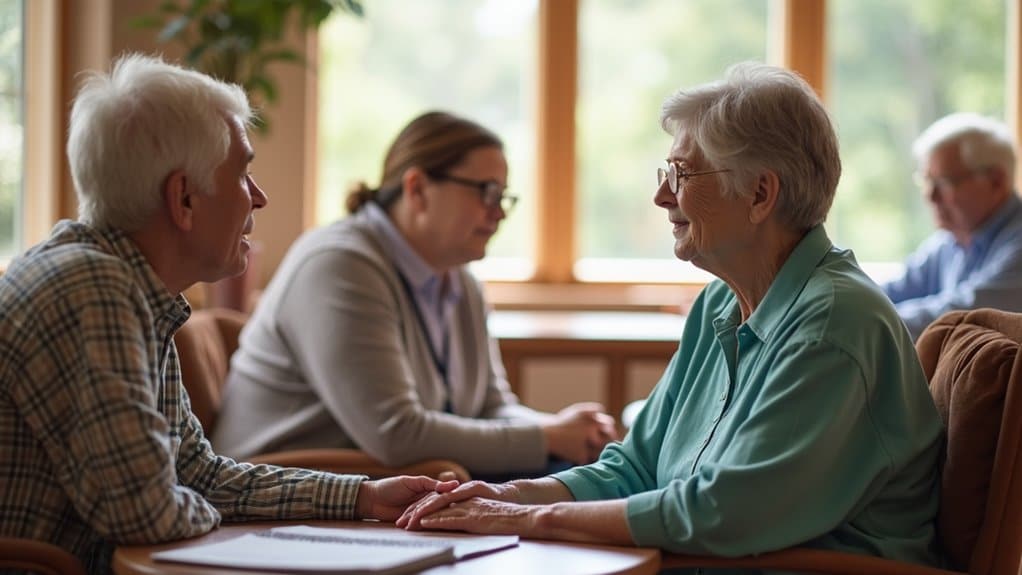
Active listening and non-verbal communication form the foundation of effective memory care interactions. You’ll need to maintain eye contact, lean in slightly, and use encouraging facial expressions while carefully observing your resident’s body language and emotional cues. When listening, you should focus completely on your resident’s message without interrupting, allowing them time to process and respond while showing genuine interest through appropriate head nods and gentle verbal acknowledgments.
Active Listening Skills
When caring for memory care residents, mastering active listening skills becomes essential for establishing trust and understanding their needs. You’ll need to practice mindful listening by maintaining eye contact, observing body language, and giving your full attention without interruption.
To demonstrate you’re actively engaged, position yourself at the resident’s eye level and acknowledge their statements with appropriate facial expressions and brief verbal responses. Empathy development comes from truly focusing on their message rather than planning your response. You’ll want to validate their emotions and experiences, even if their words seem confused or disconnected from reality.
Remember to watch for non-verbal cues that might indicate discomfort, anxiety, or unmet needs. Sometimes what isn’t said carries more meaning than spoken words.
Non-Verbal Communication Methods
Most successful interactions with memory care residents rely heavily on non-verbal communication techniques, particularly as cognitive decline progresses. You’ll need to maintain open, welcoming body language cues that convey warmth and safety. Keep your shoulders relaxed, face the resident directly, and position yourself at or slightly below their eye level.
Your facial expressions should remain calm and pleasant, even when residents exhibit challenging behaviors. Avoid showing frustration or anxiety, as residents can quickly pick up on these emotional signals. Use gentle hand gestures when appropriate, and demonstrate what you’d like the resident to do rather than just explaining it verbally. Remember to observe the resident’s non-verbal signals as well their posture, expressions, and movements often communicate needs or emotions they can’t express in words.
Managing Challenging Behaviors and De-escalation
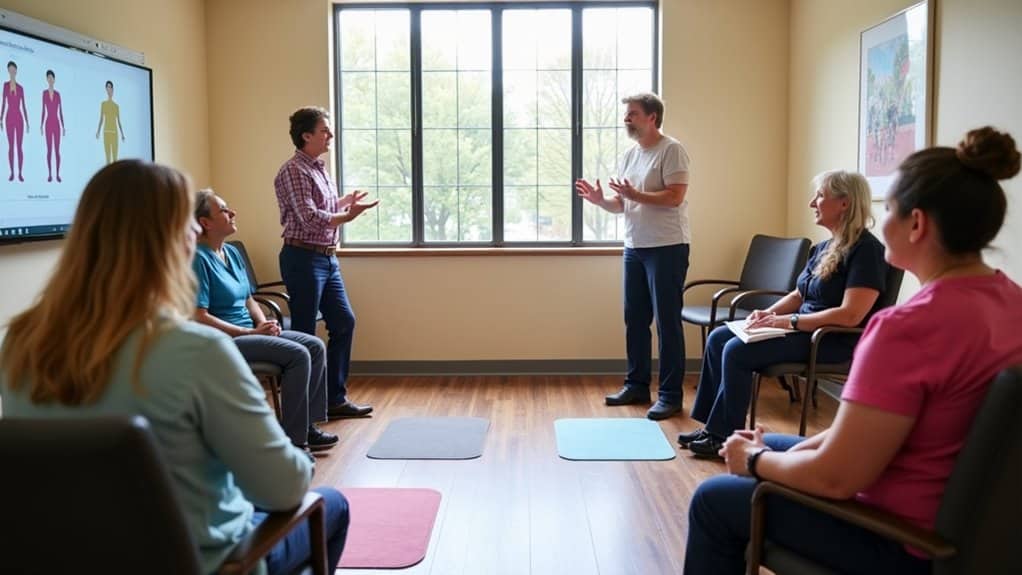
Successful management of challenging behaviors in memory care requires a systematic, evidence-based approach to de-escalation. You’ll need to identify behavior triggers and implement appropriate intervention strategies based on each resident’s unique needs and patterns.
| Behavior | Possible Trigger | Intervention Strategy |
|---|---|---|
| Agitation | Overstimulation | Reduce noise/activity |
| Wandering | Unmet needs | Address basic needs |
| Aggression | Fear/confusion | Provide reassurance |
When confronting challenging behaviors, you must remain calm and assess the situation before acting. Start by evaluating environmental factors that might be causing distress. Then, implement person-centered interventions that address the underlying cause rather than just the symptoms. Remember to document all incidents and successful de-escalation techniques to help establish effective, individualized care plans for future situations.
Safety Protocols and Emergency Response
Safety protocols and emergency response procedures form the foundation of quality memory care, requiring your mastery of fall prevention strategies, evacuation plans, and crisis management. You’ll need to implement proven fall prevention measures, including regular environmental assessments, proper lighting, and clear pathways throughout the facility. Your crisis de-escalation training must integrate seamlessly with emergency evacuation protocols to guarantee resident safety during both routine care and extraordinary circumstances.
Fall Prevention Protocols
Given that falls represent one of the leading causes of injury among memory care residents, implementing thorough fall prevention protocols is crucial for all staff members. You’ll need to conduct regular fall risk assessments and document any changes in residents’ mobility or balance. Install appropriate safety equipment, including bed rails, grab bars, and non-slip mats in bathrooms and common areas.
Monitor residents who display unsteady gait or confusion, and verify they’re using mobility aids correctly. You must keep walkways clear of obstacles and immediately clean up spills. When transferring residents, always follow proper body mechanics and use transfer equipment when necessary. Make certain to report and document any near-falls or incidents, as these can help identify patterns and prevent future accidents.
Emergency Evacuation Plans
Establishing thorough emergency evacuation plans requires careful attention to the unique challenges of memory care residents. You’ll need to develop protocols that account for varying levels of cognitive impairment and mobility limitations while ensuring staff can efficiently guide residents to safety.
Your evacuation routes must be clearly marked with visual cues that memory care residents can understand, such as large, simple directional signs and color-coded pathways. You should conduct regular emergency drills to familiarize both staff and residents with evacuation procedures, but modify these exercises to prevent causing unnecessary anxiety or confusion.
Train your staff to use specific techniques for calmly directing confused or resistant residents during emergencies. Each team member must know their assigned roles and responsibilities, including who’ll carry medication charts, who’ll lead residents, and who’ll perform headcounts at designated safe zones.
Crisis De-escalation Training
When behavioral crises occur in memory care settings, properly trained staff must respond swiftly and effectively to protect both residents and caregivers. You’ll need to guarantee your team masters essential de-escalation techniques, including recognizing early warning signs of agitation and implementing appropriate interventions before situations intensify.
Your crisis intervention training should focus on non-physical approaches, teaching staff to maintain a calm demeanor, use supportive body language, and employ therapeutic communication strategies. Staff must learn to identify triggers that may lead to aggressive behaviors and understand how to redirect residents using person-centered methods. You’ll want to implement regular practice scenarios so your team can confidently apply these skills during actual emergencies, reducing the need for physical interventions and maintaining a safe environment for everyone.
Person-Centered Care Approaches
Person-centered care stands as the cornerstone of effective memory care, shifting focus from task-oriented routines to individualized approaches that honor each resident’s unique needs, preferences, and life history.
To implement person-centered practices effectively, you’ll need to train your staff to recognize and respond to each resident’s distinct rhythms, routines, and communication styles. You’ll want them to learn how to gather detailed life histories, including residents’ past occupations, hobbies, and cultural backgrounds. This information helps create meaningful daily activities and interactions.
Staff must understand how to adapt individualized care strategies throughout the day, from morning routines to evening rituals. They should know how to document personal preferences, maintain dignity during care tasks, and incorporate familiar objects or music that provide comfort and orientation.
Activities and Engagement Strategies
Crafting engaging activities for memory care residents requires a thoughtful blend of therapeutic value and personal meaning. You’ll need to understand how to assess each resident’s cognitive abilities, interests, and personal history to develop appropriate therapeutic activities that promote both stimulation and comfort.
Focus on incorporating sensory engagement through varied modalities – touch, smell, sight, sound, and taste. You’ll learn to implement activities that trigger positive memories, such as music therapy, gardening, or reminiscence sessions using familiar objects. It’s crucial to recognize signs of overstimulation and know when to adjust activity levels.
You must also master techniques for encouraging participation while respecting individual preferences and limitations. This includes adapting activities for different stages of cognitive decline and maintaining flexibility in your approach to enhance resident engagement.
Family Support and Relationship Building
Building strong partnerships with residents’ families strengthens the quality of memory care and contributes to better outcomes. You’ll need to understand complex family dynamics and help establish sturdy support networks that benefit both residents and their loved ones.
| Family Support Strategies | Relationship Building Goals |
|---|---|
| Regular care updates | Build trust and transparency |
| Family education sessions | Increase care involvement |
| Support group facilitation | Create community connections |
| Crisis intervention | Manage expectations |
Your role includes helping families navigate the emotional challenges of memory loss while maintaining meaningful connections with their loved ones. You’ll need to facilitate open communication channels, provide resources for coping with grief and loss, and create opportunities for families to participate in care planning. This collaborative approach guarantees residents receive thorough support from both professional caregivers and family members.
Documentation and Assessment Skills
Your ability to maintain accurate documentation and assessment records directly impacts resident care quality in memory care settings. You’ll need to master both traditional progress notes and modern digital record-keeping systems to track changes in residents’ conditions, behaviors, and treatment responses. Professional documentation requires you to record detailed resident assessments, including cognitive status, functional abilities, and behavioral patterns, while adhering to your facility’s protocols and regulatory requirements.
Progress Notes Best Practices
Precise documentation in progress notes serves as the cornerstone of quality memory care and protects both residents and staff. When writing progress notes, you’ll need to follow specific documentation standards that guarantee accuracy and objectivity.
Record your observations using concrete, measurable terms rather than vague statements. Include time-stamped entries detailing behavioral changes, interventions used, and resident responses. You should document both routine care and significant events, noting any deviations from the resident’s baseline.
Always write factual, observable information avoid subjective interpretations or judgmental language. Include direct quotes when relevant, and document family communications and care team discussions. If you make an error, follow proper procedures for corrections: strike through with a single line, initial, and date the change.
Digital Record Keeping Systems
As memory care facilities modernize their documentation processes, digital record keeping systems have become the industry standard for tracking resident care. You’ll need thorough software training to effectively manage electronic health records while maintaining digital security protocols that protect sensitive resident information.
When implementing digital documentation systems, focus on these critical components:
- Learn to navigate the facility’s electronic health record platform, including modules for assessments, care plans, and progress notes
- Master security features like two-factor authentication, encrypted data transfer, and HIPAA-compliant communication channels
- Understand automated alerts and notification systems that flag significant changes in resident condition or scheduled care tasks
Regular system updates and continuing education guarantee you’re maximizing the benefits of digital documentation while maintaining resident data protection standards.
Resident Assessment Documentation
Thorough resident assessment documentation forms the cornerstone of quality memory care delivery. You’ll need to master resident observation techniques and assessment accuracy strategies to properly document changes in cognitive function, behavior patterns, and daily living activities.
| Assessment Component | Documentation Requirements |
|---|---|
| Cognitive Status | Record orientation levels, memory function, communication abilities |
| Behavioral Changes | Note triggers, frequency, intensity of behaviors |
| ADL Performance | Document assistance levels, independence markers |
| Social Engagement | Track participation, interaction quality |
| Physical Health | Monitor essential signs, weight, medication responses |
Document your observations immediately to guarantee accuracy and include specific examples of resident behaviors. You’ll want to focus on objective descriptions rather than subjective interpretations. Cross-reference your documentation with other staff members’ observations to maintain consistency in resident care records.
Medication Management and Health Monitoring
The safe administration of medications and consistent health monitoring are critical responsibilities for memory care staff. You’ll need extensive training in medication safety protocols and regular health assessment procedures to guarantee resident wellbeing. Understanding how memory impairment affects medication compliance is essential for providing effective care.
- Monitor and document crucial signs, behavioral changes, and physical symptoms while maintaining detailed medication administration records
- Learn to recognize adverse drug reactions, which can present differently in residents with cognitive decline
- Practice proper medication storage, disposal, and documentation procedures, including controlled substance protocols
Your ability to accurately track health indicators and manage medications directly impacts resident safety. Stay current with medication administration certifications and maintain strong communication with healthcare providers to ensure ideal medication management outcomes.
Self-Care and Stress Management for Staff
Working in memory care can take a significant emotional and physical toll, making effective self-care practices crucial for maintaining your professional performance and personal wellbeing.
You’ll need to develop specific self-care techniques that work for your schedule and lifestyle. Practice deep breathing exercises between shifts, maintain regular exercise routines, and verify you’re getting adequate sleep. Set clear boundaries between work and personal time to prevent burnout.
Implement stress management strategies such as mindfulness meditation, scheduling regular breaks during your shift, and participating in peer support groups. You should also utilize your facility’s employee assistance programs and seek professional counseling when needed. Keep in mind that managing your own wellbeing directly impacts the quality of care you provide to memory care residents.
Frequently Asked Questions
How Often Should Memory Care Staff Receive Refresher Training Courses?
You’ll need to guarantee your memory care staff receives refresher training at least quarterly, with some facilities opting for monthly sessions. Ongoing education should cover critical updates in dementia care protocols, safety procedures, and resident engagement techniques. It’s crucial to maintain consistent refresher training frequency throughout the year, supplemented by immediate updates when new care guidelines emerge. Track your staff’s participation and comprehension to guarantee effective knowledge retention.
What Are the Minimum Educational Requirements for Memory Care Staff Positions?
You’ll find that staff qualifications for memory care positions typically require a high school diploma or GED as the minimum educational background. Many facilities prefer candidates with a Certified Nursing Assistant (CNA) certification. While advanced degrees aren’t always mandatory for entry-level positions, you’ll need supplementary credentials for supervisory roles. Some states require specific memory care certifications, and you must complete mandated training hours before working directly with residents.
Are There Specific Certifications Required for Memory Care Facility Administrators?
You’ll find that memory care facility administrators must meet specific certification programs and training standards that vary by state. You’ll typically need to complete a state-approved administrator licensing program and pass a national exam. Many states require you to maintain your license through continuing education credits. Furthermore, you should obtain specialized dementia care certifications to demonstrate your expertise in managing memory care facilities and supervising staff effectively.
What Is the Typical Staff-To-Resident Ratio in Memory Care Facilities?
You’ll find that staff-to-resident ratios in memory care facilities typically range from 1:4 to 1:8 during day shifts, and 1:8 to 1:12 during overnight hours. These ratio impacts directly affect care quality and resident safety. While state regulations vary, staffing challenges often push facilities in the direction of the higher end of these ranges. You should note that factors like resident acuity levels, facility size, and specific care needs influence these staffing patterns considerably.
How Much Does Comprehensive Memory Care Staff Training Typically Cost?
You’ll find that extensive memory care staff training costs vary considerably. A cost analysis shows that basic training programs typically range from $500-$1,500 per staff member annually. For specialized dementia care certifications, you can expect to invest $2,000-$4,000 per employee. Online training platforms may offer more affordable options, starting at $200-$400 per person. These figures don’t include ongoing education requirements or potential staff turnover-related training expenses.