





Today’s technological advances offer powerful solutions to support your aging independence. You’ll find extensive smart home systems that monitor safety and automate daily tasks, wearable health devices that track crucial signs in real-time, and remote caregiving platforms that enable seamless communication with care providers. Advanced security innovations protect your environment, while virtual connection tools keep you socially engaged. These five key developments represent just the beginning of technology’s transformative impact on independent aging.
Smart Home Systems: The Digital Revolution in Senior Living
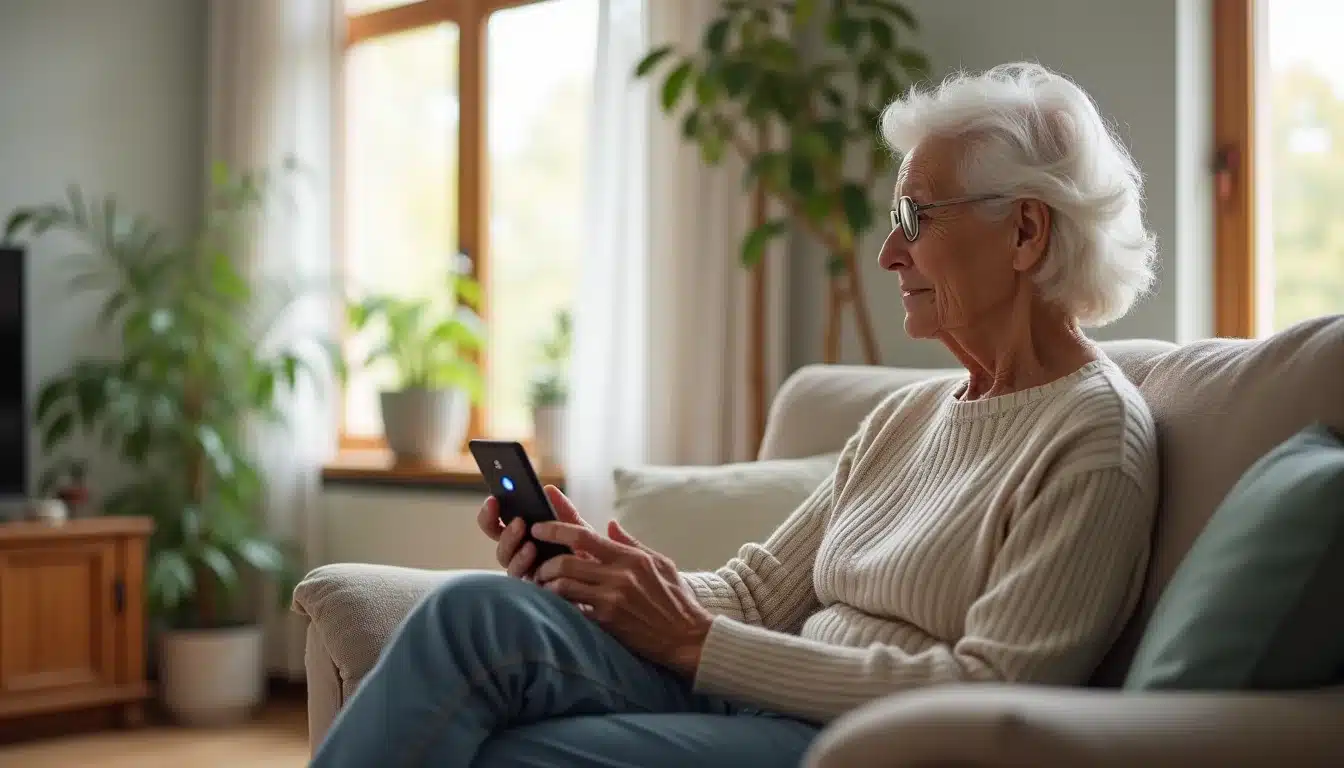
As digital technology continues to reshape modern living, smart home systems have emerged as a groundbreaking solution for seniors aging in place. You’ll find that integrated Home Monitoring Systems, including smart locks and Video Doorbell features, provide enhanced security while enabling family members to monitor safety remotely.
Smart home devices now seamlessly connect to create all-encompassing health monitoring solutions. These systems incorporate Wearable devices with Fall Detection capabilities and can instantly alert caregivers in emergencies. You can easily manage daily routines through voice-activated assistants that control Lighting and Temperature settings, reducing physical strain and promoting independence. These automated features adapt to your schedule, ensuring comfort while maintaining safety. The technology also strengthens community connections through digital signage and event scheduling, helping you stay engaged and informed.
Health Monitoring Technologies: Real-Time Wellness Tracking
Three key advances in health monitoring technologies have revolutionized real-time wellness tracking for seniors. Wearable health monitors now continuously track vital signs, activity levels, and sleep patterns, giving you instant insights into your daily wellness. Remote health monitoring systems alert caregivers to changes in your condition, enabling proactive interventions before issues escalate.
Predictive analytics, paired with health tracking devices and smartphone apps, puts you in control of your health management. These tools analyze your biometric data to detect potential problems early, while integrated sensors throughout your home monitor movement patterns and behavioral changes. You’ll benefit from an all-encompassing monitoring system that combines the convenience of wearable technology with the security of remote oversight, ensuring you maintain your independence while staying connected to your care team.
Remote Caregiving Platforms: Bridging the Distance Gap
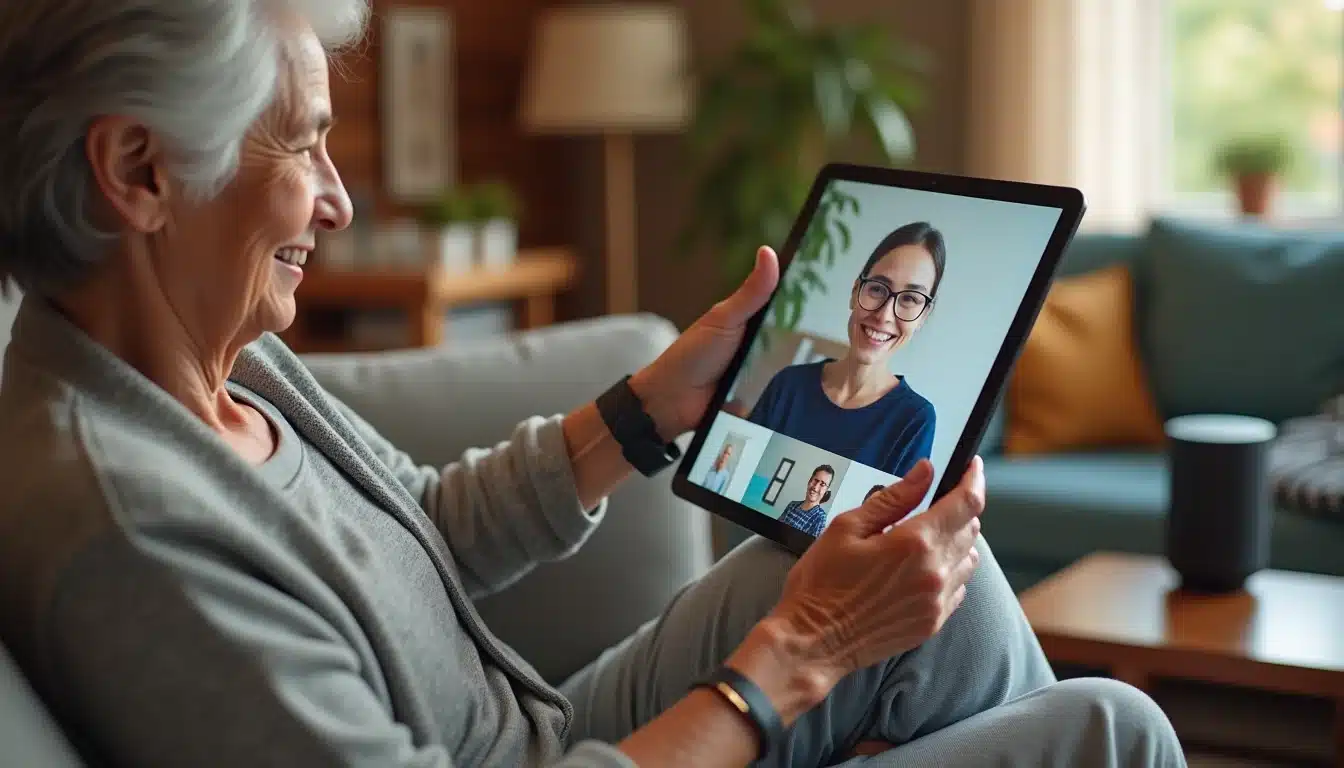
While physical distance often presents challenges in caregiving, remote caregiving platforms now offer extensive solutions that bridge the gap between seniors and their support networks. These smart technology solutions enhance home living by simplifying device management and enabling seamless communication through intuitive controls.
You’ll find these platforms particularly valuable for older adults living independently, as they integrate entertainment devices and health monitoring capabilities into one user-friendly system. The technology allows you to remotely support your loved ones while maintaining their autonomy. Through video calls and device connectivity, you can actively participate in their care routine without being physically present. These solutions prove especially beneficial when you’re monitoring your older family members’ well-being and ensuring they remain engaged with both technology and their support network.
Safety and Security Innovations: Peace of Mind at Home
Modern safety and security innovations have revolutionized home living for seniors, building upon remote caregiving capabilities with robust protective features. These integrated solutions offer thorough safety measures while promoting independent living and providing peace of mind for both seniors and caregivers.
- Smart home sensors detect emergency situations like falls or fires, instantly sending real-time alerts to caregivers through connected monitoring systems
- GPS tracking devices and video doorbells create a secure environment, preventing wandering and allowing safe visitor screening without physical door interaction
- Voice-activated assistants paired with automatic medication dispensers guarantee proper medication adherence while simplifying daily tasks
This technology-driven approach to safety creates a protective ecosystem that maintains seniors’ dignity while delivering essential monitoring and support services through unobtrusive, effective solutions.
Virtual Connection Tools: Staying Engaged and Connected
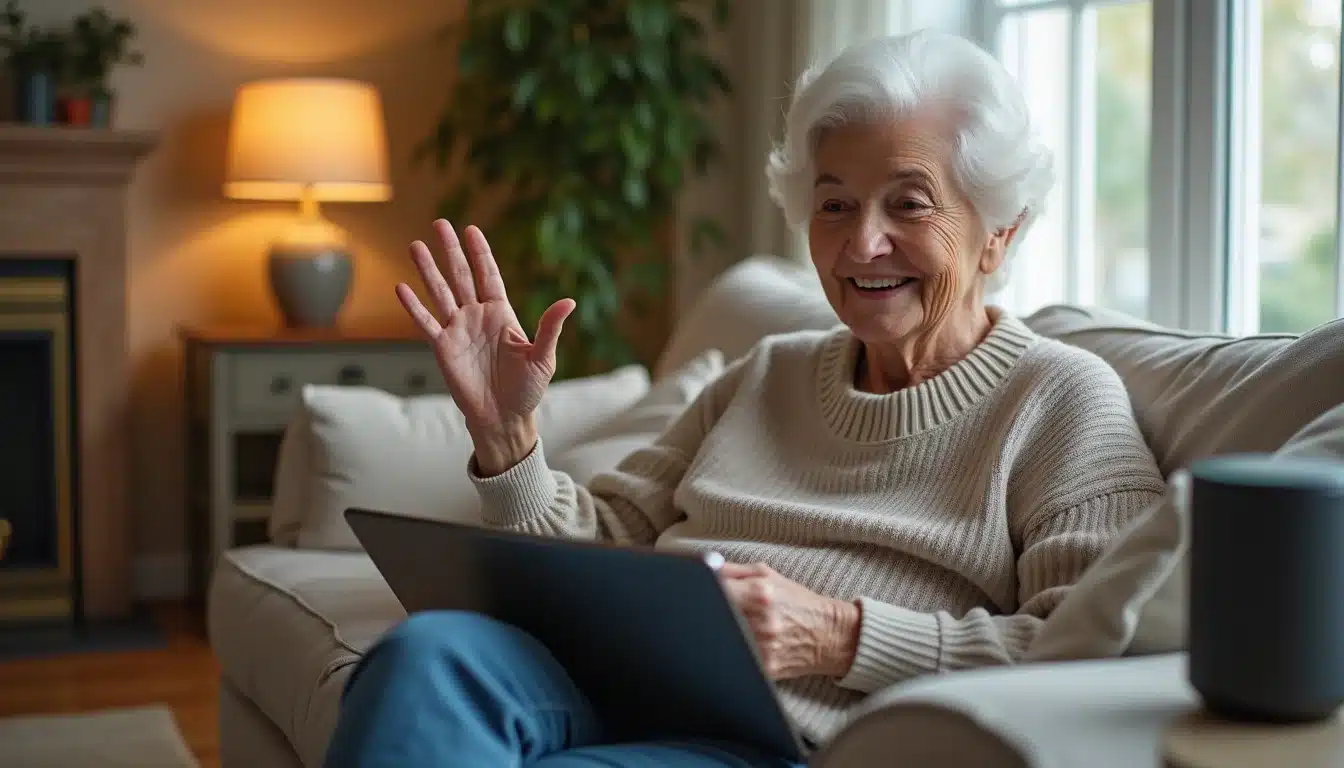
Digital connectivity tools have transformed how older adults maintain social relationships and combat isolation, offering accessible solutions for meaningful engagement regardless of physical limitations or distance. You’ll find video calling platforms like Skype and FaceTime enabling virtual connection with family, while senior-friendly social media apps facilitate photo sharing and messaging within online communities.
In senior living communities, tablet-based communication devices with simplified interfaces empower residents to initiate video chats independently. Voice-activated smart speakers provide hands-free access to calls, information, and entertainment, enhancing daily social interaction. Virtual reality technology creates immersive experiences that spark conversations and shared moments with loved ones. These virtual connection tools guarantee older adults stay connected through user-friendly interfaces and accessible features, maintaining critical social bonds despite physical separation.
Frequently Asked Questions
What Technology Is Used to Support Older People?
You’ll find numerous technologies designed to support your independence as you age. Voice-controlled devices and smart home sensors help you manage daily tasks, while wearable activity trackers monitor your health. You can use medication management apps to track prescriptions and telehealth services for remote medical care. Fall detection systems provide safety monitoring, while social engagement platforms keep you connected. Brain training games maintain cognitive function, and adaptive home automation simplifies household control.
What Technology Is Used for Aging in Place?
You’ll find thorough aging-in-place solutions through interconnected technologies. Smart home devices and voice-activated assistants help you control your environment effortlessly, while wearable health monitors and fall detection sensors track your well-being. You can access healthcare through telehealth platforms and manage medications with automated reminder systems. AI-powered chatbots provide 24/7 support, and virtual care communities keep you connected. Remote patient monitoring guarantees you’re safe while maintaining independence.
What Is the Biggest Benefit Technology Will Have on Ageing and Longevity?
You’ll find the most significant benefit of technology on aging and longevity is detailed health management through integrated solutions. Remote health monitoring, digital cognitive assessments, and telehealth consultations enable early intervention and preventive care. When combined with smart home automation, wearable activity trackers, and fall detection sensors, you’re empowered to maintain independence while staying safer. These technologies create a proactive ecosystem that extends your healthy years and enhances your quality of life.
What Are the Digital Technologies to Enable Aging in Place?
You’ll find numerous digital technologies to support aging in place. Voice-controlled home assistants and smart home monitoring systems provide hands-free control and safety oversight. You can access telehealth video consultations for remote medical care, while wearable activity trackers monitor your health. Medication management apps guarantee proper dosing, and virtual social communities keep you connected. In-home robotics, smart appliance automation, fall detection sensors, and location tracking devices offer additional independence and security.