





You’ll find extensive PTSD care options in retirement communities through integrated VA services and on-site mental health professionals who specialize in veteran trauma. Treatment includes traditional counseling, therapeutic activities, and telehealth services, with access to psychiatrists and psychologists for coordinated care plans. Support programs combine evidence-based therapies with innovative approaches like art therapy and peer mentorship. Understanding these all-encompassing services reveals how retirement communities effectively address veterans’ unique mental health needs.
Understanding PTSD Prevalence Among Senior Veterans

Countless senior veterans face the ongoing challenge of post-traumatic stress disorder (PTSD), with research showing that 8% of U.S. veterans experience lifetime PTSD while 1-3% of older veterans currently live with the condition. Data indicates that sudden death trauma represents the most commonly reported traumatic experience among veterans. Concerning brain function decline, veterans reporting executive dysfunction are more likely to experience worsening PTSD symptoms.
PTSD statistics reveal significant gender differences, with female veterans showing higher rates of both subthreshold (19.3%) and full PTSD (6.8%) compared to males. Age factors play an essential role, as more than 60% of veterans are 55 or older, and service eras impact prevalence rates, with Vietnam and Iraq/Afghanistan veterans experiencing higher incidence. Trauma exposure affects 92.7% of older veterans, with an average of 3.4 lifetime traumatic events. You’ll find that symptom management becomes more complex with age, as 9.9% of seniors face exacerbated symptoms decades later, often complicated by cognitive decline. Veterans who experience PTSD also show lower physical functioning compared to those without the condition, making comprehensive care especially important.
Key Mental Health Resources in Retirement Settings
As retirement communities increasingly recognize the unique mental health needs of senior veterans, extensive resources have emerged to address PTSD and related conditions. You’ll find integrated VA services that combine traditional counseling with innovative approaches like therapeutic gardening and peer counseling programs. These communities offer specialized geriatric mental health support, particularly for complex cases involving cognitive decline alongside PTSD symptoms. Regular activities help veterans maintain social connections while adjusting to civilian routines. If accessibility issues arise, veterans may need to retry connections to telehealth platforms during peak usage times.
On-site mental health professionals provide individual therapy, while structured group sessions address combat-related trauma. Initial screenings through Mental Health Triage teams ensure veterans receive properly matched care programs. You can access telehealth services for remote care, and crisis intervention protocols guarantee immediate response when needed. Support extends to families and caregivers, creating a thorough care network. Additionally, wellness activities, including mindfulness training and stress-reduction programs, complement clinical treatments to promote long-term emotional stability and recovery.
On-Site Treatment and Support Programs
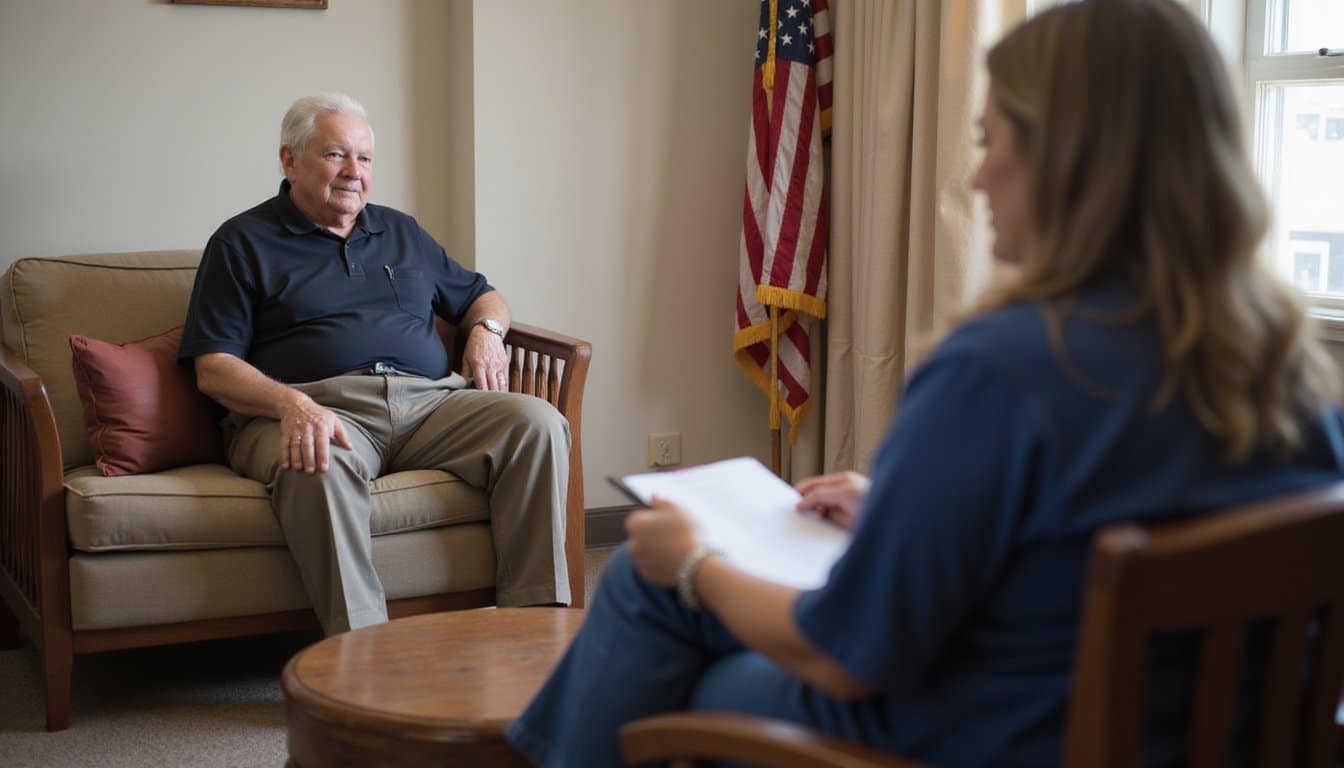
You’ll find dedicated mental health professionals integrated into retirement community staff who specialize in veteran trauma care and can provide immediate support when PTSD symptoms arise. Your access to on-site clinicians includes psychiatrists, psychologists, and counselors who coordinate thorough treatment plans while maintaining close communication with your primary care team. Following proven treatment models, staff incorporate art therapy sessions to promote holistic healing through creative expression. Group activities specifically designed for veterans offer structured opportunities to connect with peers who understand your experiences, including weekly support meetings and therapeutic workshops focused on managing PTSD symptoms. The facility’s calm environment design helps minimize potential triggers that could cause anxiety or distress. Traditional stigmas around mental health have made many senior veterans hesitant to seek help, but these communities provide private, judgment-free spaces for addressing emotional struggles.
Mental Health Staff Integration
Retirement communities specializing in veteran care have implemented extensive mental health integration programs that combine on-site professional staff with evidence-based treatment protocols. You’ll find thorough staff training initiatives that guarantee all team members can recognize and respond to PTSD symptoms effectively. The comprehensive approach ensures personalized care delivery for seniors while maintaining focus on their unique experiences and challenges as veterans. The facilities employ specialist PTSD therapists who understand the complexities of military service.
| Service Component | Staff Involvement | Outcome Measures |
|---|---|---|
| Clinical Care | Licensed Therapists & Psychiatrists | Symptom Reduction |
| Support Programs | Social Workers & Nurses | Social Functioning |
| Care Coordination | Activity Directors & Peer Mentors | Quality of Life |
Through care collaboration between mental health professionals, medical staff, and caregivers, you’ll receive personalized treatment plans that address your specific needs. The interdisciplinary approach includes regular assessment and modification of interventions, making sure you get ideal support for both PTSD and age-related concerns. These integrated services have demonstrated high satisfaction rates, with 95% of veterans recommending this thorough care model.
Veteran-Focused Group Activities
Senior veterans struggling with PTSD can access extensive group-based treatment through specialized on-site programs that combine therapeutic support with social engagement.
You’ll find structured environments designed to foster military camaraderie through veteran-only gatherings, PTSD support groups, and trauma-focused therapy sessions. These programs integrate recreational bonding opportunities like wellness classes and art therapy, helping you manage symptoms while connecting with peers who share similar experiences. A network of trained healthcare professionals specializes in identifying and addressing service-related trauma symptoms. Dedicated VA medical centers coordinate closely with retirement communities to ensure comprehensive memory care and PTSD treatment options.
On-site activities include military history discussions, Veterans Day celebrations, and commemorative events that reinforce your identity and service value. Local VFW and American Legion chapters often collaborate to provide additional support networks. Through these group-based interventions, you’ll gain access to peer feedback, problem-solving skill development, and emotional healing opportunities within a community that understands your unique experiences.
Specialized Care Through VA Partnerships
Your local VA mobile treatment teams can reach you directly in your retirement community through established partnerships that deliver evidence-based PTSD therapies. These specialized teams coordinate with your retirement facility to provide both in-person and virtual mental health services, including cognitive processing therapy and prolonged exposure treatment. Through VA’s coordinated specialty care programs, you’ll have access to extensive PTSD treatment that integrates medication management, trauma-focused therapies, and anxiety reduction techniques tailored for older veterans. Veterans who receive trauma-focused therapy show significantly better outcomes, with 53 out of 100 patients no longer meeting PTSD criteria after treatment. Since older veterans often face complex medical and mental health needs, the VA prioritizes team-based care to ensure comprehensive treatment and improved patient engagement. Emergency mental health services are available at all hours through VA medical centers for veterans experiencing crisis situations.
VA Mobile Treatment Teams
VA Mobile Treatment Teams represent a pivotal advancement in delivering specialized PTSD care to veterans through multidisciplinary crisis response units. Through mobile intervention strategies, these teams combine mental health professionals and law enforcement officers to provide rapid assistance when you’re experiencing mental health crises. Their crisis response training emphasizes de-escalation and thorough assessment techniques.
You’ll find these teams particularly valuable if you’re living in a retirement community, as they bridge critical access gaps through both in-person and virtual care options. The teams deliver confidential counseling services directly to your location, integrating TeleMental Health when needed. They’ve adapted their care models specifically for seniors, offering flexible session durations and frequencies. With 54% of VA mental health services now delivered virtually, you’re assured accessible care regardless of your location or mobility constraints.
Coordinated Specialty Care Access
Building upon mobile treatment initiatives, Coordinated Specialty Care Access expands PTSD treatment through structured partnerships between VA facilities and community providers. You’ll find enhanced telehealth accessibility through the Community Care Network (CCN) and Veterans Care Agreements (VCAs), guaranteeing thorough PTSD care delivery regardless of your location.
The VA’s coordinated specialty care system offers:
- Team-based care coordination with personalized treatment plans
- Streamlined screening and referral processes for rapid specialty care access
- Community outreach through partnerships with emergency physicians and specialized providers
- Virtual care options to overcome geographic and mobility barriers
This structured approach guarantees you’ll receive continuous monitoring and support throughout your PTSD treatment journey, with seamless information flow between VA teams and community providers managing your care needs.
Building Effective Support Networks for Veterans

While veterans with PTSD often face significant challenges in seeking help, effective support networks can dramatically improve their treatment outcomes and quality of life. Peer mentorship programs have proven particularly successful, with 23% of veterans engaging in eight or more sessions following outreach efforts. These connections help reduce isolation and build trust among participants.
You’ll find that community outreach initiatives, especially telephone-based peer support, provide accessible options if you’re hesitant about traditional mental health services. For female veterans and those concerned about stigma, peer mentors can help navigate barriers to care while connecting you with essential resources. VA statistics show that veterans with peer support are more likely to engage in mental health services, with 41.2% of PTSD-diagnosed veterans accessing VA care compared to 14.4% of non-PTSD-diagnosed veterans.
Managing PTSD Alongside Age-Related Health Issues
Beyond establishing support networks, senior veterans face distinct challenges when managing PTSD in their later years. Research shows that age-related health conditions can greatly impact PTSD symptoms and treatment effectiveness. You’ll need to address multiple health concerns simultaneously while managing trauma triggers.
Aging veterans with PTSD must navigate complex health challenges that can intensify symptoms and affect treatment success.
Key considerations for thorough care include:
- Monitoring cognitive decline, which can worsen PTSD symptoms and complicate treatment approaches
- Managing cardiovascular and metabolic conditions that frequently co-occur with PTSD
- Addressing increased risks of medication interactions due to multiple health conditions
- Adapting treatment strategies to accommodate physical limitations and sensory changes
Your healthcare team should integrate PTSD care with geriatric medicine, carefully considering how each health condition affects the others. This coordinated approach helps prevent symptom exacerbation while maintaining ideal physical and mental health throughout your retirement years.
Empowering Families and Caregivers
Since family members and caregivers play an essential role in supporting senior veterans with PTSD, the VA has established extensive programs to empower these vital support providers.
You’ll find thorough caregiver empowerment through the VA’s specialized training programs, including the six-week “Building Better Caregivers” online course. This education covers PTSD symptom management, trigger recognition, and home environment adaptation. For financial support, the Program of Comprehensive Assistance for Family Caregivers (PCAFC) offers compensation and respite care services.
Family support extends through peer networks, both online and in-person, where you can connect with others facing similar challenges. The VA Caregiver Support Program provides two levels of assistance: PGCSS and PCAFC. You’ll access these resources through the VA Caregiver Support Line and website, ensuring you receive appropriate guidance and benefits.
Advancing Mental Health Care for Aging Veterans
As mental health needs evolve with age, senior veterans face distinct challenges in managing PTSD symptoms, with prevalence rates reaching 19.1% in VA skilled nursing facilities compared to 5.4% among community-dwelling veterans.
Through innovative therapies and community outreach, mental health care for aging veterans continues advancing to address these unique needs:
Groundbreaking mental health treatments and community programs evolve to meet aging veterans’ complex psychological needs.
- Cognitive Behavioral Therapy within the first year of facility admission shows promising results in managing institutional PTSD symptoms
- Enhanced screening protocols now recognize subthreshold PTSD, affecting up to 25% of veterans with significant health impacts
- Executive function and memory assessments help identify late-life PTSD re-emergence, affecting roughly 10% of older veterans
- Specialized interventions target the dose-response relationship between combat exposure and PTSD persistence, particularly essential for heavy combat veterans where rates reach 16%
Frequently Asked Questions
How Long Does It Typically Take to See Improvement With PTSD Treatment?
You’ll typically see initial improvement within 2-4 weeks with intensive PTSD treatment, though treatment duration varies by approach. The improvement timeline shows that traditional weekly therapy takes 3-4 months for meaningful change. By one month post-treatment, you’re likely to see substantial progress, with about 52% of patients no longer meeting PTSD criteria. Long-term outcomes are promising, with success rates reaching 83% at six-year follow-up with Prolonged Exposure therapy.
What Are the Costs Associated With Specialized PTSD Care Services?
You’ll find specialized PTSD care services are markedly expensive, with annual direct healthcare costs averaging $25,684 per veteran. For a cost comparison, that’s 47% higher than veterans without PTSD. Various funding sources can help offset these expenses, including VA benefits and federal programs. However, you should expect additional costs of several thousand dollars monthly for specialized retirement community care that includes psychotherapy, medication management, and trauma-informed nursing support.
Can Veterans Switch Between VA and Non-VA PTSD Care Providers?
Yes, you can switch between VA and non-VA PTSD care providers, but you’ll need to meet specific veteran eligibility requirements first. You must be enrolled in VA healthcare and obtain pre-approval from your VA health team before seeking non-VA care. Care coordination between systems requires proper referrals and authorizations. You’ll only receive VA coverage for non-VA services if you follow these protocols and use approved providers within VA’s Community Care Network.
Do Retirement Communities Offer Emergency Mental Health Services for PTSD Episodes?
Yes, you’ll find emergency mental health services in many retirement communities, though availability varies by location. You can access 24/7 emergency response systems and on-site staff trained to handle mental health crises. If you’re experiencing an acute episode, these communities often maintain direct connections to VA crisis services and local hospitals. You’ll also have continuous access to the Veterans Crisis Line, regardless of your location or community’s resources.
Are PTSD Treatments Covered by Medicare or Veterans’ Insurance Plans?
Yes, you’ll find extensive coverage for PTSD treatments through both Medicare coverage and Veterans benefits. Medicare covers therapy, medications, and specialized treatments like TMS, while VA benefits and Tricare provide access to evidence-based therapies, including CBT and EMDR. You’re eligible for both inpatient and outpatient mental health services, medication management, and support groups. Most treatments require prior authorization, and you’ll need to meet specific criteria for coverage eligibility.