





Pet therapy can considerably enhance your emotional wellness as a senior through scientifically-proven benefits. When you interact with therapy animals, your brain releases oxytocin while reducing cortisol levels, naturally fighting depression and anxiety. You’ll experience improved social connections, reduced isolation, and meaningful companionship through structured animal interactions. For seniors with dementia, these sessions can decrease agitation and negative behaviors. The transformative impact of animal-assisted therapy continues to reshape modern senior care approaches.
Understanding the Emotional Impact of Animal Companionship
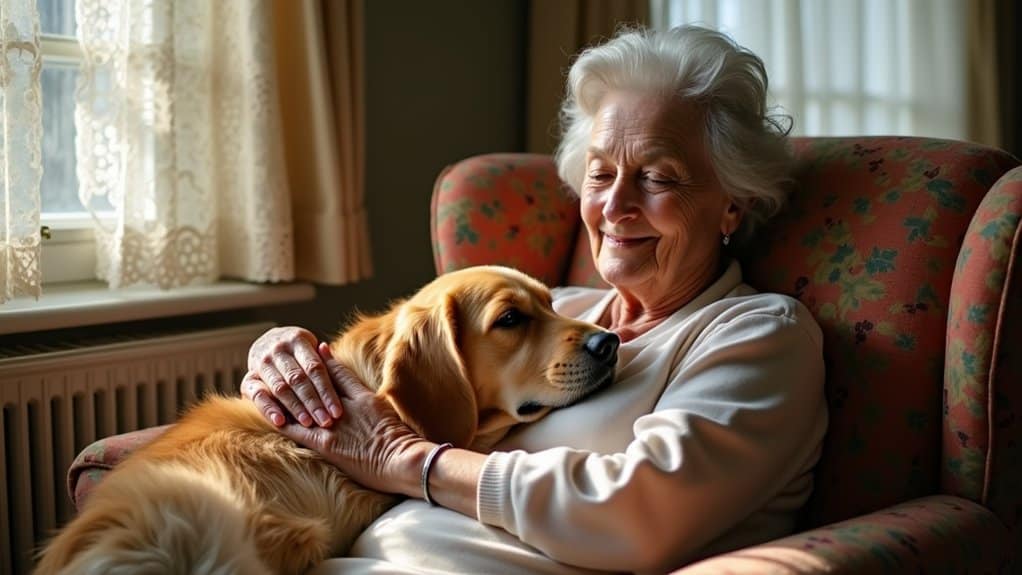
While the physical benefits of pet therapy are well-documented, the emotional impact of animal companionship on seniors proves particularly important. You’ll find that therapy animals provide essential emotional support, effectively reducing stress and alleviating symptoms of depression and loneliness in older adults.
The presence of companion animals creates meaningful social interaction opportunities, strengthening both mental health and family relationships through shared experiences. For seniors with dementia or Alzheimer’s, therapy animals can drastically decrease agitation and negative behaviors while promoting a sense of purpose. You’ll notice that regular interaction with pets helps establish emotional stability and consistent support, creating a nurturing environment that enhances overall well-being. This therapeutic connection offers a unique combination of unconditional companionship and structured engagement, addressing multiple aspects of senior emotional wellness.
The Science Behind Pet Therapy and Mental Health
The remarkable emotional benefits of pet therapy are backed by substantial scientific evidence and neurological research. When you interact with therapy animals, your brain releases oxytocin, a hormone that strengthens social bonds and promotes emotional well-being. For older adults, this neurochemical response proves particularly valuable in combating depression and loneliness.
Research demonstrates that pet therapy delivers measurable improvements in mental health through multiple pathways. The physical act of petting animals reduces stress by lowering cortisol levels, while regular social interaction with therapy animals helps prevent isolation in long-term care settings. You’ll find that these animal-assisted activities create opportunities for meaningful emotional support and connection. Studies consistently show that seniors who participate in pet therapy experience significant reductions in anxiety symptoms and enhanced social engagement, highlighting the scientifically-validated importance of animal companionship for elder wellness.
Building Social Connections Through Animal Interactions
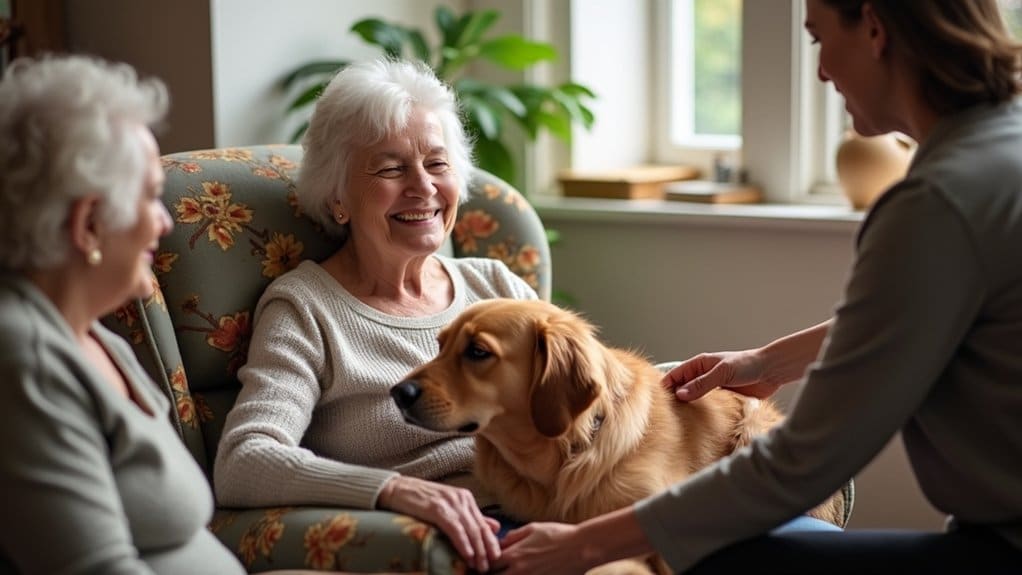
Since therapy animals naturally draw people together, they serve as powerful catalysts for social connection among seniors. When you spend time with therapy pets, you’ll notice how they create opportunities for social interaction and meaningful companionship among residents, family members, and healthcare staff.
Research shows that pet therapy effectively combats loneliness and depression by encouraging seniors to engage their social skills through shared experiences. You’ll find that these animal interactions provide both emotional support and a sense of purpose, helping you build lasting relationships within your community. The presence of therapy animals improves your overall quality of life by facilitating natural conversations and strengthening social bonds. As you interact with others around therapy pets, you’ll develop stronger connections that contribute to better physical and mental health outcomes.
Reducing Anxiety and Depression With Furry Friends
Research consistently demonstrates that regular interactions with therapy animals can dramatically reduce symptoms of anxiety and depression in seniors. When you spend time with therapy animals, your body naturally produces less cortisol, the primary stress hormone responsible for anxiety. This biological response helps restore emotional wellness and promotes a sense of calm.
You’ll find that therapy animals offer unconditional love and acceptance, effectively combating feelings of social isolation and loneliness that often affect older adults. Their presence creates a unique emotional connection that supports mental health without judgment or expectations. Studies confirm that seniors who regularly engage with therapy animals experience significant improvements in their mood and stress levels. This natural, non-pharmaceutical approach to emotional wellness has proven particularly effective in addressing depression among the elderly population.
Transforming Senior Care With Animal-Assisted Therapy
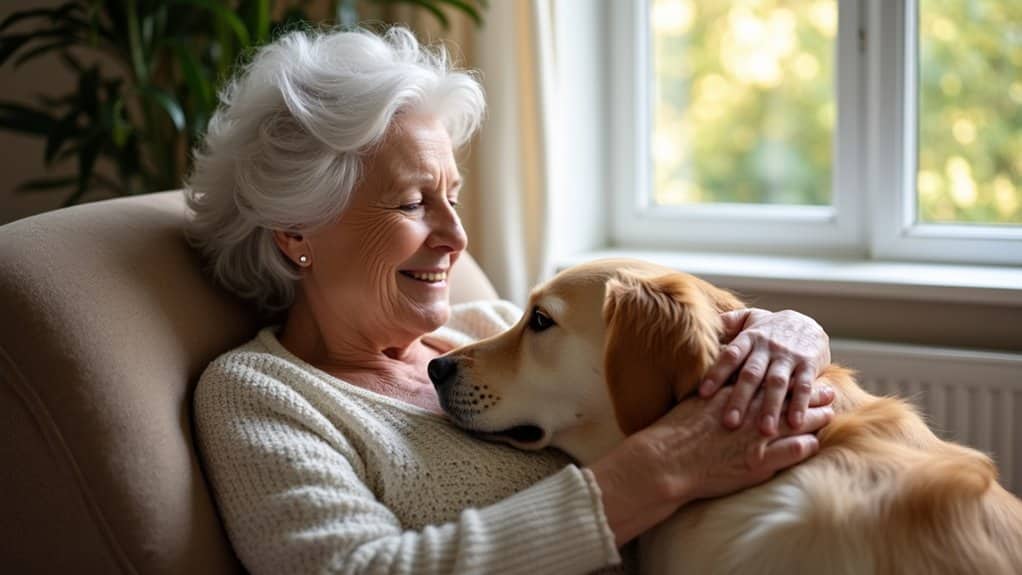
Building on these proven emotional benefits, animal-assisted therapy has revolutionized modern senior care facilities by introducing holistic wellness programs that extend far beyond basic companionship. You’ll find that therapy animals serve as catalysts for enhanced social interaction, creating opportunities for seniors to connect and build meaningful relationships within their communities.
Research shows that animal-assisted therapy can dramatically reduce loneliness, anxiety, and depression while promoting positive experiences that improve mental health. When you incorporate therapy animals into senior care settings, you’re not just providing a calming presence – you’re facilitating an extensive approach to senior emotional wellness. The animals’ soothing influence helps manage behaviors associated with cognitive impairments, while simultaneously strengthening family bonds through shared experiences. This transformation in care delivery demonstrates how animal-assisted therapy continues to reshape traditional senior care approaches.
Frequently Asked Questions
How Does Pet Therapy Affect Mental Wellbeing in the Elderly?
Pet therapy drastically enhances your mental well-being as you age. It reduces anxiety and alleviates depression while decreasing loneliness through meaningful animal interactions. You’ll experience improved social interaction as therapy animals foster companionship and encourage positive emotions. When you engage with therapy pets, it promotes mindfulness and boosts self-esteem. You’ll also benefit from increased physical activity during animal interactions, which enhances cognitive function and overall emotional health.
How Is Pet Therapy an Effective Strategy to Care for the Elderly?
You’ll find pet therapy is highly effective in elderly care through multiple evidence-based mechanisms. It creates increased socialization opportunities while fostering feelings of unconditional love. You’ll notice improved physical activity levels and enhanced cognitive stimulation when seniors interact with therapy animals. The strengthened human-animal bond helps reduce feelings of loneliness, decrease symptoms of depression, and alleviate stress and anxiety. This interaction boosts self-confidence and provides a strengthened sense of purpose.
How Can Pets Provide Emotional Support?
When you interact with pets, you’ll experience multiple emotional benefits through strengthening the human-animal bond. They’re exceptional at reducing loneliness and increasing social engagement by providing unconditional companionship. You’ll notice enhanced mood and happiness while alleviating depression and anxiety. Pets boost your self-esteem by giving you a sense of purpose, and they’ll help ease your passage to new environments. They’ll also promote physical activity and can help lower your blood pressure.
What Are the Emotional Benefits of Animal Assisted Therapy?
You’ll experience multiple emotional benefits through animal-assisted therapy, including increased social engagement and reduced loneliness as you bond with therapy animals. You can expect improved mood and decreased anxiety through calming physiological responses, like lowered blood pressure. The therapy will enhance your cognitive stimulation while facilitating reminiscence. As you strengthen human-animal bonds, you’ll develop greater independence and emotional stability through these therapeutic interactions.