




Groundbreaking dementia care technologies in 2025 will revolutionize how you’ll protect and support your loved ones. You’ll find AI-powered monitoring systems that prevent falls, smart home integrations that detect wandering, and wearable devices that track cognitive changes in real-time. Virtual reality platforms improve memory through immersive experiences, while personalized medication management guarantees proper dosing. These innovations represent just the beginning of tomorrow’s all-encompassing care solutions that’ll transform dementia support.
AI-Powered Monitoring and Fall Prevention Systems
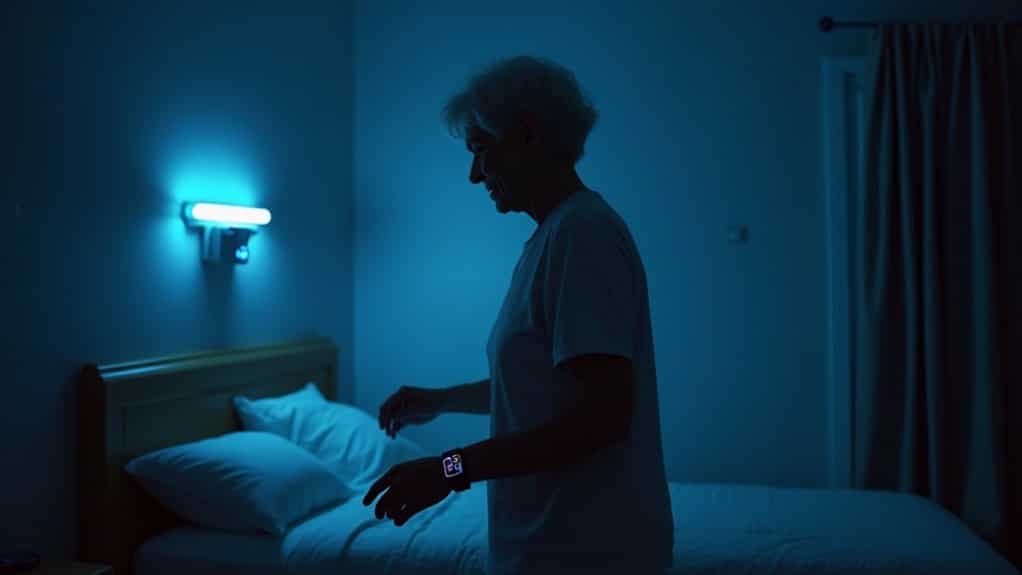
As artificial intelligence revolutionizes dementia care, sophisticated monitoring systems now provide 24/7 protection for seniors through a network of discreet sensors and smart cameras.
These AI-powered solutions use advanced analytics to detect subtle changes in movement patterns, alerting caregivers before falls occur. You’ll find that these systems learn your loved one’s routine, identifying potential risks like nighttime wandering or unusual gait changes that might indicate declining mobility.
The technology enables seamless caregiver collaboration through real-time alerts and detailed reports accessible via smartphone apps. When the system detects concerning behavior, it immediately notifies designated care team members, allowing for swift intervention. Machine learning algorithms continuously improve accuracy, adapting to each individual’s unique patterns while maintaining privacy through encrypted data transmission.
Smart Home Integration for Enhanced Safety
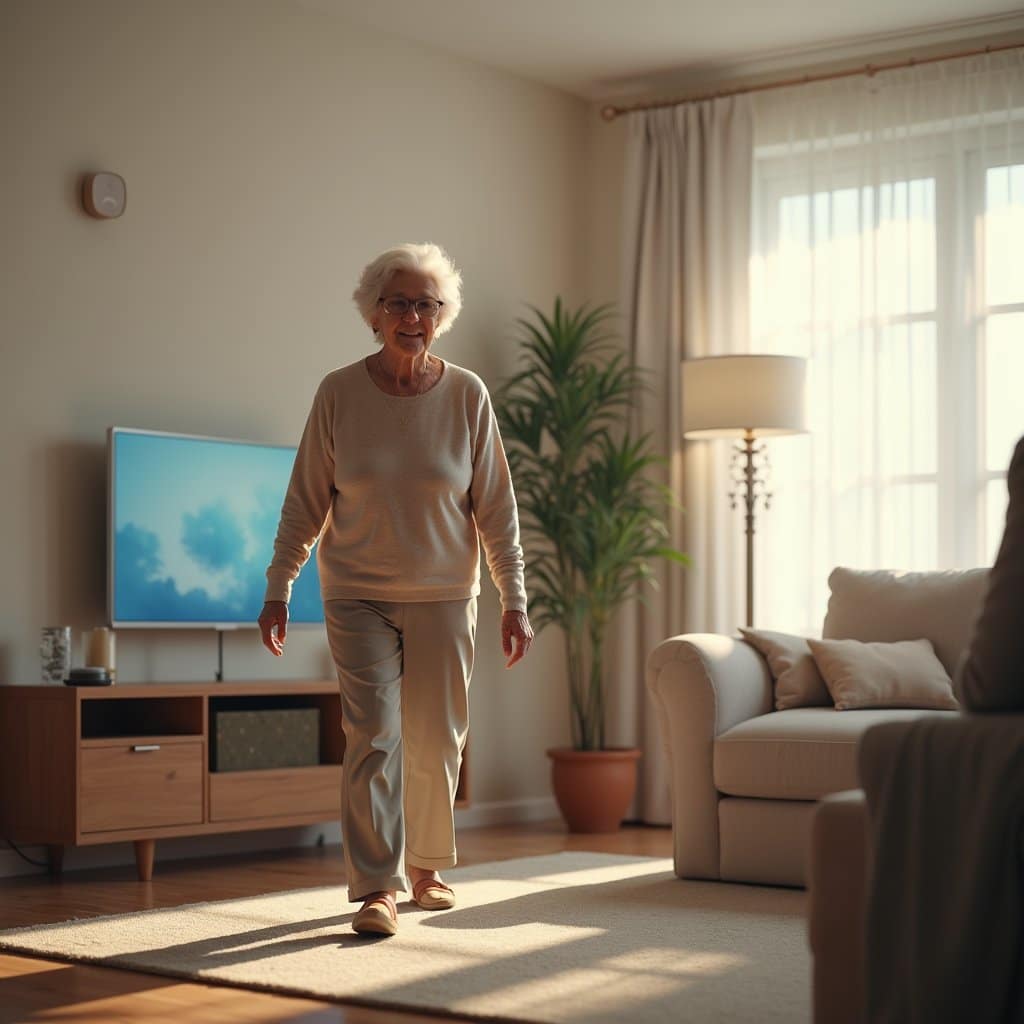
Modern smart home systems integrate automated fall detection sensors that’ll alert caregivers within seconds of detecting unusual movements or potential accidents. You’ll find these systems equipped with AI-powered cameras and pressure-sensitive flooring that can distinguish between normal activities and emergency situations. Smart door security features provide added protection by monitoring exits, automatically locking at scheduled times, and notifying caregivers when someone with dementia attempts to leave unsupervised.
Automated Fall Detection Systems
While traditional fall alert pendants require conscious activation by the user, automated fall detection systems integrated into smart homes represent a significant advancement in dementia care safety. These systems employ sophisticated sensor technology to continuously monitor movement patterns and instantly detect falls, triggering emergency response protocols without user intervention.
Modern fall detection solutions offer three key advantages:
- Multi-room coverage through strategically placed sensors that monitor activity 24/7
- AI-powered algorithms that distinguish between normal movements and actual falls, reducing false alarms
- Automatic notification systems that alert caregivers and emergency services with precise location data
You’ll find these systems particularly valuable for loved ones with advanced dementia who may be unable to call for help or use traditional alert devices. The technology provides peace of mind while maintaining independence and dignity.
Smart Door Security Features
Since wandering behaviors affect up to 60% of people with dementia, smart door security features serve as essential safeguards in connected homes. You’ll find that modern systems now offer smart lock integration that automatically secures entrances during high-risk periods, particularly during evening hours when wandering typically occurs.
These systems incorporate biometric access control, allowing you to customize entry permissions for family members and caregivers while maintaining security for your loved one with dementia. You can monitor door activity through your smartphone, receiving instant notifications when unusual patterns emerge. The technology also integrates with other home safety features, such as automated lighting and temperature control, creating a thorough security environment that helps prevent unauthorized exits while preserving dignity and independence.
Wearable Cognitive Assessment Devices
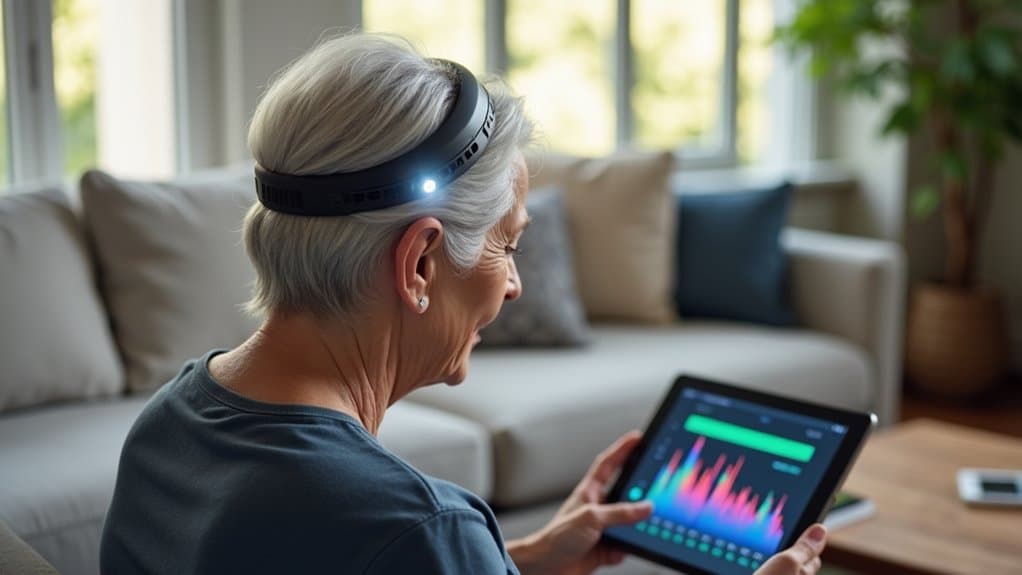
Wearable cognitive monitors you’ll wear like a watch or pendant can continuously assess your memory performance throughout daily activities. These sophisticated devices track behavioral patterns and cognitive responses, instantly alerting your healthcare team if concerning changes emerge. You’ll benefit from early detection of cognitive decline through the device’s clinical alert system, which enables rapid medical intervention when necessary.
Real-Time Memory Performance Tracking
How can we effectively monitor cognitive decline in real-time? Today’s memory assessment tools utilize advanced algorithms to track your cognitive performance throughout the day. These sophisticated systems analyze your daily interactions with cognitive training games and routine digital tasks, providing immediate feedback about your memory function.
Your real-time memory tracking can identify subtle changes through:
- Pattern recognition of daily task completion rates and accuracy
- Response time measurements during digital memory exercises
- Behavioral analysis of routine technology interactions
You’ll receive instant alerts when the system detects significant variations in your cognitive performance, allowing for timely interventions. This continuous monitoring helps healthcare providers adjust treatment plans promptly, rather than waiting for scheduled assessments. The technology integrates seamlessly with your existing digital devices, making it both practical and non-intrusive for daily use.
Clinical Alert Response Systems
Modern clinical alert systems revolutionize dementia care through sophisticated wearable devices that continuously assess your cognitive function. These smart devices monitor your daily activities, detect changes in behavior patterns, and instantly trigger clinical response protocols when necessary.
You’ll benefit from real-time alerts that notify both healthcare providers and family caregivers if there’s a significant decline in your cognitive performance or unusual behavior. The system’s advanced caregiver communication features guarantee immediate response during critical situations, such as wandering episodes or medication emergencies.
Your wearable device integrates seamlessly with existing healthcare systems, providing your care team with detailed reports and actionable insights. This technology empowers you to maintain independence while guaranteeing you receive prompt medical attention when needed, creating a strong safety net for your daily activities.
Virtual Reality Therapy Solutions
Virtual reality (VR) technology has emerged as a groundbreaking therapeutic tool for individuals living with dementia, offering immersive experiences that can stimulate cognitive function and improve emotional well-being. You’ll find these solutions particularly effective for providing safe, controlled environments that promote cognitive engagement while reducing anxiety and agitation.
Modern VR therapy platforms offer three key benefits:
- Memory stimulation through virtual visits to familiar places from one’s past
- Physical activation via gentle exercise programs in immersive environments
- Social connection through multi-user virtual spaces where you can interact with family members
You’ll appreciate how these systems adapt to individual needs, offering customized difficulty levels and monitoring capabilities. The technology’s non-pharmacological approach complements traditional treatments, making it an invaluable enhancement to extensive dementia care strategies.
GPS Tracking and Wandering Prevention Technology
Smart wearable alert systems now give you peace of mind by immediately notifying caregivers if your loved one with dementia wanders beyond designated safe zones. You’ll find these GPS-enabled devices available in different forms, from discrete pendant necklaces to comfortable wristbands that maintain constant connection with monitoring systems. Real-time location monitoring allows you to quickly locate and assist the person in your care through smartphone apps or professional monitoring services, greatly reducing the risks associated with wandering behavior.
Smart Wearable Alert Systems
Three critical innovations in wearable alert systems have transformed dementia care: GPS tracking devices, geo-fencing technology, and fall detection sensors. These smart fabric devices now integrate seamlessly into clothing and accessories, providing real-time health analytics while maintaining dignity for your loved ones.
Today’s advanced alert systems offer:
- Customizable boundary alerts that notify caregivers when patients exit safe zones
- Essential sign monitoring that detects irregular patterns and potential health emergencies
- Two-way communication features enabling instant contact between patients and caregivers
You’ll find these wearables particularly effective during nighttime wandering episodes, as they combine motion detection with precise location tracking. The latest models automatically adjust sensitivity based on individual movement patterns, reducing false alarms while ensuring reliable monitoring. These systems now integrate with smart home platforms, creating a thorough safety network for your family member.
Real-Time Location Monitoring
Modern GPS tracking systems have revolutionized wandering prevention by providing caregivers with instant location data accurate to within 10 feet. You’ll find these location based services integrated into lightweight pendants, watches, and even shoe insoles that your loved one with dementia can wear comfortably.
The latest devices offer tracking accuracy through multiple satellites and cellular networks, ensuring continuous monitoring even indoors. You can set up virtual safety zones, receiving immediate alerts when your family member moves beyond designated boundaries. Many systems now include fall detection and essential sign monitoring as complementary features.
For improved security, you’ll have access to user-friendly apps that display real-time movement patterns, historical location data, and customizable alert thresholds. This technology helps maintain independence while ensuring safety through discreet, reliable supervision.
Digital Memory Enhancement Applications
Digital memory aids have revolutionized how individuals with dementia maintain their daily independence and cognitive function. You’ll find personalized memory training exercises and cognitive game applications that adapt to your specific needs and progression level.
Modern digital tools empower dementia patients with adaptive memory exercises, helping preserve independence and mental sharpness.
These cutting-edge digital solutions offer:
- AI-powered reminder systems that learn your daily routines and provide context-aware prompts
- Interactive memory albums that combine photos, voice recordings, and family stories to strengthen emotional connections
- Virtual cognitive training programs that target specific memory domains while monitoring your progress
Personalized Medication Management Systems
While memory support tools help with daily tasks, managing multiple medications presents its own set of challenges for dementia patients. You’ll find smart pill dispensers now equipped with AI-driven scheduling that adapts to your loved one’s daily routines and cognitive patterns. These systems track medication adherence through sensor technology and automatically alert caregivers when doses are missed.
Advanced personalized dosage features account for individual factors like meal times, drug interactions, and symptom severity. You’ll appreciate how these devices can adjust reminder intensity based on response patterns and even connect with healthcare providers in real-time. The latest models integrate with smartphone apps, allowing you to monitor compliance remotely and receive detailed reports on medication effectiveness, helping you make informed decisions about treatment adjustments with your healthcare team.
Remote Care Monitoring Platforms
Advanced remote monitoring systems have revolutionized how families track their loved ones’ well-being from afar. Today’s telehealth platforms integrate seamlessly with home sensors and wearable devices, providing real-time health data and behavioral patterns to both caregivers and healthcare providers.
Modern technology empowers families to monitor and protect loved ones remotely through integrated health tracking and real-time data solutions.
You’ll find these monitoring solutions particularly valuable for their:
- 24/7 fall detection and emergency response capabilities
- AI-powered behavior analysis that identifies changes in daily routines
- Secure caregiver communication channels for coordinated care decisions
These platforms now feature user-friendly dashboards that you can access through smartphones or tablets, enabling quick responses to potential issues. They’ll alert you to changes in sleep patterns, medication adherence, or unusual movements, while maintaining your loved one’s privacy and dignity through encrypted data transmission.
Voice-Activated Assistance and Daily Routine Support
Voice-activated assistants serve as constant digital companions for individuals with dementia, offering intuitive support through simple verbal commands. You’ll find these systems equipped with advanced voice recognition technology that adapts to speech patterns and cognitive changes, making them increasingly reliable for daily use.
These user-friendly interfaces help structure routines by providing verbal reminders for medications, meals, and appointments. You can count on them to guide your loved ones through basic tasks like turning lights on/off, adjusting thermostats, or calling family members. The technology also monitors behavioral patterns and can alert caregivers to potential concerns.
For improved safety, these systems integrate with smart home devices, allowing voice control of locks, appliances, and security features. They’re particularly effective during evening hours when confusion often increases.
Adaptive Sensory Stimulation Technology
Through groundbreaking adaptive sensory technology, individuals with dementia can now experience personalized environmental stimulation that adjusts to their cognitive state and emotional needs. Smart sensors monitor behavioral patterns and automatically modify the surrounding environment to provide ideal sensory engagement levels.
Innovative adaptive technology creates personalized environments for dementia patients, using smart sensors to optimize sensory engagement based on individual needs.
You’ll find these systems offering three key benefits:
- Real-time adjustment of light intensity and color based on time of day and agitation levels
- Customized audio environments featuring familiar sounds and music that evolve with cognitive changes
- Tactile and aromatherapy elements that activate during specific care routines
This cognitive stimulation technology learns from each interaction, creating an increasingly refined experience that supports both calm and active states. You can monitor its effectiveness through a caregiver dashboard that tracks engagement levels and emotional responses over time.
Frequently Asked Questions
What Is the Average Cost of Implementing Dementia Care Technology?
You’ll find that dementia care technology costs vary greatly based on your needs. A basic home monitoring system starts at $500, while extensive solutions can reach $5,000+. Your cost breakdown might include monthly subscription fees ($30-100), initial hardware ($200-2,000), and installation ($100-500). Consider exploring technology funding through Medicare Advantage plans, grants, or local aging organizations to offset these expenses. Smart home integration typically adds $1,000-3,000 to your investment.
Are These Technologies Covered by Insurance or Medicare?
You’ll find that insurance coverage for dementia care technology varies considerably by provider and plan. Medicare benefits typically cover some medically necessary devices and monitoring systems, but you’ll need to check Part B coverage specifically. Many private insurers are now expanding their coverage for digital health solutions, but you’ll often need a doctor’s prescription and documented medical necessity. It’s best to contact your insurance provider directly to verify specific technology coverage.
How Long Does It Take Elderly Patients to Adapt to New Technology?
You’ll find that elderly patients typically need 2-4 weeks to become comfortable with new technology, though this varies by individual. The key is providing consistent support and hands-on practice sessions. Technology learning curves can be shortened when you incorporate user feedback and make adjustments based on their specific needs. You’ll see better adoption rates if you break down instructions into simple steps and offer regular encouragement during the learning process.
What Backup Systems Exist During Power Outages or Internet Failures?
You’ll find multiple layers of protection in modern caregiving technology. Your essential devices should include battery backup systems that provide 24-48 hours of continuous operation. Many smart devices now feature offline functionality, storing critical data locally until connectivity returns. You’ll want to maintain traditional backup methods like printed care schedules and emergency contact lists. It’s best to pair your high-tech solutions with low-tech alternatives for uninterrupted care during outages.
Can Multiple Family Members Access and Monitor These Systems Simultaneously?
You’ll find that most modern remote monitoring systems support multi-user access, allowing your entire family to stay connected and engaged in caregiving. You can set up different permission levels for family members, with each person receiving customized alerts and updates on their smartphones or computers. Some platforms even offer family chat features and care calendars, making it easier for you to coordinate care responsibilities and share observations about your loved one’s well-being.