





Music therapy can help you stay active in multiple ways as you grow older. When you engage with rhythm and melody, your brain creates natural connections between sound and movement, improving coordination and balance. You’ll strengthen muscles through gentle dancing, enhance memory with familiar songs, and build social bonds in group sessions. Regular musical activities also reduce stress and pain while enhancing emotional wellbeing. There’s so much more to uncover about this engaging therapeutic approach.
Understanding the Science Behind Music and Movement
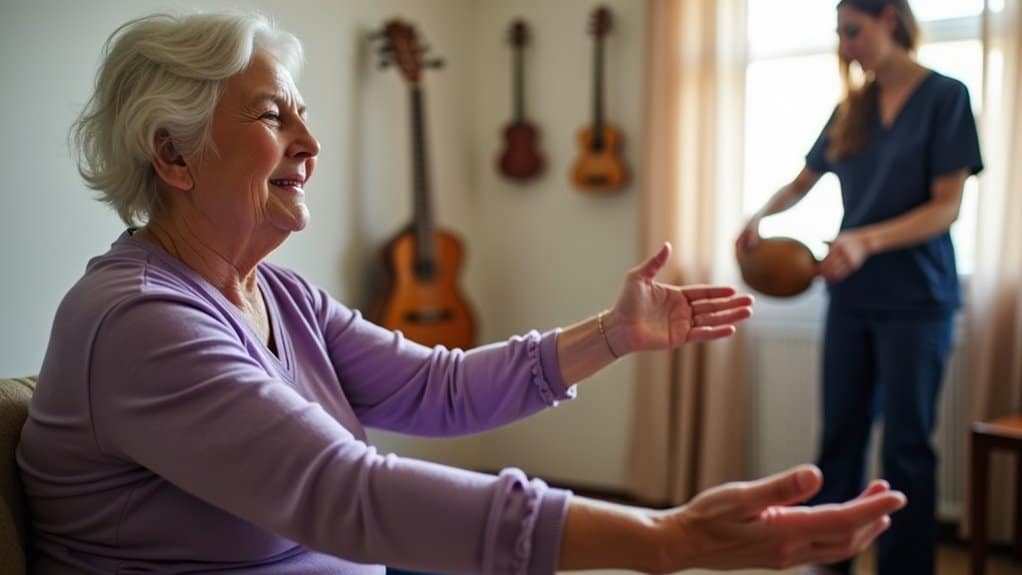
When music fills a room, it triggers a complex cascade of neurological and physiological responses in the human body. Your brain’s music cognition centers light up, creating strong connections between sound, emotion, and movement. These neurological pathways work together, prompting your body to naturally want to move with the rhythm.
You’ll find that different types of music activate specific areas of your brain, influencing everything from your heart rate to your muscle coordination. When you hear a familiar tune, your brain releases dopamine and serotonin, enhancing your mood and energy levels. This natural response explains why you might unconsciously tap your foot or nod your head to a beat. Understanding this connection between music and movement helps explain why music therapy is so effective for maintaining physical activity in your later years.
Physical Benefits of Rhythmic Activities for Seniors
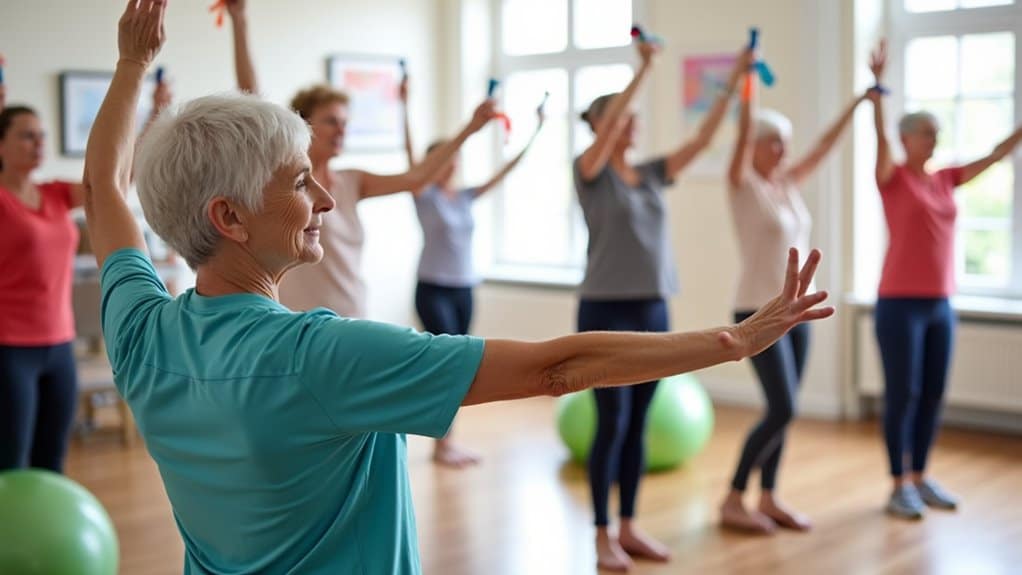
Engaging in rhythmic activities can markedly improve your balance and physical control through repeated movement patterns synchronized to music. You’ll find that following musical timing helps strengthen your hand-eye coordination and spatial awareness, making daily activities easier and safer. When you participate in dance-based exercises, you’re building muscle strength and endurance while enjoying the social aspects of movement to music.
Movement and Balance Control
Through rhythmic musical activities, older adults can greatly improve their physical coordination and balance control. When you move to music’s steady beat, you’re engaging multiple sensory systems that help strengthen your stability and spatial awareness. Simple rhythm games like stepping in time to music or following basic dance patterns can considerably improve your motor skills.
Balance exercises paired with musical accompaniment are particularly effective because they provide an enjoyable way to work on stability. You’ll find that moving to different tempos helps you develop better control over your movements while reducing the risk of falls. The predictable nature of musical rhythms allows your brain to anticipate and plan movements more effectively, leading to improved coordination in your daily activities.
Coordination Through Musical Timing
Physical coordination and musical timing are natural partners in wellness activities for older adults. When you engage in timing exercises set to musical rhythm, you’ll strengthen the essential connection between your brain and body movements. This synchronization helps maintain your daily functional abilities while making exercise more enjoyable.
- Simple clapping or tapping exercises with music improve your hand-eye coordination and reaction time
- Walking or marching to rhythmic beats improves your gait stability and spatial awareness
- Seated movements synchronized to music strengthen your core balance and posture control
- Dancing with musical accompaniment combines multiple coordination skills while reducing fall risk
These musical rhythm activities aren’t just beneficial they’re engaging ways to maintain your physical coordination. You’ll find that regular practice helps keep your movements fluid and purposeful throughout your daily activities.
Muscle Strength From Dancing
Dancing offers three key benefits for building muscle strength in older adults: improved core stability, enhanced leg power, and increased upper body tone. When you engage in different dance styles, you’ll naturally activate your abdominal and back muscles, which helps maintain better posture and balance during daily activities.
Dancing serves as one of the most enjoyable strength exercises you can do. As you move across the floor, you’re constantly pushing against gravity, which strengthens your quadriceps, calves, and hip muscles. You’ll also work your arms, shoulders, and upper back when following dance movements, especially in styles that incorporate arm patterns or partner work.
Whether you’re new to dancing or returning after years away, you’ll find it’s an effective way to build functional strength while having fun.
Social Connection Through Group Musical Sessions

While individual music therapy sessions offer valuable benefits, group musical activities create powerful opportunities for older adults to forge meaningful social connections. You’ll uncover how group dynamics naturally emerge when seniors gather to make music together, leading to lasting friendships and communal bonding.
- Share musical memories and stories with peers who understand your generation’s experiences
- Learn new instruments alongside others, creating an encouraging environment for skill development
- Participate in choir sessions that strengthen vocal abilities while fostering team spirit
- Engage in rhythm exercises that synchronize the group and create a sense of unity
These shared musical experiences help combat isolation and loneliness common challenges in later life. When you join group music sessions, you’re not just making melodies; you’re building a supportive community that improves your overall wellness.
Memory Enhancement and Cognitive Stimulation
Research consistently shows that engaging with music activates multiple regions of the brain simultaneously, making it a powerful tool for maintaining cognitive function in older adults. When you participate in music therapy sessions, you’ll experience how familiar songs can trigger memory recall of past events, people, and emotions.
You’ll find that learning new songs and musical patterns serves as effective cognitive exercises, helping keep your mind sharp and engaged. Music therapists often incorporate rhythm games, lyric memorization, and instrument playing to strengthen your mental abilities. These activities can help you maintain better focus, processing speed, and mental flexibility. Whether you’re singing along to old favorites or exploring new melodies, you’re giving your brain a thorough workout that supports long-term cognitive health and mental well-being.
Dance Therapy: A Musical Approach to Balance and Coordination
Through guided dance movements synchronized to music, you’ll uncover a natural way to improve your balance and coordination while staying active. You can start with simple swaying and stepping exercises that help strengthen your core muscles and elevate your spatial awareness. Dancing with others adds a valuable social dimension to your physical activity, making it both an enjoyable workout and an opportunity to connect with fellow seniors.
Moving to the Beat
As older adults face mobility challenges, dance therapy emerges as a powerful fusion of music and movement that can dramatically improve their balance and coordination.
When you engage in rhythmic improvisation, you’ll uncover how your body naturally responds to musical patterns. Through gentle movements synchronized to the beat, you’ll develop better body awareness and stability while having fun.
- Start with simple swaying and toe-tapping to familiar tunes you love
- Progress to arm movements that help improve upper body strength and flexibility
- Practice weight shifts from side to side to boost balance control
- investigate different tempos to challenge your coordination skills
You don’t need prior dance experience just a willingness to move and connect with the music. Let the rhythm guide your movements as you build confidence and stability.
Balance Through Guided Movement
While many traditional balance exercises can feel tedious and repetitive, guided movement with music transforms stability training into an engaging therapeutic experience. You’ll uncover how gentle swaying and stepping to guided rhythms can improve your coordination while reducing the risk of falls.
Through movement improvisation, you’re able to investigate your body’s natural range of motion at your own pace. As you respond to different musical elements, you’ll strengthen core muscles and boost spatial awareness. The combination of rhythm and movement creates neural pathways that help your brain better coordinate balance responses.
You don’t need dance experience to benefit simple movements like weight shifting and arm gestures can greatly improve your stability. These musical sessions provide a safe space to build confidence in your physical capabilities while enjoying the therapeutic properties of music.
Social Dancing Benefits Seniors
Social dancing offers three powerful benefits for seniors: improved physical coordination, improved cognitive function, and meaningful social connections. When you participate in dance activities, you’ll engage multiple muscle groups while following seniors’ rhythm patterns that challenge both mind and body.
- Learning new dance styles like waltz, swing, or salsa helps maintain mental sharpness and memory
- Moving to music in sync with others strengthens balance and spatial awareness
- Regular dance sessions can reduce feelings of isolation and depression
- Partner dancing creates opportunities for touch and human connection in a structured, comfortable environment
You don’t need prior dance experience to benefit many senior centers offer beginner-friendly classes customized to different mobility levels. Start with gentle movements and progress at your own pace while enjoying the music and companionship.
Therapeutic Drumming for Upper Body Strength
Recent studies have shown that therapeutic drumming offers remarkable physical benefits for older adults, particularly in maintaining and building upper body strength.
When you participate in drumming techniques, you’ll engage multiple muscle groups in your arms, shoulders, and core. The repetitive motions of drumming serve as effective upper body exercises, helping you maintain mobility and strength without the strain of traditional weightlifting. You’ll find that even simple drumming patterns can improve your grip strength, coordination, and posture.
You don’t need complex equipment to start a basic hand drum or even tapping on a table can provide these benefits. Whether you’re seated or standing, you can adapt drumming techniques to match your comfort level and gradually increase the intensity as your strength improves.
Emotional Wellbeing Through Musical Expression
As music flows through your mind and body, it creates powerful pathways for emotional expression and healing. When you engage with familiar melodies, musical nostalgia triggers positive memories and helps you process complex feelings in a safe, supportive environment.
- Singing or humming favorite songs releases endorphins, reducing stress and anxiety while elevating your mood
- Playing instruments provides a healthy outlet for emotional expression, helping you cope with life’s changes
- Listening to meaningful music from your past strengthens neural connections and emotional resilience
- Participating in group music activities creates social bonds and reduces feelings of isolation
You’ll find that regular musical engagement opens doors to emotional wellness, whether you’re dealing with grief, celebrating joy, or seeking inner peace. Music therapy provides a natural path to express yourself and find emotional balance.
Music’s Role in Pain Management and Stress Relief
Beyond emotional wellness, music’s therapeutic benefits extend into the physical domain of pain and stress management. You’ll find that listening to calming melodies can trigger your body’s natural pain relief responses while providing essential emotional support during challenging times.
When you engage with music through relaxation techniques and mindfulness practice, you’re activating multiple sensory stimulation pathways that help reduce discomfort. Whether you’re dealing with chronic pain or daily stress, music serves as an effective cognitive distraction, shifting your focus away from physical discomfort. You can improve these benefits by combining music with deep breathing exercises or gentle movement.
For ideal stress reduction and mood improvement, try selecting music that resonates with your personal preferences and current emotional state. This personalized approach helps enhance music’s therapeutic potential in your pain management routine.
Creating an Effective Music Therapy Program at Home
Setting up a personalized music therapy program at home doesn’t require complex equipment or professional training. You’ll need just a few basic items and a willingness to engage with music regularly. Creating a home playlist that reflects your musical preferences and emotional needs is an excellent starting point.
Music therapy can be simple and personal all you need is dedication, basic tools, and music that resonates with your heart.
- Choose simple musical instruments like hand drums, shakers, or bells to encourage active participation and movement
- Set aside dedicated times for music sessions, ideally 20-30 minutes daily
- Organize playlists by mood or activity relaxation, exercise, or memory stimulation
- Create a comfortable space free from distractions where you can fully immerse yourself in the music
Remember to listen to your body and adjust the music’s tempo and volume to match your energy levels. You’ll find that consistent practice helps enhance the therapeutic benefits of your home music program.
Frequently Asked Questions
Do Medicare or Insurance Plans Typically Cover Music Therapy Sessions?
Your insurance coverage for music therapy can vary considerably. While Medicare typically doesn’t cover music therapy costs, some private insurance plans do offer coverage when it’s deemed medically necessary and prescribed by your doctor. You’ll want to check with your specific insurance provider about their policies, as coverage limits and requirements differ. Many music therapists also offer sliding scale fees or payment plans to help make sessions more affordable.
How Long Does It Take to See Improvements From Music Therapy?
You’ll often notice short term benefits from music therapy after just a few sessions, with some people experiencing immediate improvements in mood and relaxation. Long term effects typically develop over 8-12 weeks of consistent sessions. However, everyone responds differently you might see changes in sleep quality and anxiety levels within weeks, while other goals like improved cognitive function or physical coordination may take several months of dedicated practice.
What Qualifications Should I Look for in a Music Therapist?
When choosing a music therapist, you’ll want to look for someone with proper music therapist credentials, including a bachelor’s degree or higher in music therapy and the MT-BC (Music Therapist-Board Certified) designation. Make sure they’re licensed in your state and registered with the American Music Therapy Association. Ask about their experience with specific music therapy techniques and their approach to treatment. Don’t hesitate to inquire about their success rates with conditions similar to yours.
Can Music Therapy Be Effective for Seniors With Hearing Impairments?
Yes, you can still benefit from music therapy even with hearing impairments. Music therapists use adaptive strategies like amplification devices, vibration-based instruments, and visual cues to guarantee you’re fully engaged. They’ll focus on sensory engagement beyond just hearing you might feel rhythmic vibrations through hand drums or see musical patterns through movement. Don’t let hearing loss discourage you – there are many creative ways to experience music’s therapeutic benefits through multiple senses.
Are There Any Risks or Contraindications for Music Therapy in Elderly?
While music therapy is generally safe for elderly individuals, you’ll want to be aware of a few potential contraindications. If you’re sensitive to certain sounds or have severe hearing conditions, music therapy might cause discomfort. You should also consider emotional triggers, as some music may evoke distressing memories. If you have cognitive impairments, overstimulating musical environments could cause confusion or agitation. Always discuss these concerns with your healthcare provider before starting music therapy sessions.