





Help your senior loved one adjust to their new home by maintaining familiar daily routines and setting up comfort zones with cherished belongings. You’ll want to organize essential items for easy access, clear walkways of hazards, and guarantee proper lighting. Create memory stations with meaningful photos and mementos to provide emotional anchors. Be patient and supportive during this change there’s much you can do to make their new space feel like home.
Maintaining Familiar Daily Routines

When seniors move to a new home, maintaining their established daily routines can provide essential stability during this major life change. Familiar activities like morning coffee, reading the newspaper, or afternoon walks help create a sense of normalcy in unfamiliar surroundings.
You’ll want to support your loved one in keeping their daily rituals as consistent as possible. Help them set up their new space to accommodate these routines perhaps arranging their favorite chair near a window for reading or establishing a dedicated area for crafts or hobbies. If certain activities need modification due to the new environment, work together to find creative alternatives that preserve the essence of their routine. Keep in mind that these familiar patterns serve as crucial anchors, reducing anxiety and helping seniors feel more in control during their shift.
Setting Up a Comfortable Living Space
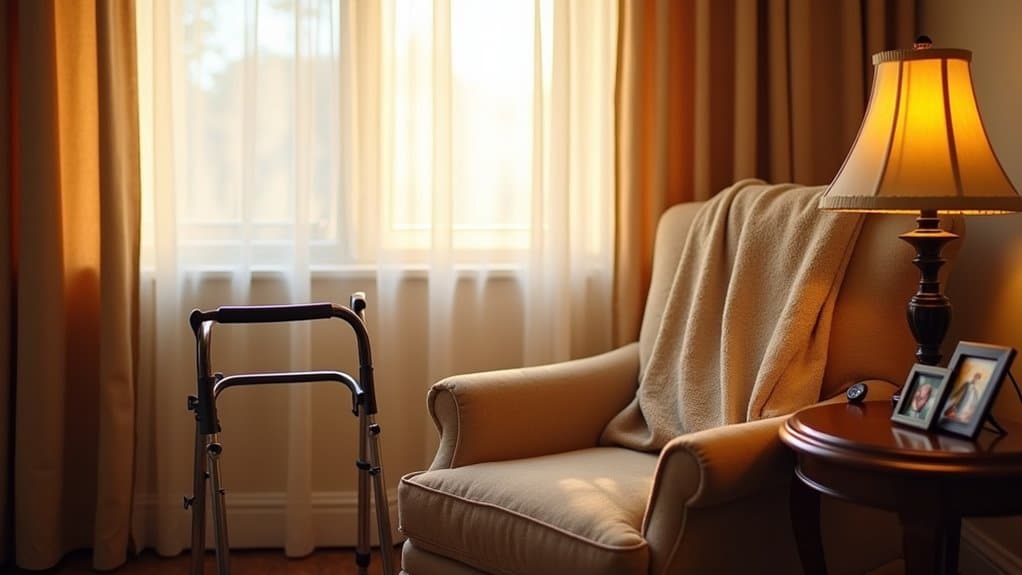
Creating a comfortable living space for your senior loved one starts with placing cherished photos, favorite furniture pieces, and meaningful mementos in easily visible locations. You’ll want to guarantee proper lighting throughout the space and maintain a consistent, comfortable temperature that accommodates their preferences. Clear walkways of any obstacles and create wide paths between furniture pieces, making it easier and safer for them to navigate their new surroundings.
Arrange Familiar Personal Items
The strategic placement of cherished belongings can transform an unfamiliar space into a comforting sanctuary for your senior loved one. Focus on arranging familiar belongings that trigger positive memories and create a sense of continuity from their previous home.
Start with the most meaningful sentimental items, such as family photos, favorite artwork, or cherished mementos. Position these where they’ll be easily visible during daily activities. Place family photos on bedside tables or arrange them on a gallery wall in the living area. Don’t forget to include practical items they’ve used for years, like a favorite reading chair or bedside lamp. These familiar objects serve as anchor points, helping your loved one maintain a connection to their past while adjusting to their new surroundings.
Optimize Lighting and Temperature
Proper lighting and temperature control play essential roles in your senior loved one’s comfort and safety within their new living space.
Make sure all rooms have adequate lighting, especially in areas where they’ll be reading or performing tasks. Position furniture near windows to enhance natural light during the day, but install adjustable window coverings to prevent glare. Install night lights in hallways, bathrooms, and bedrooms to prevent falls during nighttime trips.
Keep the temperature consistent and comfortable typically between 68-70°F during the day. Ask about their temperature preferences and show them how to use the thermostat or temperature control system. Consider adding a small fan or extra blanket in their bedroom so they can adjust their comfort level as needed. Monitor humidity levels to prevent the air from becoming too dry.
Create Safe Walking Paths
Safe walking paths throughout your senior loved one’s new home serve as essential routes for daily movement and navigation. Create accessible pathways by removing potential trip hazards like loose rugs, electrical cords, and low-lying decorative items. Make certain there’s at least a three-foot clearance in hallways and around furniture for easy walker or wheelchair access.
Establish direct routes between frequently visited areas, such as the bedroom to bathroom and kitchen to living room. You’ll want to focus on obstacle removal in these high-traffic zones. Install handrails along corridors and consider marking pathway edges with contrasting colors or motion-sensor lights for better visibility. Remember to keep floors dry and immediately clean up any spills to prevent slipping. Regular pathway maintenance will help your loved one maintain independence while moving safely through their new space.
Organizing Essential Items for Easy Access
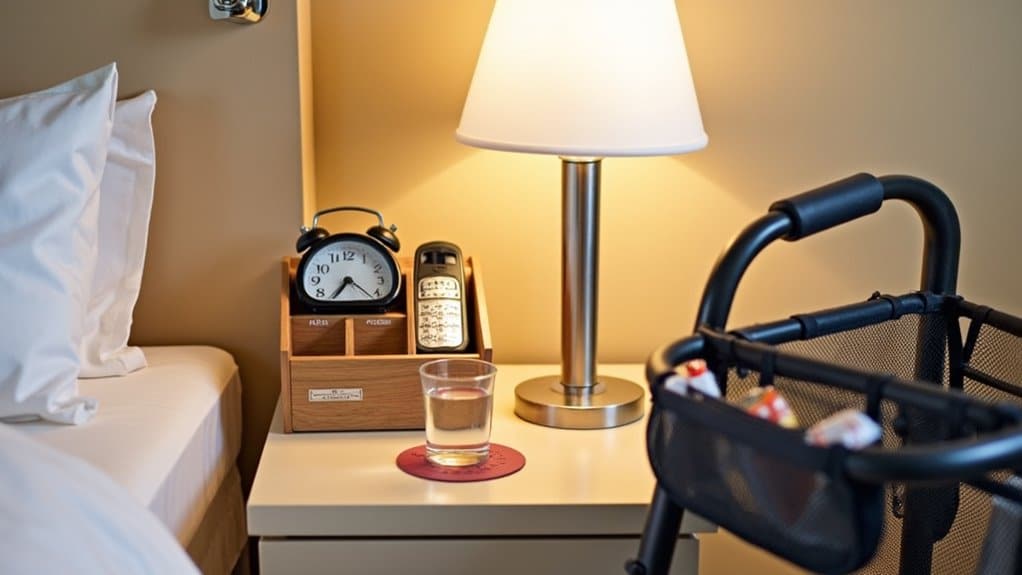
Making crucial items easily accessible helps seniors maintain their independence and reduces frustration during the shift to a new home. Start by identifying frequently used items like medications, eyeglasses, remote controls, and phones. Place these within arm’s reach of their favorite sitting spots or bedside.
Set up dedicated zones for daily necessities, keeping similar items grouped together. Install pull-out shelves in lower cabinets and use drawer organizers to prevent items from getting lost. Consider using clear containers with large labels for easy identification. Position everyday kitchen tools and dishware in middle shelves rather than high cabinets or low drawers.
Remember to keep emergency contact numbers, medical information, and essential documents in a clearly marked folder that’s readily available in a consistent location.
Building Social Connections in the New Environment
While adjusting to a new physical space is essential, establishing social connections proves likewise vital for seniors’ wellbeing during a move. You’ll want to help your loved one build new relationships and maintain a sense of community involvement from day one. Look for local events and activities that match their interests and encourage participation at a comfortable pace.
- Research nearby senior centers, religious organizations, or hobby groups that align with their preferences and help them make initial contact
- Arrange informal meet-and-greets with neighbors, perhaps through a small coffee gathering or during regular walking times
- Use technology to help them stay connected with existing friends while building new relationships, such as video calls or social media platforms
Remember to be patient and supportive as they navigate these new social waters.
Managing Emotional and Physical Well-being
To support your senior loved one’s wellness during this change, you’ll want to establish consistent daily routines for meals, medications, and activities. You can help manage their emotional health by watching for signs of anxiety or depression while maintaining open communication about their feelings and concerns. Creating designated comfort zones with familiar items, photos, and personal keepsakes will give them a sense of security and belonging in their new space.
Establish Daily Care Routines
Since daily routines provide stability and reduce anxiety, establishing a consistent care schedule should be your top priority when helping seniors settle into their new home. Work with your loved one to create a structured yet flexible daily plan that incorporates both care needs and personal preferences. Regular daily check-ins will help you monitor their adjustment while providing reassurance during this change.
- Create a written schedule that includes medication times, meals, activities, and rest periods, but maintain routine flexibility to accommodate unexpected changes
- Set up specific times for personal care tasks like bathing, dressing, and grooming to help establish a sense of normalcy and independence
- Plan social activities and light exercise at consistent times to maintain physical and emotional well-being while preventing isolation
Monitor Anxiety and Mood
Because moving to a new home can trigger significant emotional stress in seniors, you’ll need to closely monitor their anxiety levels and general mood during the change phase. Watch for signs of withdrawal, changes in sleeping patterns, or loss of appetite, as these can indicate heightened anxiety or depression.
Pay attention to specific anxiety triggers in their new environment, such as unfamiliar noises or different lighting conditions. Keep track of mood fluctuations throughout the day, noting when they seem most relaxed or distressed. If you notice persistent anxiety or declining mood, don’t hesitate to consult their healthcare provider. Consider implementing calming activities like listening to familiar music or looking at family photos to help manage stress. Creating a peaceful atmosphere and maintaining open communication will help them feel more secure during this transition.
Create Comfort Zones
While adjusting to a new living space, seniors need dedicated comfort zones that feel familiar and safe. Help your loved one create a cozy corner or personal retreat where they can relax and feel at home. Consider incorporating personalized decor and favorite scents to make the space distinctly theirs. You’ll want to establish at least one area that mirrors the comfort of their previous home.
- Set up a reading nook with their favorite chair, good lighting, and cherished books or magazines within easy reach
- Arrange familiar photos, mementos, and valued decorative items in their bedroom or sitting area
- Create a sensory-pleasing environment using their preferred scented candles, potpourri, or essential oils that remind them of home
Establishing Safety Measures and Emergency Protocols
When seniors move to a new home, establishing strong safety measures and emergency protocols must be your top priority. Create an extensive list of emergency contacts, including family members, neighbors, healthcare providers, and local emergency services. Post this list in visible locations throughout the home and program these numbers into their phones.
Walk through safety drills with your senior loved one, ensuring they know how to respond to different emergencies like fires, falls, or medical situations. Install safety devices such as grab bars, non-slip mats, and proper lighting in key areas. Make sure they understand how to use their medical alert system if they have one. Consider creating a simple checklist of steps to follow during emergencies and place it where it’s easily accessible.
Creating Memory Stations With Personal Treasures
Memory stations serve as powerful anchors that help seniors feel more connected to their new living space. By strategically placing cherished photos, meaningful objects, and familiar items throughout their new home, you’ll create memory prompts that spark joy and comfort. These nostalgia triggers can help your loved one maintain a sense of identity while adjusting to their new environment.
- Set up a cozy corner with a photo album, comfortable chair, and their favorite throw blanket to encourage reminiscing and relaxation
- Display family heirlooms and valued mementos on small tables or shelves where they’re easily visible during daily activities
- Create a dedicated wall space for framed photographs that tell their life story, arranging them chronologically or by theme
Frequently Asked Questions
How Long Does It Typically Take for Seniors to Fully Adjust?
You’ll find that the adjustment timeline for seniors varies greatly, typically ranging from 3-6 months. Don’t worry if your loved one needs more time it’s completely normal. Your emotional support plays an essential role in helping them adapt. You’ll notice small improvements week by week, but full adjustment often happens gradually. Remember, you’re helping them navigate a major life change, so patience and consistency are your best allies.
What Are the Signs That a Senior Is Not Adapting Well?
You’ll want to watch for several key signs that indicate adjustment difficulties. Emotional signs often include increased anxiety, depression, or withdrawal from social activities. You might notice behavioral changes like disrupted sleep patterns, loss of appetite, or resistance to daily routines. If your senior loved one shows irritability, frequently talks about “going home,” or stops participating in activities they once enjoyed, it’s time to address these concerns with their care team.
Should Family Members Visit Daily During the First Week?
While daily visits show strong family support, it’s best to find a balanced approach. You’ll want to be present enough to provide emotional bonding and comfort, but not so much that it prevents your loved one from developing new relationships and routines. Consider visiting every other day during the initial week, allowing time for both family connection and independent adjustment. You can always adjust the frequency based on how they’re responding.
Are There Specific Medications That Can Help With Transition Anxiety?
While medication options exist for anxiety relief, you’ll want to consult a healthcare provider before starting any new treatments. They might recommend short-term anti-anxiety medications like Xanax or Ativan, or longer-term solutions such as SSRIs. Don’t forget that non-pharmaceutical approaches can be effective too try meditation, deep breathing exercises, or counseling initially. Always discuss any concerns about medication with your doctor, as they’ll create a personalized plan that’s right for you.
How Often Should Staff Check on New Residents During Overnight Hours?
You’ll want to establish frequent overnight check-ins during a new resident’s initial few days, typically every 2-3 hours. It’s crucial to balance resident comfort with safety monitoring. If you notice signs of anxiety or restlessness, you might increase visits to hourly intervals. Keep your check-ins brief and quiet to avoid disturbing sleep. As the resident adjusts, you can gradually reduce the frequency based on their individual needs and comfort level.