





Modern hearing support combines AI-powered hearing aids, thorough audiological care, and robust community resources to address your hearing needs. You’ll find OTC devices with advanced features like Bluetooth connectivity and fall detection, while professional services offer personalized fittings and rehabilitation. Medicare Advantage, VA benefits, and financial assistance programs can help cover costs. Support groups and online communities provide valuable connections. Understanding all available options will empower you to make informed decisions about your hearing health.
Understanding Your Hearing Assessment Results

When you undergo an extensive hearing assessment, the results provide crucial diagnostic information about your auditory function. Your audiogram graphically displays the softest sounds you’re able to detect across different frequencies, while pure tone audiometry measures both air and bone conduction to determine if you have sensorineural, conductive, or mixed hearing loss.
During your evaluation, speech recognition testing assesses your ability to understand spoken words, helping identify specific communication difficulties you may experience in daily situations. An otoscopic examination reveals the condition of your outer ear canal and eardrum, which can affect sound transmission. Understanding these all-encompassing test results enables your audiologist to develop a targeted treatment plan that addresses your unique hearing loss pattern and communication needs.
Advanced Technological Solutions and Devices
Modern hearing aid technology has evolved markedly to provide seniors with sophisticated solutions that combine convenience and performance. You’ll find cutting-edge OTC hearing aids featuring AI-powered noise reduction and Bluetooth connectivity, allowing customization through smartphone apps. These devices offer enhanced speech clarity and remote support from licensed professionals.
Premium features now include rechargeable batteries, telecoil functionality, and Bluetooth 5.3 streaming capabilities. You can choose from discreet in-canal models like the Linner Saturn for mild hearing loss, or opt for powerful prescription devices like the Signia Motion X for severe cases. Advanced models incorporate practical features such as fall detection and “Find My Hearing Aid” functionality. The integration with home entertainment systems and smartphones guarantees you’ll experience seamless audio connectivity across all your devices.
Professional Audiological Care Services
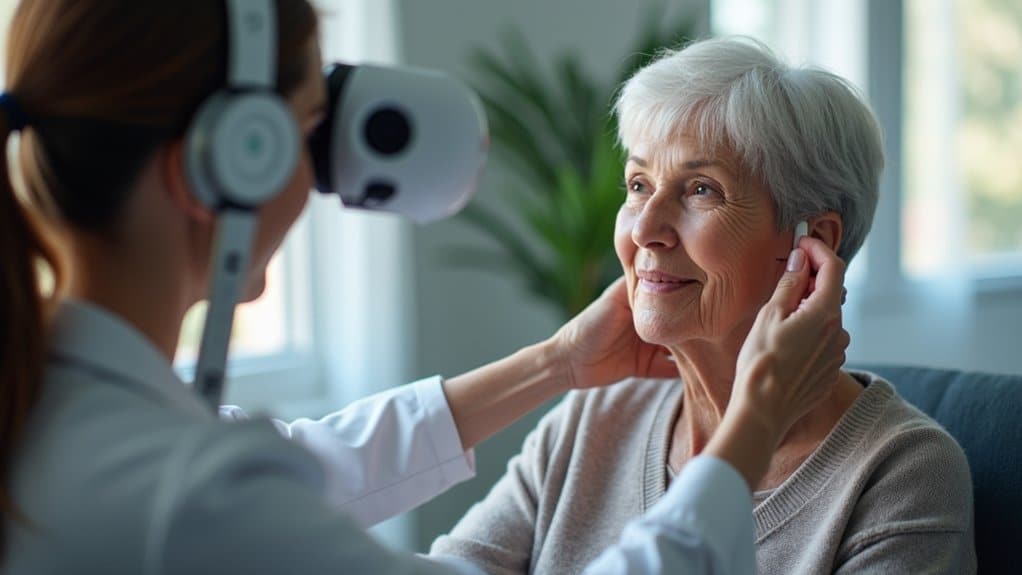
While advanced hearing devices offer impressive capabilities, professional audiological expertise remains central to ideal hearing health management. When you’re experiencing hearing loss, audiologists provide thorough hearing evaluations to precisely diagnose your condition and determine the most effective treatment approach.
- Licensed hearing healthcare professionals conduct comprehensive assessments to identify your specific type and degree of hearing loss, verifying accurate diagnosis and targeted solutions.
- During hearing aid fitting sessions, audiologists utilize real-ear measurements to verify and optimize device performance, certifying maximum benefit from your investment.
- Your audiologist delivers ongoing support through aural rehabilitation services, teaching essential communication strategies and recommending appropriate assistive listening devices.
This evidence-based approach to hearing healthcare certifies you receive personalized treatment that addresses your unique hearing challenges and lifestyle needs.
Insurance Coverage and Financial Assistance Programs
While Medicare’s standard coverage excludes hearing aids, you’ll find some Medicare Advantage plans offer partial coverage for these essential devices. You can access cost-saving alternatives through the VA’s all-encompassing hearing aid program for eligible veterans or through state-specific Medicaid coverage options. If you’re seeking additional financial support, organizations like the Hearing Loss Association of America provide assistance programs, and the federal Affordable Connectivity Program can help reduce costs for hearing aid-compatible devices.
Medicare Coverage Options
Understanding Medicare coverage for hearing-related services requires careful attention to the distinctions between different plans and programs. While Medicare Part B covers 80% of your hearing tests when ordered by a hearing professional, it won’t help with hearing aid costs. However, you’ll find several pathways to access affordable hearing aids through alternative coverage options.
- Medicare Advantage plans offer varying degrees of hearing aid coverage, with costs and benefits differing between providers
- Medicaid programs in certain states provide hearing aid coverage for qualifying low-income individuals
- Veterans can access free hearing aids and related services through the VA, while SSI recipients may qualify for financial assistance
Consider exploring these options based on your eligibility to find the most cost-effective solution for your hearing loss needs.
Cost-Saving Program Alternatives
Because hearing aids represent a major investment, numerous cost-saving programs exist to help seniors access these essential devices. If you’re experiencing mild-to-moderate hearing loss or severe to profound hearing loss, several financial assistance options can reduce Hearing Aids Cost significantly.
| Program Type | Coverage Details | Eligibility |
|---|---|---|
| Medicare Advantage | Partial coverage | Medicare enrollees |
| Medicaid | Full coverage | Low-income seniors |
| VA Benefits | Free/discounted aids | Veterans |
| Non-profit Programs | Free/reduced cost | Income-based |
| Financial Assistance | Variable support | Needs-based |
For seniors seeking quality sound and extended battery life in their hearing aids, these programs offer substantial savings. You’ll find the best hearing aids through VA benefits if you’re a veteran, while Medicaid provides extensive coverage for qualifying low-income individuals. Non-profit organizations frequently conduct hearing aid donation programs for those facing financial hardship.
Support Groups and Community Resources

You’ll find extensive local support networks through HLAA’s 200+ nationwide chapters, which offer peer connections and specialized resources for seniors experiencing hearing loss. Senior centers provide targeted educational workshops covering essential topics like hearing aid technology and effective communication strategies for the hearing impaired. Veterans can access additional support through VA audiology clinics, while online communities like HearingJourney.com enable you to connect with peers and access educational materials from home.
Local Support Networks Available
Seniors with hearing loss regularly find essential assistance through extensive local support networks. You’ll discover comprehensive resources designed to enhance your quality of life while wearing hearing aids. Local audiology clinics and community centers offer specialized support to help you select the right models, whether traditional or over-the-counter (OTC) hearing aids.
- Community organizations provide educational seminars focusing on new hearing aid features, proper use techniques, and maintenance best practices
- Local hearing loop installations in public venues optimize sound quality for hearing aid users, improving accessibility at theaters, places of worship, and community centers
- Regional chapters of hearing loss associations connect you with professional support networks, offering guidance on technological advancements and personalized solutions
These evidence-based resources ensure you’ll receive expert assistance while managing hearing healthcare options in your area.
Educational Programs For Seniors
Building on local support networks, exhaustive educational programs offer structured learning opportunities for managing hearing loss effectively. You’ll find specialized workshops through HLAA chapters covering both prescription hearing aids and OTC hearing aids, with detailed guidance from hearing care professionals.
| Resource Type | Benefits | Technology Focus |
|---|---|---|
| Library Programs | Hands-on device testing | Bluetooth streaming |
| Clinical Seminars | Expert consultation | Latest hearing aids |
| Online Forums | Peer reviews | Customer support |
For older adults with severe hearing loss, these educational initiatives provide critical technical knowledge. You can access inclusive training on aid maintenance, connectivity features, and adaptive strategies through community centers. Public libraries offer assistive devices for trial periods, while audiology clinics deliver specialized instruction on hearing aid optimization and technological advancements.
Home Modifications and Assistive Technologies
Modern assistive technologies and home modifications provide essential support for individuals experiencing hearing loss. These innovations enhance daily living and safety while maintaining independence in your home environment. Smart home integration with devices like voice assistants and automated systems creates a more accessible living space.
- Install visual alert systems that connect to your Bluetooth-enabled hearing aids (including Phonak Naída, Audéo, Sphere, Linner Saturn, Elehear Beyond, or Signia Motion models) for doorbell notifications and safety alarms
- Set up amplified communication systems with rechargeable options, featuring enhanced volume controls and visual indicators for telephone calls
- Implement induction loops or FM systems throughout your home to directly transmit audio to your hearing devices, ensuring clearer sound reception in every room
These modifications work seamlessly with modern hearing technology to create a thorough support system.
Communication Strategies and Training
While adapting to hearing loss presents challenges, thorough communication training programs offer evidence-based strategies to maintain effective social interactions and daily function. You’ll learn essential skills like lip-reading, sign language, and speech-reading techniques to enhance your comprehension during conversations.
Augmented listening devices, including personal amplifiers and FM systems, can significantly improve your ability to hear in group settings. For severe hearing impairment, speech-to-text apps and real-time captioning services provide immediate transcription support. Support groups and counseling services help you develop coping strategies while addressing the emotional aspects of hearing loss. These extensive programs guarantee you’re equipped with both technical tools and practical communication methods. By combining multiple approaches, you’ll maintain independence and social connections while effectively managing your hearing challenges.
Maintenance and Care Guidelines
Proper maintenance of hearing devices complements effective communication strategies by guaranteeing prime performance and longevity. You’ll need to establish a daily care routine that includes cleaning your devices with a soft, dry cloth to remove earwax and debris. Regular replacement of wax filters and tubing preserves optimal sound quality and prevents audio distortion.
- When you’re not using your hearing aids, store them in a protective case and use a dehumidifier to prevent moisture damage and extend battery life
- Clean your devices daily to remove earwax buildup, which can affect sound transmission and reduce their lifespan
- Schedule annual professional cleanings and checkups with your audiologist to guarantee proper functioning and receive necessary adjustments or replacements for worn components
Emergency Preparedness for Hearing Impaired Seniors
Since natural disasters and emergencies can disrupt normal communication channels, hearing impaired seniors must establish detailed emergency preparedness plans. You’ll need backup devices with IP68 ratings for dust and water protection, plus a rechargeable battery system with portable charging capabilities. Keep your hearing aids in a waterproof case and maintain extra batteries for remote control functions.
Your emergency kit should include devices for remote adjustments and remote care access during crises. Install visual alert systems that flash during emergency phone calls or background noise. Connect with local support programs that offer specialized training for crisis communication. Your local emergency management office can provide information about accessible shelters and transportation services. Remember to store a notepad and pen for written communication when electronic devices fail.
Frequently Asked Questions
What Is the New Hearing Aid Technology 2025?
You’ll find 2025’s hearing aid technology features artificial intelligence integration for superior digital signal processing and adaptive noise reduction. Advanced directional microphones enhance speech clarity while improved feedback cancellation guarantees clear sound. You’ll benefit from Bluetooth connectivity for seamless audio streaming capabilities. Battery life improvements offer extended use, and you can personalize your listening experience through customizable sound profiles. These innovations deliver unprecedented hearing precision and convenience.
What Is the New Treatment for Hearing Loss 2025?
You’ll find several breakthrough treatments for hearing loss in 2025, including early stage hearing restoration through gene therapy and regenerative auditory nerve treatments. Bionic ear implants now offer innovative sound amplification with AI-powered hearing analysis. Stem cell therapies are advancing for personalized hearing enhancement, while adaptive sound filtering technology provides superior noise management. You can also access integrated smart technology solutions that enable wireless hearing synchronization across multiple devices.
What Is the Best in Ear OTC Hearing Aid 2025?
The Eargo 7 stands out as the best OTC hearing aid in 2025, offering superior sound quality improvements and advanced speech enhancement algorithms. You’ll benefit from its discreet design aesthetics and tailored fit customization options. It features reliable rechargeable capabilities with extended battery life performance, plus effective background noise reduction. The device includes wireless connectivity features and water/sweat resistance. Its telecoil integration guarantees compatibility with various audio systems while maintaining a nearly invisible profile.
What Is the Best Phonak Hearing Aid for 2025?
The Phonak Audéo Paradise stands as your best choice for 2025, featuring advanced binaural processing and artificial intelligence-driven sound optimization. You’ll benefit from its inclusive wireless connectivity, digital noise reduction, and seamless smartphone integration through a dedicated app. The device offers enhanced tinnitus management, directional microphones for clearer conversations, and remote programming capabilities. Its waterproof design and long-lasting rechargeable batteries guarantee reliable performance in any environment.