





Family home care programs let you receive payment for caring for an eligible family member at home through Medicaid waivers or state-managed systems. You’ll need to meet specific income requirements, complete caregiver training, and provide documented daily living assistance. Programs typically offer $13-18 per hour, plus benefits like respite care and health insurance. While managing responsibilities like personal care and medical coordination, you’ll receive ongoing support to guarantee quality care delivery. Exploring the full program details will help you make informed caregiving decisions.
The Basics of Family Home Care Programs

While traversing long-term care options can feel overwhelming, family home care programs offer a structured way for loved ones to receive care in familiar surroundings. These programs typically operate under Medicaid waivers or state-managed systems, allowing you to provide care in either your home or your loved one’s residence. Families accessing these programs receive caregiver counseling and support to build confidence in their caregiving roles. To qualify, outside employment is typically prohibited for caregivers who must dedicate themselves fully to providing care.
You’ll find diverse paths to financial sustainability through these programs. You can become a paid caregiver through an agency, receive direct payments, or get reimbursed for documented care hours. The programs include essential support elements like professional training, respite coordination, and access to health coaches. You’ll work with state agencies or Area Agencies on Aging, who’ll guide you through eligibility requirements and help coordinate supplemental services such as medical supplies and home modifications when needed. Caregivers provide comprehensive support with Activities of Daily Living like bathing, dressing, and maintaining proper hygiene.
Eligibility Requirements for Caregivers and Recipients
To qualify for family home care assistance through Medicaid, you’ll need to meet your state’s specific income limits and demonstrate financial need as a care recipient. Your living arrangements will directly impact eligibility, as most programs require care to be provided in your home rather than an institutional setting. If you’re planning to have a family member as your caregiver, you’ll also need to verify that your proposed living situation complies with state-specific requirements about caregiver cohabitation. Most states operate through a consumer-directed assistance program that allows recipients to choose their preferred family caregiver.
Medicaid and Income Criteria
Understanding Medicaid’s eligibility requirements for home care services involves traversing complex income and asset thresholds. During the application process, you’ll need to demonstrate that your monthly income falls within your state’s limits, typically 300% of SSI ($2,901/month in 2025) for most waiver programs, though some states set lower thresholds at 100% of FPL ($1,304.17/month).
Income reporting must be exhaustive and precise, but don’t panic if you’re slightly over the limit. You may still qualify through options like Miller Trusts. Your assets must generally stay under $2,000 as an individual, though certain possessions like your home, car, and personal items don’t count toward this restriction. A county social worker will conduct an in-home interview to determine your eligibility and assess your specific needs. If you’re also eligible for Medicare, dual eligibility can provide you with more expansive coverage choices. The personal care services offered through these programs help approximately 4.5 million people annually with essential daily activities like bathing and dressing.
Living Arrangement Guidelines
Whether you’re seeking to become a caregiver or receive care through a family home care program, specific eligibility requirements govern both roles. As a caregiver, you must be at least 18 years old and demonstrate your ability to provide necessary assistance while balancing other obligations. Family members and close friends can serve as primary caregivers for their loved ones under these programs.
For care recipients, you’ll need a documented assessment from a healthcare professional showing your need for daily living assistance. Recipients must reside in a community-based setting to qualify for services. If you’re considering shared space accommodations, your living arrangement must be legitimate and support a proper caregiving environment. Privacy protection measures, such as lockable doors, are vital in these situations.
Both parties must participate in developing an exhaustive care plan that outlines specific services, from personal care to transportation needs. Regular reassessments guarantee the arrangement continues to meet everyone’s needs effectively.
Living Arrangements and Home Setup
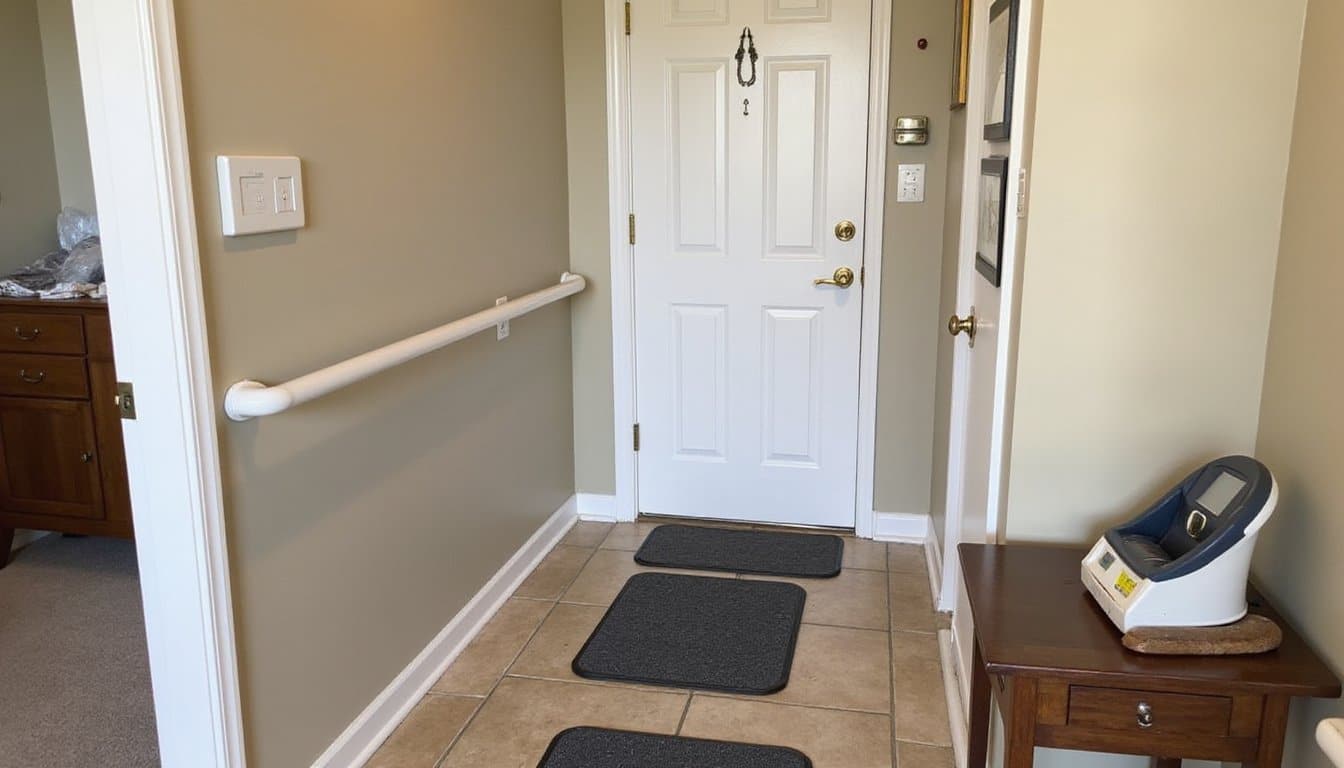
When caring for a family member at home, selecting the right living arrangement and creating a supportive environment are critical initial steps. You’ll need to decide whether your loved one will move into your home, remain in their own residence with support, or consider shared living communities. This choice depends on their care needs, available support systems, and access to community services. Consider setting up a daily schedule where trained aides can assist with personal care tasks. Once you’ve determined the location, focus on home safety modifications to guarantee a secure environment. Install grab bars, ramps, and non-slip flooring where needed. You’ll want to verify proper lighting throughout the space and set up accessible emergency alert systems. Making these adjustments is essential since physical signs like trouble moving often indicate the need for home modifications. Working with an Area Agency on Aging can provide valuable guidance on necessary home modifications and available resources. Don’t forget to organize medication storage and meal preparation areas to promote independence while keeping potentially hazardous items secure. Consider noise levels and household activity patterns to maintain comfort for your loved one.
Financial Compensation and Benefits
Your ability to receive payment as a family caregiver depends on your state’s specific programs, with options ranging from Medicaid HCBS waivers to structured family caregiving stipends. You’ll need to verify your eligibility through local agencies and understand the income guidelines, which often consider factors like your relationship to the care recipient and your ability to meet training requirements. The payment rates typically align with local in-home care wages, though they vary greatly by program and location, from hourly compensation to monthly stipends. A legally binding personal care agreement can formalize the caregiver arrangement and establish clear compensation terms between family members. While compensation options vary, you may be able to take advantage of FMLA benefits that protect your job security during extended caregiving periods.
Payment Structure and Rates
Family caregivers can receive financial compensation through diverse programs, with payment structures ranging from hourly wages to monthly stipends. Through Medicaid programs, you’ll typically earn $13-$18 per hour, while VA benefits offer structured monthly payments based on care levels, around $1,818 for Level One and $2,909 for Level Two in Dallas (2022 rates). The nationwide median hourly rate of $33 provides a benchmark for family caregivers to evaluate fair compensation.
State-specific programs, like Texas’s protective services, provide daily reimbursements varying by care intensity, from $27.07 for basic care to $137.52 for specialized treatment. Nearly 70% of home care is funded through Medicaid programs nationwide. You’ll find extra support through caregiver tax benefits and resources secured through legislative advocacy efforts. Many programs also include supplementary benefits like respite care, training stipends, and health insurance options. Payment processing occurs through direct deposit systems, typically on bi-weekly or monthly schedules.
Eligibility for Financial Support
Understanding payment options is only part of the equation; you’ll need to fulfill specific eligibility criteria to receive financial assistance as a caregiver. Your eligibility typically depends on both your relationship to the care recipient and their needs.
| Criteria Type | Key Requirements |
|---|---|
| Age & Relationship | Care recipient 60+ or with Alzheimer’s; caregivers 55+ for children |
| Health Needs | Functional limitations; ADL assistance required |
| Financial Status | Joint financial eligibility; Medicaid means testing |
Most programs require your care recipient to have significant functional limitations and need help with daily activities. You’ll also need to ponder respite care access as part of your care plan. If you’re seeking Medicaid support, you may need to become a certified provider and meet state-specific income thresholds. Veterans’ programs have additional requirements based on service connection and disability ratings.
Caregiver Income Guidelines
Regarding financial compensation for caregiving, rates and benefits can differ substantially based on your location and program type. You’ll find hourly rates typically range from $13-$18, though Medicaid programs in some states offer up to $26 per hour.
Beyond direct pay, you’ll want to investigate alternative pay programs like Veteran Directed Care and Aid and Attendance benefits. Don’t overlook non-monetary compensation, including valuable tax breaks such as the Credit for Other Dependents (up to $500) and the Child and Dependent Care Credit (up to $3,000 annually). Your compensation may increase if you provide complex medical care or obtain specialized training. In addition, some states now offer paid family leave programs, though eligibility requirements and payment rates vary by location.
Daily Responsibilities of Family Caregivers
The daily responsibilities of caregivers encompass an extensive range of tasks that go far beyond basic assistance. As a family caregiver, you’ll face both emotional burden and physical strain while managing multiple duties that typically consume 24-26 hours per week.
Your core responsibilities include:
- Performing household tasks like shopping, meal prep, and laundry
- Providing personal care assistance with bathing, grooming, and medication management
- Ensuring safety through constant monitoring and fall prevention
- Coordinating medical appointments and managing healthcare communications
- Handling financial and legal paperwork while maintaining detailed records
For most caregivers, especially women who make up 75% of care providers, these duties often overlap with full-time employment. If you’re among the 43% who serve as sole caregivers, you’ll need to carefully balance these responsibilities to prevent burnout.
Training and Support Resources

Family caregivers can access thorough training programs and support resources to build essential caregiving skills and confidence. You’ll find state-specific programs offering online learning modules and in-person training covering fundamental skills like patient movement, medication administration, and wound care.
Whether you’re caring for a medically complex child or an adult on Medicaid waivers, you’ll have access to diverse certification options, including free CNA training and IHSS programs. These courses include skills assessment opportunities to confirm you’re meeting required competencies. You can also utilize interactive e-learning platforms, helplines, and peer support groups for ongoing assistance.
For supplemental support, you’ll find specialist consultations, resource directories, and guidance on legal and financial matters, including information about caregiver compensation programs and benefits navigation.
Agency Oversight and Quality Assurance
Strong regulatory oversight guarantees you’ll encounter multiple layers of quality control when participating in family home care programs. State health departments implement extensive compliance programs to secure both agencies and caregivers meet strict standards.
Key oversight accountability measures include:
- Regular audits and post-payment reviews of service documentation
- Electronic visit verification systems to track caregiving hours and locations
- Nurse supervision and periodic in-home evaluations
- Verification of caregiver qualifications and training
- Cross-referencing of billing information with other data sources
You’ll find that agencies use web-based systems to monitor daily care notes and service delivery. These digital tools help ensure services match your care plan while maintaining program integrity. Remember, this thorough oversight isn’t just about regulation; it’s about protecting your family’s wellbeing and guaranteeing you receive quality care.
Substitute Care and Respite Options
Your family home care program needs to include a detailed emergency backup plan that outlines who’ll step in when you can’t provide care. You’re typically allowed a set number of respite hours annually, which you should strategically plan to safeguard against burnout and uphold quality care. Finding and vetting qualified relief support through your agency’s approved provider network will guarantee seamless coverage while meeting all safety and supervision requirements.
Emergency Backup Care Plans
When creating emergency backup care plans, it is crucial to develop thorough strategies for both short-term and long-term substitute care needs. Your plan should incorporate technology integration for improved monitoring and communication, while ensuring regular plan review to maintain current information.
Start by assembling an extensive “Grab-and-Go” folder containing:
- Emergency contacts and medical directives
- Healthcare provider information and medication lists
- Insurance cards and necessary legal documents
- Access codes and spare keys
- Written care protocols and routines
Keep this folder in an easily accessible location and use digital tools to share information with substitute caregivers. You’ll need to identify and maintain contact with multiple care providers, including family members, professional caregivers, and backup care services. Remember to review and update your emergency plans quarterly or after significant changes in care needs.
Annual Respite Time Allowance
Understanding annual respite time allowances helps families optimize their substitute care options throughout the year. Depending on your state’s program funding limits, you’ll typically receive between 90 to 480 hours of respite care annually. Virginia offers up to 480 hours per fiscal year, while New Jersey provides 360 hours through 90-day authorization periods.
You can access these caregiver support services either in-home or at external facilities, with some programs offering self-directed options that let you choose your providers. To qualify, your loved one must have a documented disability or medical condition, and your household income usually needs to be at or below 200% of the Federal Poverty Level. Recall that authorization requires pre-screening and assessment through your local aging services agency.
Finding Qualified Relief Support
Finding qualified relief support requires careful consideration of both credential requirements and care options available in your area. You can access substitute caregivers through state agencies, home care organizations, or consumer-directed programs that follow specific agency protocols and background checks.
When searching for relief support, focus on these key sources:
- State maturity offices and Medicaid programs that maintain directories of qualified providers
- Home care agencies offering pre-screened, trained staff
- Online registries that match families with relief workers
- Community organizations with vetted caregiver lists
- Healthcare provider referrals to reputable respite sources
Most relief caregivers must be at least 18 years old and have a high school diploma. While certification requirements vary, you’ll find options ranging from informal family caregivers to licensed professionals, depending on your program’s specifications and needs.
Documentation and Compliance Guidelines
Proper documentation and compliance stand at the heart of successful family home care programs. You’ll need a secure system for record storage and documentation safeguards to protect essential paperwork, from advance directives to financial powers of attorney.
Start by organizing your legal documents, including healthcare directives, identification papers, and insurance records. You’ll also need to maintain detailed admission packets, care plans, and progress notes that outline specific services and schedules. For program eligibility, guarantee you’ve completed all required Medicaid or state forms, including financial information and medical documentation.
Keep supervision records, incident logs, and electronic visit verification current to meet regulatory requirements. Ensure that state and federal guidelines, including VA caregiver programs and Medicaid waivers, require specific documentation for compliance and audit readiness.
Success Stories and Program Impact
Beyond the paperwork and regulations, real-world results showcase the transformative power of family home care programs. The statistics paint a compelling picture, with 91% of recipients reporting high satisfaction and an 80.2% improvement in daily living activities after discharge.
While care coordination challenges and caregiver burnout remain ongoing concerns, the program’s impact is evident through:
- 90% of patients preferring to stay in their homes
- 424 million successful home care visits in 2020
- 7.6% increase in home health visits since 2013
- Significant reduction in hospital readmissions
- Cost savings through Medicare coverage ($0 for many recipients)
These outcomes demonstrate how family home care programs effectively balance patient comfort with healthcare delivery, though continued support for caregivers remains essential for sustainable success.
Frequently Asked Questions
Can Caregivers Take Care of Multiple Family Members Simultaneously Under the Program?
Yes, you can typically care for multiple family members at once, but you’ll need to carefully manage coordinated scheduling to meet each person’s care requirements. While program rules vary by state, you’ll want to establish clear routines and shared responsibilities to maintain quality care. Remember to verify specific program allowances and consider your capacity to handle multiple care recipients while maintaining your own well-being and meeting documentation requirements.
What Happens if the Care Recipient’s Condition Suddenly Worsens?
If your care recipient experiences rapid deterioration, you’ll need to take immediate action. Initially, call emergency medical services right away. You’ll then notify the care program coordinator and follow your emergency response plan. While waiting for medical intervention, stay with your loved one and gather their medical information, medication list, and emergency contacts. After the crisis, you’ll work with healthcare providers to update their care plan accordingly.
Can Family Caregivers Pursue Online Education While Participating in the Program?
Yes, you can pursue online education while caregiving through the program. The flexible scheduling of online courses allows you to study around your caregiving responsibilities, often during evenings or weekends. You’ll find many programs offer pause-and-resume options when care demands increase. Don’t forget to check for tuition assistance; many organizations provide scholarships specifically for caregivers. While it requires careful time management, continuing your education is definitely achievable.
How Quickly Can Emergency Substitute Care Typically Be Arranged?
You can typically receive emergency substitute care the same day a critical situation is identified. With 24/7 on-call substitute availability, services can be arranged within hours when immediate risk is present. Emergency response times may vary depending on your location and provider availability, but the system is designed for rapid deployment. While legal requirements like court hearings must occur within 72 hours, you won’t have to wait for these to get emergency care started.
What Happens to Payments During Recipient Hospitalization Periods?
You’ll find that your caregiver payments typically pause when your care recipient enters the hospital. Most programs, including Medicaid, Medicare, and VA benefits, suspend coverage adjustments during inpatient stays since the hospital provides necessary care. There’s no payment continuation while your loved one is hospitalized, but benefits usually resume upon discharge. You’ll need to notify your program administrator promptly about hospitalizations to avoid overpayments and potential penalties.