





Start your downsizing expedition 3-6 months before moving to reduce stress and maintain control. Begin with less emotional spaces like the garage or kitchen, sorting items into keep, donate, sell, and discard piles. Take photos of sentimental items you won’t keep, and involve family members early for heirloom distribution. Create a detailed floor plan of your new space to guarantee furniture fits properly. Smart organization strategies can transform this shift into a manageable and positive experience.
Start Early: Planning Your Downsizing Timeline

In relation to downsizing your home as a senior, starting the process 3-6 months before your planned move will help reduce stress and overwhelm. Begin by creating a detailed downsizing checklist that breaks down tasks into manageable weekly goals. You’ll want to allocate specific timeframes for sorting through different areas of your home, like closets, attics, and storage spaces.
Your timeline organization should account for significant decisions about furniture, family heirlooms, and household items. Schedule time to photograph meaningful objects you won’t keep, coordinate with family members for heirloom distribution, and arrange donation pickups. Don’t forget to build in extra time for unexpected delays or emotional moments that naturally arise during this changeover. Remember, you’re not just organizing items you’re also processing memories and preparing for a significant life change.
Room-by-Room Sorting Strategy
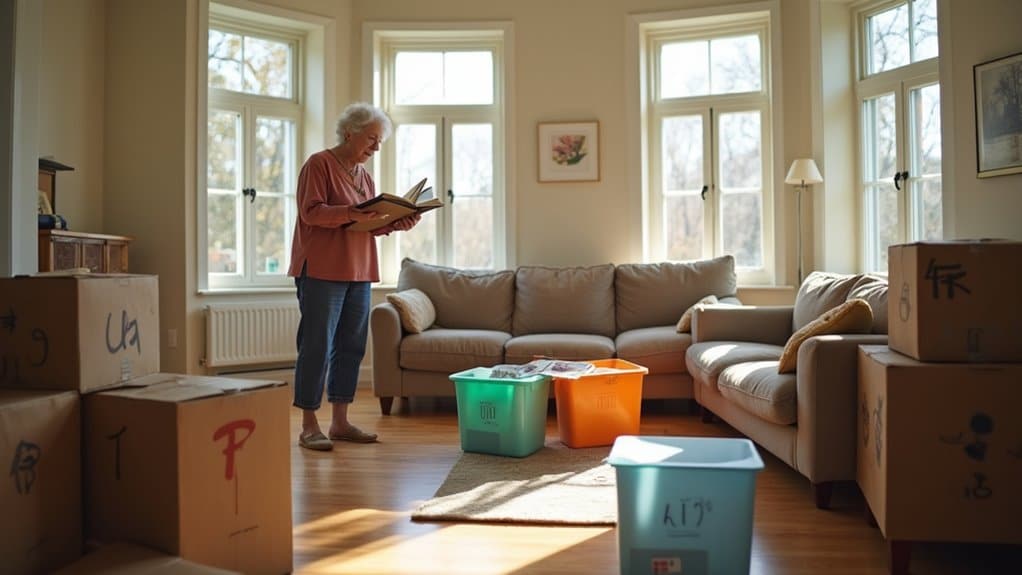
When addressing the overwhelming task of downsizing, a systematic room-by-room approach helps you maintain focus and prevent decision fatigue. Start with less emotionally charged spaces like the laundry room or guest bathroom before tackling areas with sentimental items.
Break down your home into room categories and address one space at a time. In each room, sort items into four piles: keep, donate, sell, and discard. Focus on item prioritization by asking yourself practical questions: “Have I used this in the past year?” and “Will this fit in my new space?” For frequently used rooms like the kitchen, consider your future lifestyle and keep only what you’ll realistically need. Don’t forget to measure furniture pieces to confirm they’ll fit in your new home’s dimensions.
Dealing With Sentimental Items and Family Heirlooms

Although sentimental items and family heirlooms hold precious memories, they often present the biggest challenge during downsizing. Making heirloom decisions requires careful thought and a balanced approach to memory preservation while maximizing your new living space.
Letting go of cherished heirlooms isn’t just about clearing space it’s about honoring memories while adapting to life’s changes.
- Take photos of cherished items you can’t keep they’ll preserve memories while taking up minimal space on your phone or in a digital album
- Ask family members early in the process if they’d like specific heirlooms, giving them time to coordinate pickup or shipping
- Consider keeping one representative item from each collection rather than the entire set – like your grandmother’s favorite teacup instead of the whole tea service
- Create a legacy book documenting the stories behind special items, whether you’re keeping them or passing them along to loved ones
Measuring and Space Planning for Your New Home
Before you start packing boxes or purchasing new furniture, accurate measurements of your future living space will save you time, money, and stress during the move. Grab a measuring tape and create a detailed floor plan of your new home, including doorways, windows, and built-in features.
Make a list of furniture dimensions for pieces you plan to keep, then use graph paper or a digital planning app to experiment with different layout optimization possibilities. Don’t forget to measure hallways, elevators, and stairwells to guarantee your furniture can actually make it into your new space.
Consider traffic flow and daily activities when arranging your floor plan. Leave enough room to navigate safely with a walker or wheelchair, if needed, and verify electrical outlets are accessible for medical equipment or everyday devices.
Digital Solutions for Preserving Memories
How can you hold onto cherished memories while reducing physical clutter? Digital solutions offer a perfect way to preserve your valued photos, documents, and mementos while saving valuable space in your new home.
- Schedule a photo digitization service to professionally scan your precious photographs, slides, and albums they’ll create high-resolution digital copies while protecting your originals
- Create virtual memory albums using online platforms that let you organize, tag, and share photos with family members
- Use your smartphone to photograph three-dimensional keepsakes like trophies or children’s artwork, creating a digital archive
- Store your digital memories safely by backing up files to cloud services and external hard drives, ensuring they’re protected for future generations
Getting Family Members Involved in the Process
Just as digital preservation can help safeguard your memories, making downsizing a family activity can transform a challenging task into meaningful shared experiences. Start by scheduling a family meeting to discuss your plans and establish clear expectations for family involvement.
Assign specific roles based on each family member’s strengths and availability. Your tech-savvy grandson might help organize online sales, while your daughter could coordinate donation pickups. Create a shared calendar to track everyone’s commitments and deadlines.
Consider rotating weekend sessions where family members help sort through different rooms or categories. These shared responsibilities not only lighten your workload but also give relatives a chance to hear stories behind cherished items and participate in decisions about family heirlooms. You’ll find that working together creates opportunities for bonding while accomplishing your downsizing goals.
Choosing the Right Moving Service and Support
When selecting a moving service for your downsizing adventure, it’s important to find professionals who understand seniors’ unique needs and timelines. Research your moving options carefully and consider companies that specialize in senior relocations.
- Contact at least three moving companies that offer professional assistance specifically for seniors, and ask about their experience with downsizing moves.
- Request detailed written estimates that include packing services, insurance coverage, and any special accommodations you’ll need.
- Check reviews, licenses, and insurance credentials don’t hesitate to ask for references from other senior clients.
- Consider hiring a senior move manager who can coordinate with the moving company and provide extra support throughout the process.
Setting Up Your New Space for Comfort and Safety
To make your new home both comfortable and secure, you’ll want to focus on smart storage solutions that keep essential items within easy reach. Strategic placement of furniture and everyday necessities helps prevent dangerous reaching or bending, while installing grab bars and non-slip mats adds vital safety measures. Consider using vertical storage options like wall-mounted shelves and over-door organizers to enhance your space without creating obstacles that could lead to falls.
Maximize Storage Efficiently
Although downsizing means living with less space, smart storage solutions can help you maintain an organized and clutter-free environment in your new home. Making the most of every square foot is essential when you’re working with a smaller footprint.
- Think vertically by installing shelving units, hanging organizers, and over-door storage systems to optimize wall space without cluttering your floor area
- Invest in multi-functional furniture like ottomans with hidden storage, beds with built-in drawers, or expandable dining tables that can accommodate both daily use and visitors
- Use clear storage containers and labels to easily identify items, and rotate seasonal belongings to keep only what you need accessible
- Create zones in closets and cabinets using drawer dividers and stackable containers to utilize every inch of available space
Prevent Falls and Injuries
Since safety becomes increasingly essential as we grow older, setting up your new space with fall prevention in mind should be a top priority. Implementing effective fall proofing strategies will help guarantee your safe mobility throughout your new home.
| Area | Hazard | Solution |
|---|---|---|
| Floors | Loose rugs | Install non-slip pads |
| Bathroom | Slippery surfaces | Add grab bars & mats |
| Lighting | Dark zones | Install motion sensors |
| Furniture | Low seating | Raise chair/bed height |
| Storage | High shelves | Relocate items lower |
You’ll want to address potential hazards before they become problems. Install handrails along hallways, guarantee proper lighting in all areas, and remove any obstacles from walkways. Consider purchasing furniture with rounded edges and positioning it to create clear pathways. Don’t forget to keep frequently used items within easy reach to avoid unnecessary stretching or climbing.
Frequently Asked Questions
What Tax Implications Should I Consider When Selling My Home and Downsizing?
You’ll want to focus on potential capital gains tax implications when selling your home. If you’ve lived in your house as your primary residence for at least 2 of the past 5 years, you can exclude up to $250,000 in gains ($500,000 for married couples) from your taxes. Don’t forget to keep records of home improvements, as they can adjust your home’s cost basis and potentially reduce your tax liability.
How Can I Protect Valuable Items During the Moving Process?
You’ll want to start by investing in quality packing materials – sturdy boxes, bubble wrap, packing paper, and foam padding. Carefully wrap each valuable item individually and clearly label boxes as “fragile.” Consider purchasing item insurance for extra protection during transit. Don’t forget to photograph valuable pieces before packing and keep an inventory list. For irreplaceable items, it’s best to transport them personally rather than leaving them with movers.
Which Senior Living Communities Offer the Best Value for Downsizing Seniors?
You’ll find great affordable communities by researching continuing care retirement communities (CCRCs) that offer lifetime care packages. Consider Del Webb or Holiday Retirement properties, which provide excellent value nationwide. Don’t overlook smaller, local retirement options that might offer better rates. Compare amenities, healthcare services, and monthly fees. Also, ask about move-in incentives and whether they’ll help with moving expenses many communities offer these perks to new residents.
Should I Rent or Sell My Current Home When Downsizing?
When deciding between renting or selling your home, consider your unique financial goals and timeline. Renting advantages include generating steady income, maintaining property appreciation, and keeping future options open. Selling benefits offer immediate capital, freedom from landlord responsibilities, and a clean break for your next chapter. You’ll want to evaluate your retirement needs, market conditions, and tax implications. Consult with a financial advisor who can analyze your specific situation.
What Government Assistance Programs Help Seniors With Downsizing Expenses?
You’ll find several government programs that can help with downsizing expenses. Check your local Area Agency on Elderly Services for grants availability and financial assistance options. You might qualify for HUD’s Section 504 Home Repair program or USDA Rural Development grants. Don’t forget to investigate state-specific senior assistance programs and property tax relief options. Remember to contact your local senior services office, as they’ll guide you through available programs in your area.