





Keep your loved one active and engaged with targeted memory care activities that stimulate both mind and body. You’ll find success with sensory-based exercises using scents and textures, music therapy sessions that incorporate familiar songs, and creative projects like simplified painting or collage-making. Involve them in manageable kitchen tasks and daily routines to maintain purpose and skills. These evidence-based approaches can help preserve cognitive function while creating meaningful connections. Let’s investigate specific techniques to improve their quality of life.
Sensory-Based Activities for Cognitive Stimulation
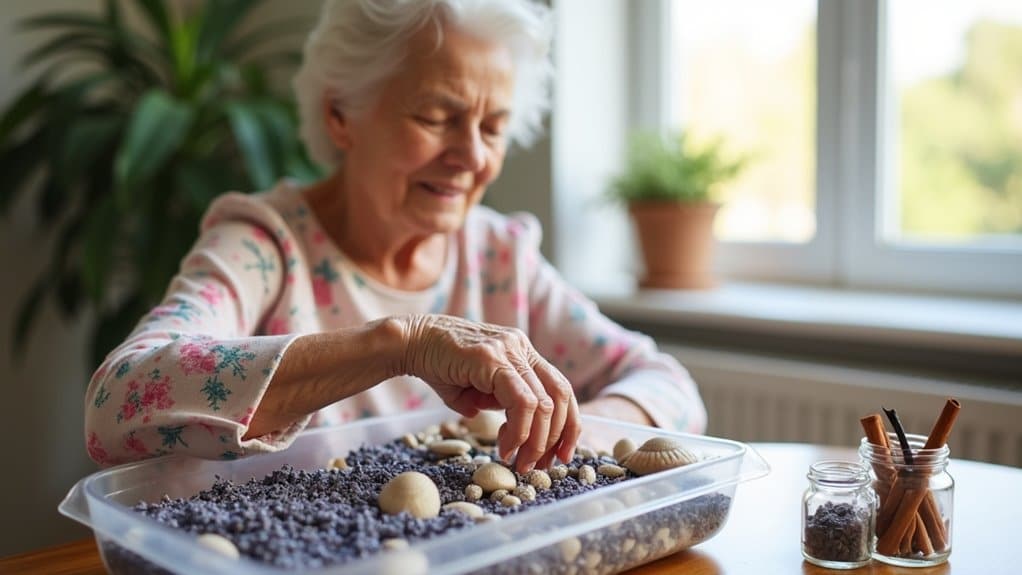
When engaging seniors with memory impairments, sensory-based activities provide essential cognitive stimulation while creating meaningful connections to their environment. You’ll find that incorporating scent exploration activities, such as identifying familiar herbs or spices, can trigger memories and promote engagement.
Tactile stimulation exercises help maintain fine motor skills and improve sensory awareness. You can introduce textured materials like soft fabrics, smooth stones, or rough sandpaper for seniors to touch and describe. Create sensory bins filled with dried rice, beans, or pasta for sorting activities that combine touch with cognitive tasks.
Consider incorporating nature-based elements into your activities. Let seniors handle leaves, flowers, or seashells while discussing their characteristics. These hands-on experiences strengthen neural pathways and encourage social interaction through shared sensory findings.
Music and Movement Therapy Sessions

Building on the sensory engagement approach, music and movement therapy offers powerful cognitive and physical benefits for seniors with memory challenges. You’ll find that combining music appreciation with gentle movement exercises creates an engaging therapeutic environment that stimulates both mind and body.
| Activity Type | Benefits | Implementation |
|---|---|---|
| Chair Dancing | Balance, coordination | Use familiar songs |
| Drumming Circle | Rhythm awareness, social | Simple percussion |
| Singing Sessions | Memory recall, speech | Folk songs, hymns |
| Guided Movement | Motor skills, flexibility | Seated stretches |
| Music Listening | Emotional regulation | Time-specific music |
Structure your sessions around familiar melodies that connect with residents’ past experiences. You’ll achieve better participation when you incorporate rhythmic movements that match their mobility levels. Start with shorter 15-minute segments and gradually increase duration as participants build stamina and engagement.
Creative Arts and Crafts Projects

Creative arts and crafts projects serve as essential cognitive stimulants for seniors with memory impairments while promoting fine motor skills and self-expression. You’ll want to focus on activities that match your residents’ abilities and interests, ensuring success and engagement.
Introduce painting projects using large brushes and non-toxic watercolors, allowing seniors to create without frustration. Set up collage creation stations with pre-cut images from magazines, providing an opportunity for residents to make choices and tell stories through their artwork.
Keep materials simple and organized to prevent overwhelming your participants. Break down complex projects into manageable steps, and offer gentle guidance when needed. Always display finished artwork in common areas to enhance residents’ sense of accomplishment and create opportunities for social interaction.
Memory-Triggering Photo Albums and Storytelling
Working with your loved one to create a family history photo album serves as both a meaningful activity and a way to document cherished memories. You’ll want to gather family photographs, documents, and mementos to compile into a narrative-driven scrapbook that prompts conversation and reminiscence. The process of creating personal story books allows seniors to share their experiences while strengthening cognitive connections to significant life events and relationships.
Preserving Family History Together
Family photos serve as powerful catalysts for memory recall and emotional connection in seniors with cognitive decline. You can create meaningful legacy projects by engaging in heritage storytelling and genealogy projects together. Memory mapping and historical timelines help preserve cherished family stories while stimulating cognitive function.
Key activities for preserving family history include:
- Building detailed family trees with photos and significant dates
- Writing legacy letters to younger generations about noteworthy life events
- Conducting ancestor research using online genealogy resources
- Creating digital photo albums with recorded voice narrations
These preservation activities provide structure while encouraging seniors to share their wisdom and experiences. As you document family heritage through photo sharing and storytelling, you’re not just preserving memories – you’re strengthening bonds and creating valuable historical records for future generations.
Creating Personal Story Books
When designing memory care activities, personalized story books serve as powerful cognitive tools that combine photographs with narrative elements. You’ll want to gather family photos, memorabilia, and written personal anecdotes that capture significant life moments of your loved one with dementia.
Select clear, high-quality images that span different life stages and organize them chronologically. Label each photo with names, dates, and locations to provide context. Include spaces where you can write down favorite memories and stories as your loved one shares them during viewing sessions. Use large text and simple layouts to improve readability.
These story books become valuable reference points for caregivers, helping them understand the person’s life history while facilitating meaningful conversations that strengthen cognitive connections and emotional well-being.
Simple Cooking and Kitchen Activities
Engaging seniors in safe kitchen activities like peeling vegetables, sorting utensils, or organizing spice containers helps maintain their motor skills while providing a sense of purpose. You’ll find that simple food preparation tasks create opportunities for memory recall, particularly when working with familiar ingredients or following basic recipes from their past. When you incorporate family recipe sharing into these activities, you’ll stimulate both cognitive function and meaningful social connections.
Safe Food Prep Tasks
Safe food preparation activities offer valuable therapeutic benefits for seniors with memory impairments while maintaining their connection to daily living skills. When supervising kitchen safety, you’ll want to focus on simple tasks that promote confidence and independence.
- Sorting and organizing dry ingredients into labeled containers
- Washing fruits and vegetables at the sink with minimal water flow
- Tearing lettuce leaves or breaking soft vegetables into pieces
- Mixing pre-measured ingredients in a large bowl
Encourage ingredient identification by asking your loved one to name items as they handle them. Keep work surfaces clutter-free and guarantee all tools are appropriate for those with limited dexterity. Monitor for signs of fatigue or confusion, and be ready to redirect or assist as needed. Always prioritize safety while fostering a sense of accomplishment through these structured kitchen activities.
Kitchen Organization Projects
Simple kitchen organization projects provide excellent cognitive stimulation for seniors with memory challenges while maintaining their sense of purpose and routine. You’ll find that kitchen decluttering strategies help residents feel more in control of their environment while exercising decision-making skills.
Engage your loved one in basic organizing tasks like sorting utensils by type, arranging canned goods by category, or implementing pantry labeling techniques using clear, large-print tags. Create a system where frequently used items remain at eye level, reducing confusion and promoting independence. Guide them in grouping similar items together, such as baking supplies or breakfast foods, which reinforces cognitive associations and memory patterns. These activities can be adjusted based on individual capabilities and should always be supervised to guarantee safety.
Family Recipe Sharing Time
While memories may fade, the comfort of familiar recipes often remains deeply rooted in seniors’ minds. Engaging in family recipe sharing activities can stimulate cognitive function and create meaningful connections through nostalgic flavors and family traditions.
Set up regular recipe sharing sessions where your loved one can:
- Narrate step-by-step cooking instructions from memory
- Share stories about special holiday meals and family gatherings
- Identify familiar cooking utensils and ingredients
- Participate in simple food preparation tasks when appropriate
Guide the conversation by asking specific questions about cooking methods, ingredients, and special occasions. Document these cherished recipes and memories, creating a tangible connection to family traditions. This activity helps maintain social engagement while providing sensory stimulation through familiar cooking scents and tastes.
Therapeutic Garden and Nature Experiences
Because outdoor experiences stimulate multiple senses simultaneously, therapeutic gardens provide valuable cognitive benefits for seniors with memory care needs. You’ll find that structured nature walks help maintain physical mobility while engaging residents with seasonal changes in plants, weather, and wildlife. These walks create opportunities for sensory stimulation and memory recall through familiar outdoor elements.
Garden planting activities allow seniors to participate in meaningful tasks that promote fine motor skills and cognitive engagement. You can incorporate raised beds for easier access and choose plants that trigger positive memories, such as familiar herbs or flowers. The repetitive motions of planting, watering, and tending to plants help establish routine while fostering a sense of purpose. The garden becomes a therapeutic space where residents can connect with nature while exercising both mind and body.
Daily Routine and Familiar Task Engagement
Maintaining consistent daily routines helps seniors with memory impairment feel more secure and oriented throughout their day. Daily engagement in familiar tasks reinforces independence and preserves essential life skills.
Structure your loved one’s day around these familiar routines to promote cognitive function and reduce anxiety:
- Involve them in simple household tasks like folding laundry, setting the table, or organizing drawers
- Schedule personal care activities at consistent times, such as grooming and medication routines
- Incorporate meal preparation activities like mixing ingredients or arranging place settings
- Plan regular social interactions through structured group activities or one-on-one conversations
When implementing these routines, adjust task complexity based on their current abilities and provide gentle guidance as needed. Monitor their engagement levels and modify activities to prevent frustration while maintaining a sense of accomplishment.
Frequently Asked Questions
How Do You Handle Aggressive Behavior During Group Activities?
When you encounter aggressive behavior in group settings, remain calm and use proven aggression management techniques. Initially, remove the agitated person from the group to prevent escalation. Identify triggers that sparked the behavior and document them. You’ll want to redirect their energy into calming activities while maintaining a safe distance. Apply behavior modification strategies like positive reinforcement when they display appropriate social interactions. Don’t take aggressive actions personally.
What’s the Best Time of Day to Schedule Memory Care Activities?
Schedule your most challenging activities in the morning hours when alertness and energy levels typically peak. You’ll find that morning routines provide the best window for cognitive engagement and physical activities. Save quieter, less demanding activities for later in the day to maintain evening calm. Track individual responses to determine ideal timing, as some participants may function better at different hours. Always remain flexible and adjust schedules based on observed energy patterns.
Should Family Members Participate in Memory Care Activities During Visits?
Family involvement during visits can greatly improve the quality of care and engagement. You’ll find that participating in activities alongside your loved one creates meaningful connections and helps maintain family bonds. When you join in activities, you’ll provide emotional support while helping staff understand your family member’s preferences and history. The shared experience benefits both parties – improving your relative’s mood and giving you valuable bonding opportunities.
How Long Should Each Activity Session Last for Optimal Engagement?
You’ll want to keep activity duration between 20-30 minutes to maintain ideal engagement. If you notice signs of fatigue or decreased interest, it’s best to wrap up sooner. You can extend the time if your participant remains actively engaged, but don’t exceed 45 minutes. Watch for cues like restlessness or loss of focus. It’s better to end while they’re still interested than to push beyond their comfort zone and create frustration.
What Signs Indicate an Activity Is Causing Stress or Overstimulation?
Watch for these stress indicators: fidgeting, pacing, or wringing hands. You’ll notice overstimulation signs when someone becomes agitated, tries to leave, or withdraws from the activity. Pay attention if they’re showing increased confusion, making repetitive movements, or becoming vocal with groaning or calling out. Their facial expressions may show distress, and you might observe physical signs like sweating or rapid breathing. Stop the activity if these behaviors emerge.